


Biocides and antibiotics: a complex interplay
, Environment
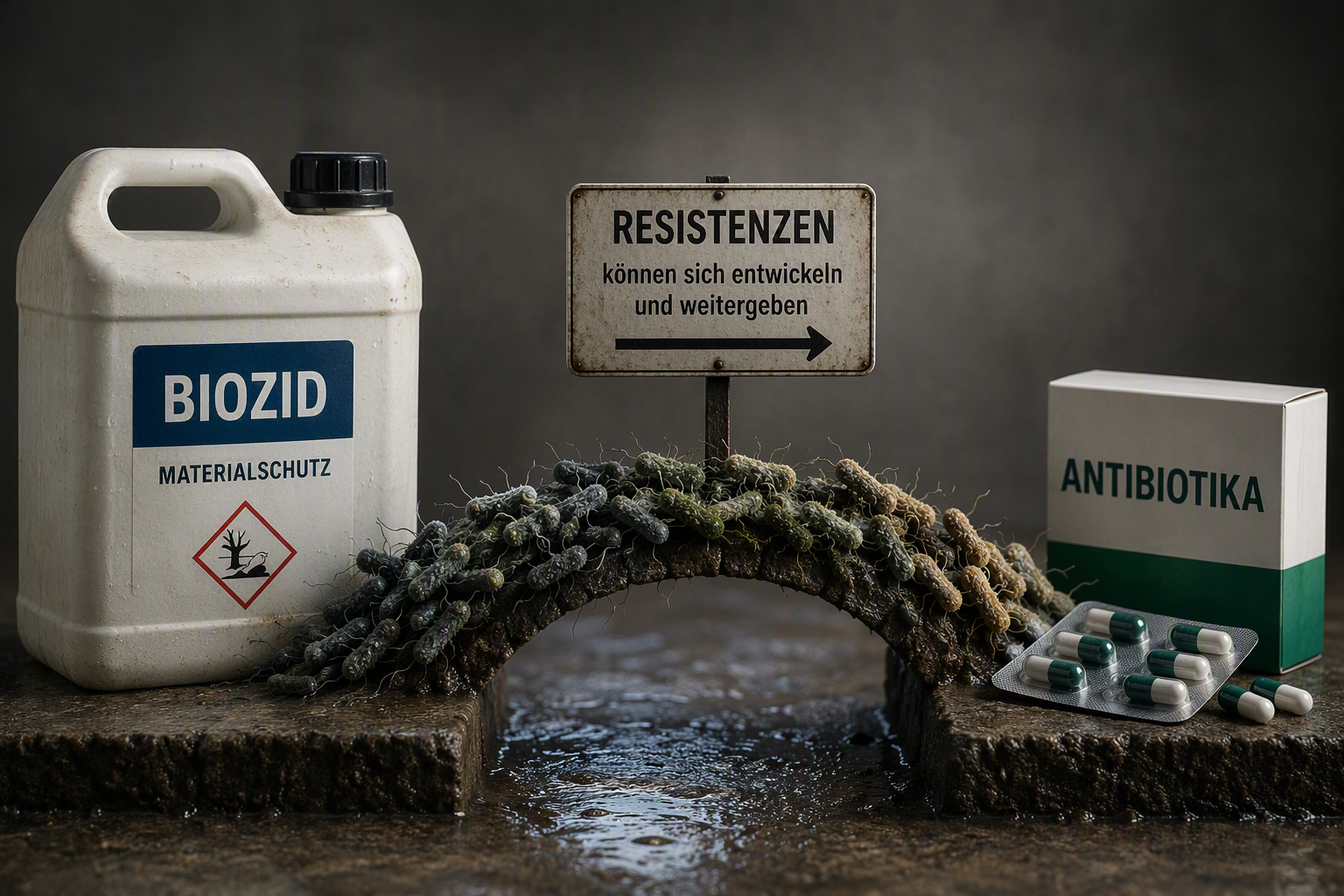
Resistenzen von Mikroorganismen gegen Biozide können ihre Empfindlichkeit und Anpassungsfähigkeit gegen Antibiotika verändern.
Biocides are an indispensable part of hygiene in hospitals and care homes. They also contribute to the functioning of industrial processes and to the protection of materials. Benzalkonium chloride is used particularly frequently; this is an active substance that can kill bacteria on surfaces or inhibit their growth in liquids. At the same time, there is growing concern that bacteria are becoming more resistant through regular contact with such active substances, thereby also promoting the development of antibiotic resistance. However, the study now published by BAM researchers shows that this interaction is significantly more complex than previously assumed.
The study examined a strain of the intestinal bacterium Escherichia coli that had previously developed increased tolerance to benzalkonium chloride through repeated application of the biocide. Using competition experiments with a non-tolerant ancestor strain, the researchers were able to demonstrate that even very low concentrations of the antibiotic ciprofloxacin favour this biocide-tolerant strain over the susceptible ancestor strain. Such concentrations are found, for example, in wastewater from hospitals, sewage treatment works or livestock farming. This could enable biocide-tolerant bacteria to spread in the environment and become established in the long term.
At the same time, the study revealed a surprising finding: although the tolerant bacteria have a selective advantage under certain conditions, they developed new resistances to various important antibiotics – such as ciprofloxacin, colistin and gentamicin – significantly less frequently. The study thus refutes the widespread assumption that adaptation to biocides generally promotes the development of antibiotic resistance. Instead, there may also be trade-offs between these two traits.
The value for societal and environmental policy of this work lies in a better understanding of the interactions between biocides, antibiotics and biocide-tolerant strains that occur as environmental pollutants, thereby providing important insights for the assessment of biocides and for strategies to reduce environmental antibiotic resistance.
Consequences of benzalkonium chloride tolerance for selection dynamics and de novo resistance evolution driven by antibiotics
Orestis Kanaris, Lydia-Yasmin Sobisch, Annett Gödt, Frank Schreiber & Niclas Nordholt
npj Antimicrobials and Resistance, 2026