

Materials Modelling
Division 5.5
Conventional approaches to materials development are costly, time consuming and often rely on trial-and-error. This represents a bottleneck in our societal development, especially slowing down urgently needed progress in energy efficiency, sustainability, and safety of materials, where an uncharted range of materials, processes and applications need to be explored.
Materials modelling is accelerating the discovery, design, and development of new materials technologies at a fraction of the cost. The tremendous capability for predictive insights from modelling and simulations by means of ever-growing computational capacities enable rapid screening and evaluation of candidate materials for targeted applications. Flanked with the experiments, computational materials science is a fundamental cornerstone of materials innovation.
The division of materials modelling performs meso-scale modelling and simulation to explore processing-microstructure-properties-performance relationships. In collaboration with our academic partners and industry, we research a broad range of topics from microstructure defect engineering, optimization of functional materials’ response, and the development of complex multi-component alloys using advanced multi-scale modelling approaches.
CALPHAD approaches, multi-phase-field methods, chemo-mechanics, fracture mechanics, and crystal plasticity are integrated to predict and design alloys and microstructures. While full-field simulations are used as a versatile tool to investigate microstructure evolution under various processing/performance conditions, mean-field and modern machine-learning approaches are applied to relate the microscopic features with collective macroscopic properties.
With our quantitative thermodynamic and kinetic simulations, we bridge the scales across experimental research and atomistic simulations (Materials Chemistry department and Materials Informatics division), with the goal to accelerate microstructural design, discovery, and safe applications.
Range of expertise
Range of expertise
- Computational exploration of processing-microstructure-properties-performance relations using mesoscale materials modelling and simulation
- Scale-bridging thermodynamic and kinetic simulation of microstructures using CALPHAD integrated multi-phase-field and machine-learning approaches
- Numerical implementation of complex deformation and damage models for stress analysis using commercial finite element software (ABAQUS, ANSYS) and open-source software (FENICS, FEAP)
- Development of theories and design concepts for exploring new materials such as complex multi-component alloys
Main activities
Main activities
- Development and application of CALPHAD integrated multi-phase-field method for alloys and microstructures design
- Density-based modelling of microstructure defects and devising defects phase diagrams
- Enhancement and application of deformation and damage models to simulate material inelasticity and damage evolution
- Development of mechanical models to describe the effects of various environments
- Simulation of crack propagation
- Programming of subroutines for material and damage models in FE software
- Inelastic 3D FE analyses
Range of services/technical equipment
Range of services/technical equipment
- Development of user-defined material subroutines (FEM)
- Development of deformation models
- Representation of failure mechanisms
- Development of lifetime assessment rules
- Investigation of microstructure stability and evolution
Publications of the division
Publications of the division
In the database PUBLICA you will find publications by BAM employees.
(Kopie 1)
-
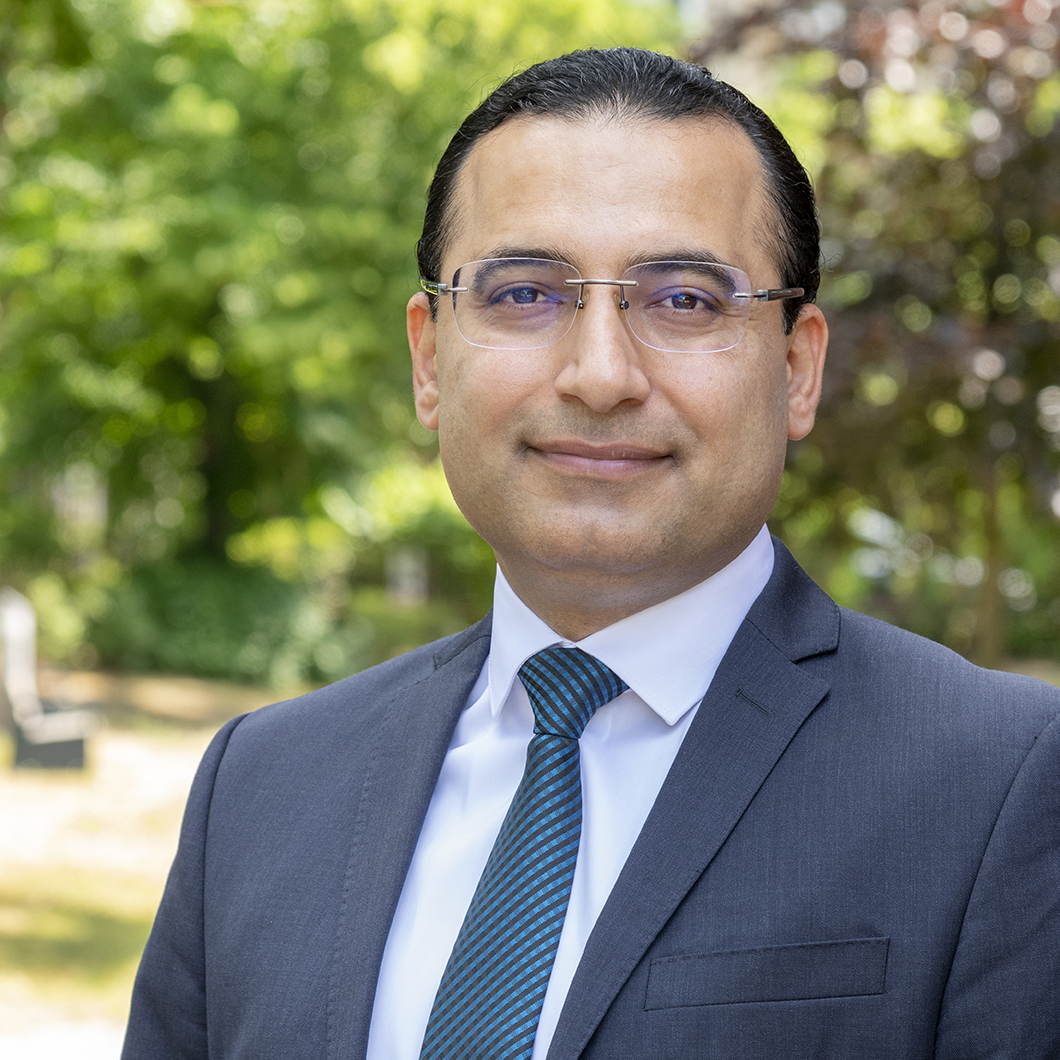
Prof. Dr.-Ing. Reza Darvishi Kamachali