
Additive Manufacturing of Metallic Components
Division 9.6
The Additive Manufacturing of Metallic Components division deals with the relationship between material, geometry, process, and the resulting properties of additively manufactured components. The focus is on the laser powder bed fusion process (PBF-LB/M).
We develop strategies for the production of safe and reliable components by developing adapted processes, researching key factors influencing the formation of defects and microstructures and examining the thermal history of the build-up process. We also consider subsequent processing steps such as heat post-treatments and laser surface processing and the build-up on existing structures (hybrid production).
The mechanical and fracture-mechanical material and component characterization of additively and conventionally manufactured components is also part of our expertise. We determine material parameters and properties according to standardized test methods as well as procedures developed for specific tasks.
Fields of expertise
Fields of expertise
- Laser powder bed fusion of metals (PBF-LB/M)
- Use and evaluation of process monitoring methods for quality assurance
- Thermographic measurement and simulative calculation of the thermal history in components (ANSYS)
- Testing laboratory for the determination of mechanical, mechanical-technological and fracture-mechanical material properties in a wide temperature and strain rate range
- Determination and evaluation of the influence of material microstructure, design, production and stress conditions on the deformation, damage and failure behavior of additively and conventionally manufactured components
- National and international standardization for test methods and materials
Main activities
Main activities
- Development of process windows and design strategies for materials, representative test specimens and components
- Use and evaluation of process monitoring methods and machine data for a digital quality assurance of components in the build-up process
- Determination of the thermal history (experimental and numerical) in the build-up process and development of strategies to avoid process-related defects and unfavorable microstructures
- Determination of mechanical and mechanical-technological material properties
- Mechanical component testing with customer-specific load scenarios (load type, load-time function, instrumentation)
- Fractographic investigations, 2D/3D surface analysis and 3D-measurement of samples and components
Range of services/technical equipment
Range of services/technical equipment
- PBF-LB/M systems (EOS M300-4, SLM Solutions 280HL, Aconity3D Midi+) including 4 lasers, inductive heating up to 1000 °C, build platform sizes up to 300 mm x 300 mm
- Extensive equipment for process monitoring (melt pool monitoring, thermographic cameras, high-resolution cameras)
- Heat treatment up to 1400 °C
- Pulsed laser system with laser scanning head for surface treatment
- Laser scanner for 3D component measurement
- Metallography, surface characterization using digital light microscopy, density measurements
- Servo-hydraulic and mechanical universal testing machines with test forces of up to 4 MN and temperature chambers from -196 °C to 600 °C
- Resonance testing machine for fracture mechanics specimens up to 50 kN and Cracktronic for small specimens
- Instrumented reference pendulum impact tester up to 750 J with low blow equipment for fracture mechanics tests
- Servo-hydraulic high-speed testing system VHS (50 kN, 25 ms 1, test temperature -100 °C to 600 °C, strain rate up to 103 s 1)
- Drop weight tester with variable load arrangement (height ≤ 1 m, energy ≤ 120 J)
Publications of the division
Publications of the division
In the database PUBLICA you will find publications by BAM employees.
Publications of the Additive Manufacturing of Metallic Components Division in PUBLICA
-
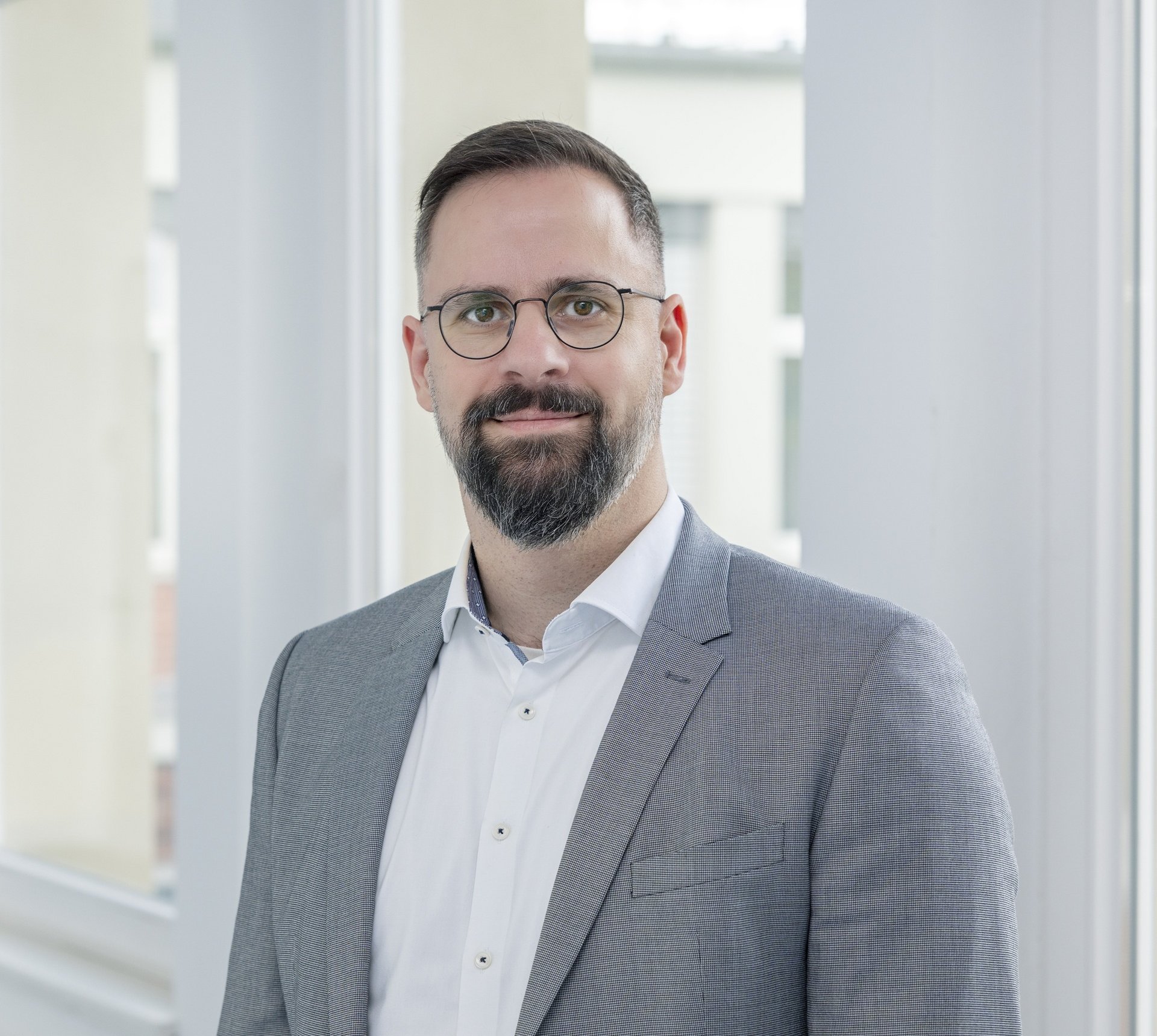
Dr.-Ing. Kai Hilgenberg