

Ecat-Acetogens - Using CO for the production of chemicals
Project
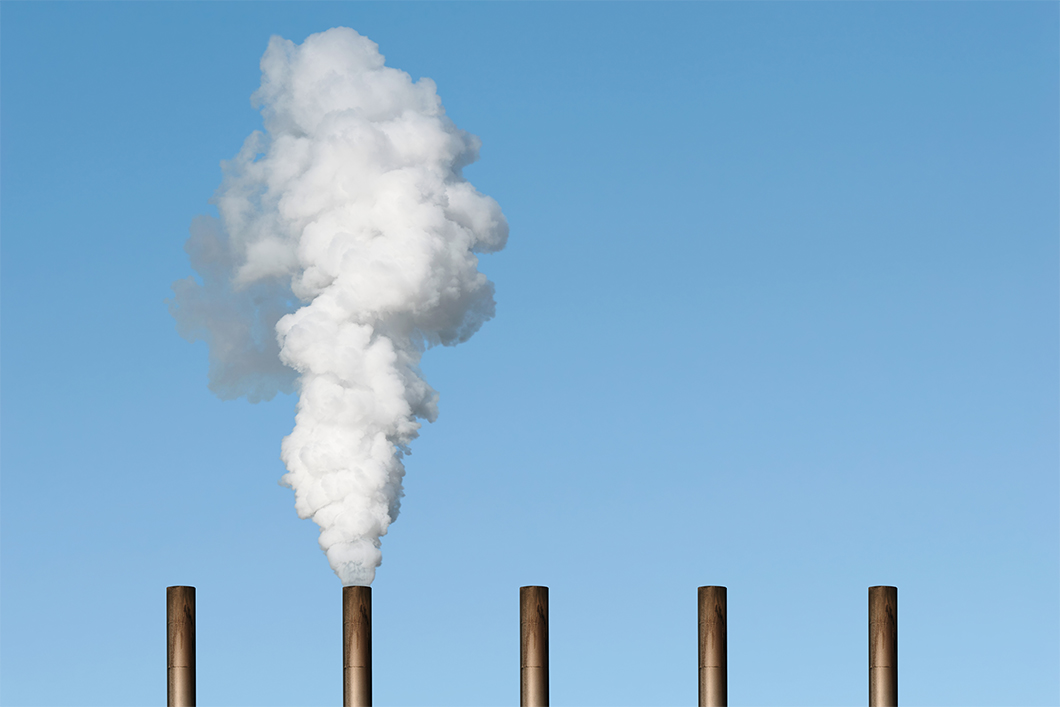
Chimneys with emission cloud
-
Project period
05/01/2021 - 04/08/2024
-
Project type
Collaborative research project
-
Project status
Closed
Description
In the project, carbon dioxide is untilized for the production of useful chemicals. The development of specific catalysts will allow for the combination of CO electrolysis with bacterial fermentation in a more economical fashion.
Location
Bundesanstalt für Materialforschung und -prüfung (BAM)
Branch Fabeckstraße
Unter den Eichen 44-46
12203 Berlin
Challenge
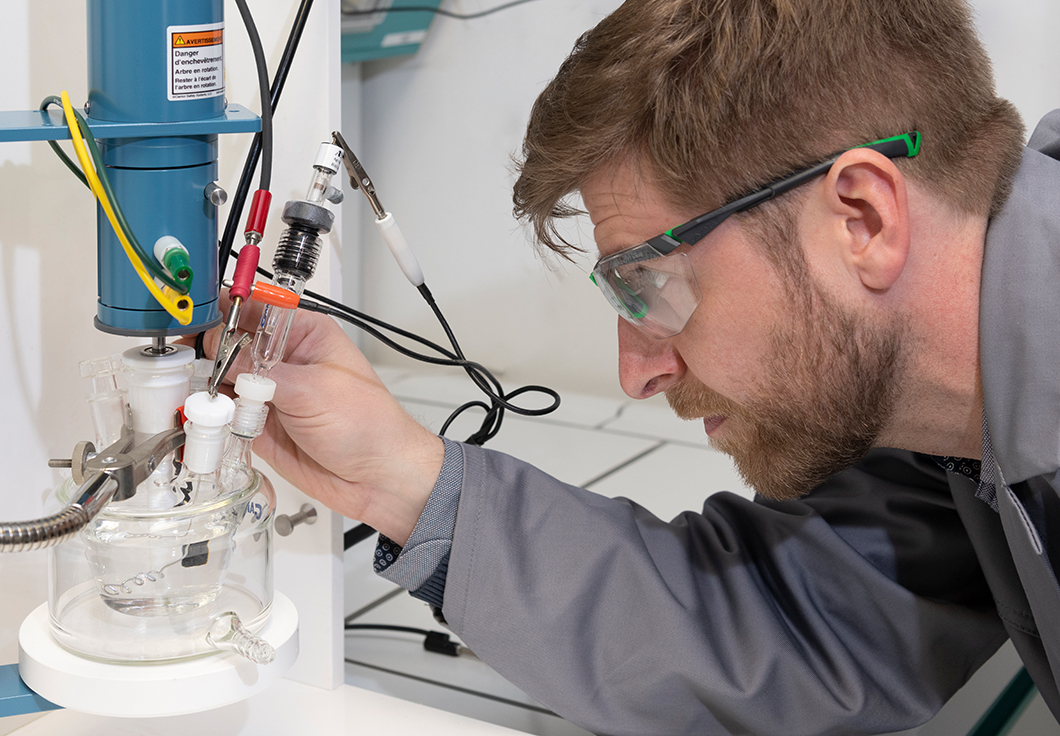
In the lab with Tim-Patrick Fellinger
When it comes to climate change, reducing emissions of the greenhouse gas CO2 is an important task. Both electrochemical and biological CO2-fixing processes can be used to effectively convert emissions into usable chemicals. Both processes have already been successfully coupled in industry. Can these processes also be integrated economically in a single system?
Objectives

The aim of the project is to develop inexpensive and biocompatible carbon-based electrocatalysts. This will make it possible to combine the electrochemical utilisation of CO2 and the bacterial fermentation of CO2 in one compact bioelectrochemical system. Reduced maintenance compared to coupled systems would be advantageous for decentral use of the technology. Furthermore, the new technology can avoid the use of expensive metals such as silver or gold.
Methods
With photosynthesis, nature shows us how CO2 can be converted into sugar with the help of light and thus made usable. We are inspired by the way biomolecules activate CO2 and transfer the concept to conductive materials similar to activated carbon using a chemical method we developed for that purpose. Like silver or gold, these inexpensive electrocatalysts can utilize electricity for the conversion of CO2. Unlike expensive metals, they can also do this in the presence of bacteria.
Partners

Project coordination
Bundesanstalt für Materialforschung und -prüfung (BAM)
Partner
Technical University of Munich, Chair of Bioprocess Engineering
BAM, Department of Dangerous Goods Packaging
Funding
The project is part of a DFG priority programme (SPP 2240)
Ecat-Acetogens - Using CO2 for the production of chemicals in a combined bioelectrochemical system
In the project, inexpensive and biocompatible carbon-based electrocatalysts are being developed. These will be used in one combined bioelectrochemical system for the production of chemicals from CO2.
Two-way recycling of CO2 emissions
Metabolites are produced electrochemically from CO2 molecules, which acetogenic bacteria use to convert further CO2 molecules into usable chemicals. For this purpose, inexpensive and biocompatible carbon-based electrocatalysts are to be developed in the project. The integration of an electrolysis cell and a bioreactor into a bioelectrochemical reactor can become economical in this way.
Project coordination
Bundesanstalt für Materialforschung und -prüfung (BAM)
Division Dangerous Goods Packaging
Project partners
TUM - Technische Universität München, Lehrstuhl für Bioverfahrenstechnik
Funding
The Ecat-Acetogens collaborative research project is funded under the DFG Priority Programme Bioelectrochemical and Engineering Foundations for Establishing Electro-Biotechnology for Biosynthesis - eBiotech (SPP 2240).