
ModuH2Pipe@BAM - Modular test platform for the safety of hydrogen pipelines
Project
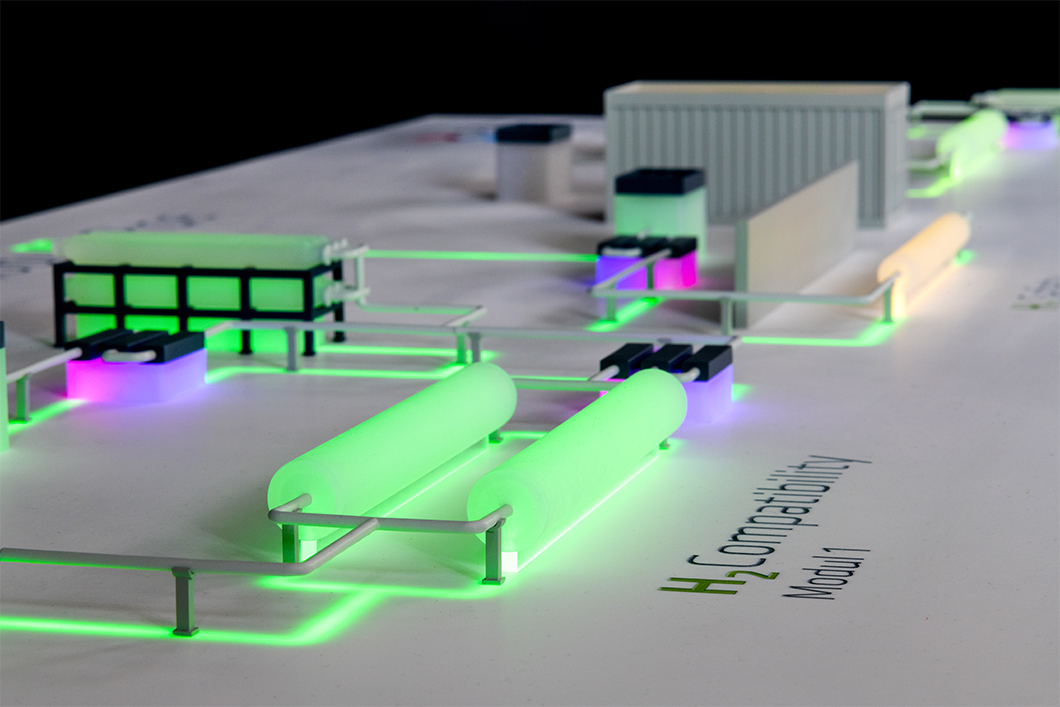
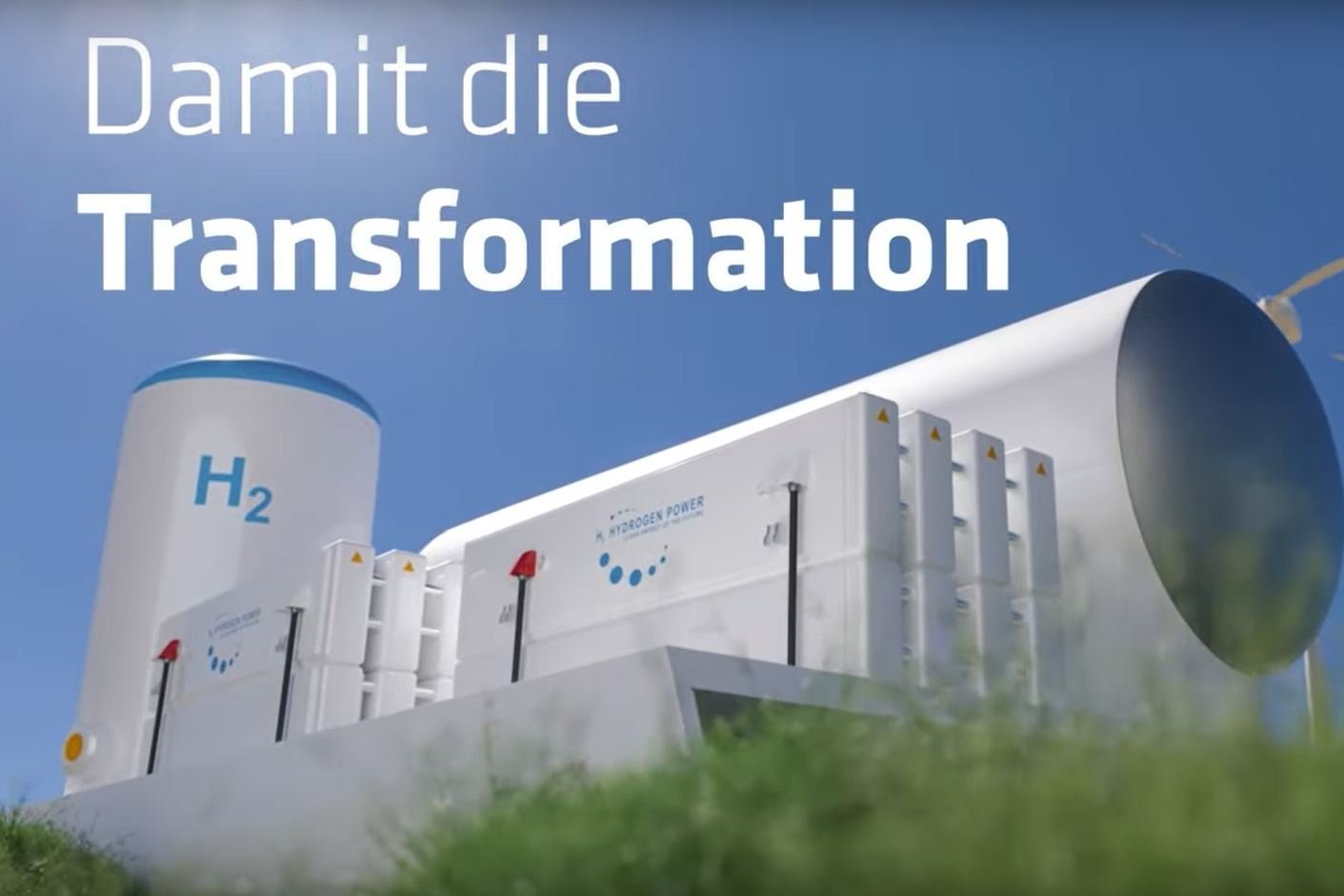
Model of the hydrogen infrastructure test platform
Description
The project focuses on developing a modular test platform for hydrogen and hydrogen-natural gas pipelines that enables full-scale safety testing under critical operating conditions. The platform is specifically designed to provide services to gas network operators, among others.
Location
Bundesanstalt für Materialforschung und -prüfung (BAM)
Testgelände Technische Sicherheit
An der Düne 9
15837 Baruth/Mark
Challenge
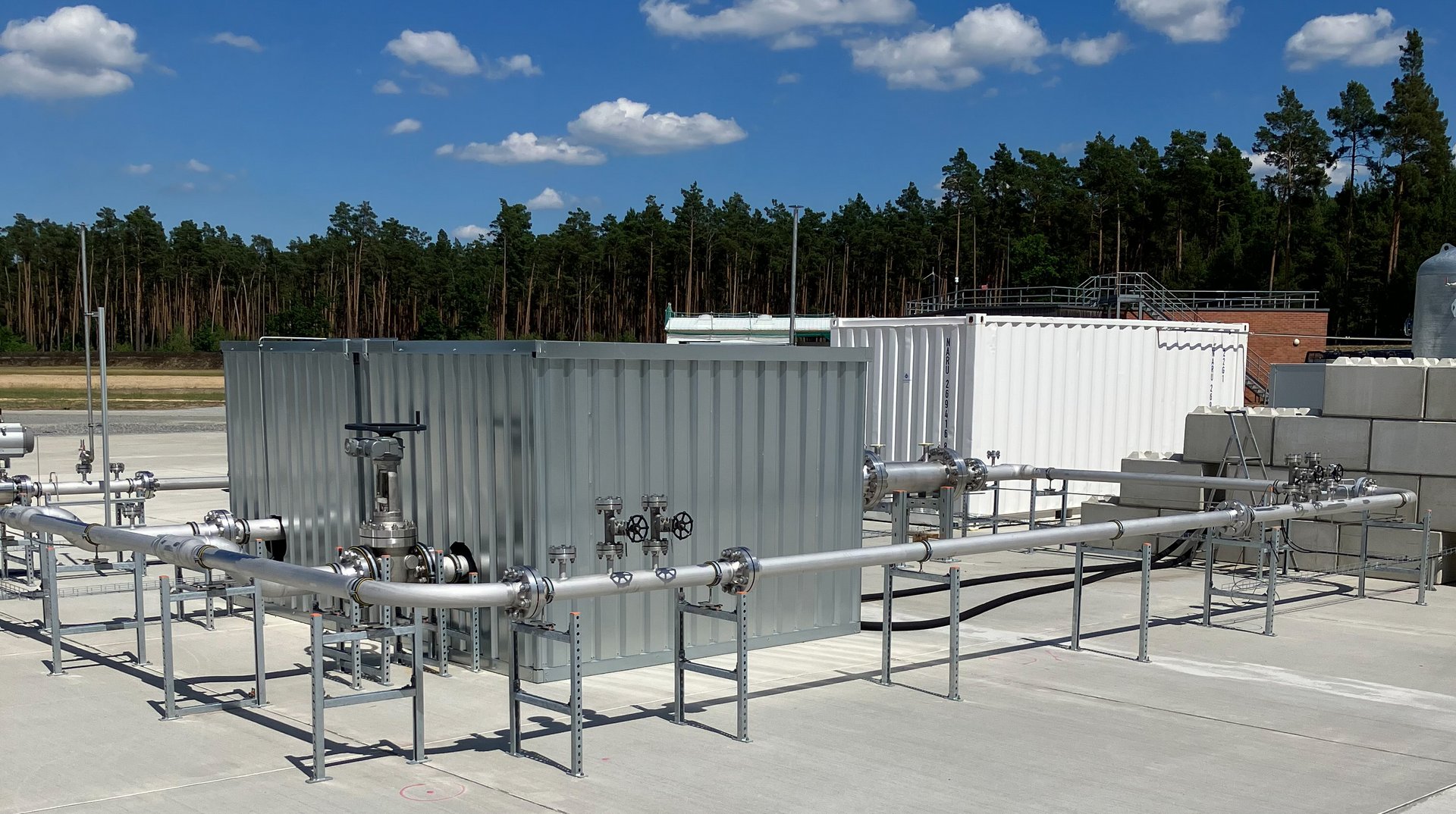
Hydrogen poses unique challenges for materials and components. Using a novel test platform, BAM is conducting research on the safe operation of pipelines.
The project is dedicated to developing an infrastructure for investigating the safety of hydrogen and hydrogen-natural gas pipelines. As existing gas networks are repurposed, many questions arise regarding the impact of hydrogen on the materials used in pipelines, seals, and other components. At the same time, it is necessary to analyze whether the infrastructure itself can affect the purity and quality of hydrogen.
Objectives

The test platform addresses real-world quality and safety issues related to hydrogen pipelines through full-scale testing. To this end, partners – such as gas network operators or manufacturers – can have pipeline segments, seals, and other components tested at real scale under real-world conditions in the test platform’s three modules and subsequently commission material and gas analysis studies at BAM.
Methods

ModuH2Pipe@BAM comprises two modules:
- “H2Compatibility and Quality” enables the operation of components at full scale under defined conditions for subsequent material analysis. This also allows to determine the influence of impurities in the hydrogen or to examine the purity of the hydrogen in an operating pipeline using appropriate analytical methods.
- “H2Safety” allows pipeline segments and other components to be subjected to extreme pressure until failure occurs, followed by material analysis. In the event of failure, the consequences can be determined in detail and protective measures developed.

To rapidly develop a hydrogen infrastructure in Europe, existing gas networks should be utilized in addition to the construction of new pipelines. From a technical perspective, this raises a number of questions. The German and European natural gas networks have grown over many decades. A wide variety of different materials are in use, primarily steels. In some cases, it is unclear how well they are suited for transporting hydrogen. At the same time, a future hydrogen economy will place special demands on the quality of the hydrogen. It must therefore be clarified, for example, to what extent pipelines – some of which have been used for natural gas for decades – will affect the purity of the hydrogen flowing through them.
With the ModuH2Pipe@BAM project at the H2Safety@BAM Competence Center, BAM is creating – for the first time in Europe – a modular test platform that allows for the examination of safety-related issues on a full-scale basis and under critical conditions associated with hydrogen and hydrogen-natural gas pipelines. The goal is to provide gas network operators, among others, with a range of services that enables a comprehensive response to these safety-related questions.
The ModuH2Pipe@BAM test platform will be located at the BAM Technical Safety Test Facility (BAM TTS) and, for the first time, will enable the systematic testing of pipelines and their components under realistic (extreme) operating conditions. The platform integrates two modules designed for the investigation of components (seals, valves, etc.) and pipeline segments at full scale.
The module “H2Compatibility and Quality” subjects components to thermal and cyclic stresses to accelerate their aging – in order to simulate long-term use. Subsequent material analysis of the components will lead to informations regarding the effect of hydrogen on the steels, seals, etc.
The core components of this facility are two 5m long, freely configurable pipe sections with nominal diameters of up to 1,400 mm. The facility can simulate significant pressure fluctuations or high flow rates: Pipes are repeatedly exposed to pressures between 10 bar and 85 bar to replicate.
Contaminants can also be specifically introduced to investigate potential degradation and failure mechanisms of materials or the functionality of components.
The focus is not only on the materials – manufacturing, welding and repair processes are also to be tested and validated. To monitor the integrity of pipelines and components, non-destructive testing methods are investigated and further developed under real-world conditions. The data obtained can in turn be used to develop diagnostic and decision-making tools, e.g. remaining life time or maintenance cycles.
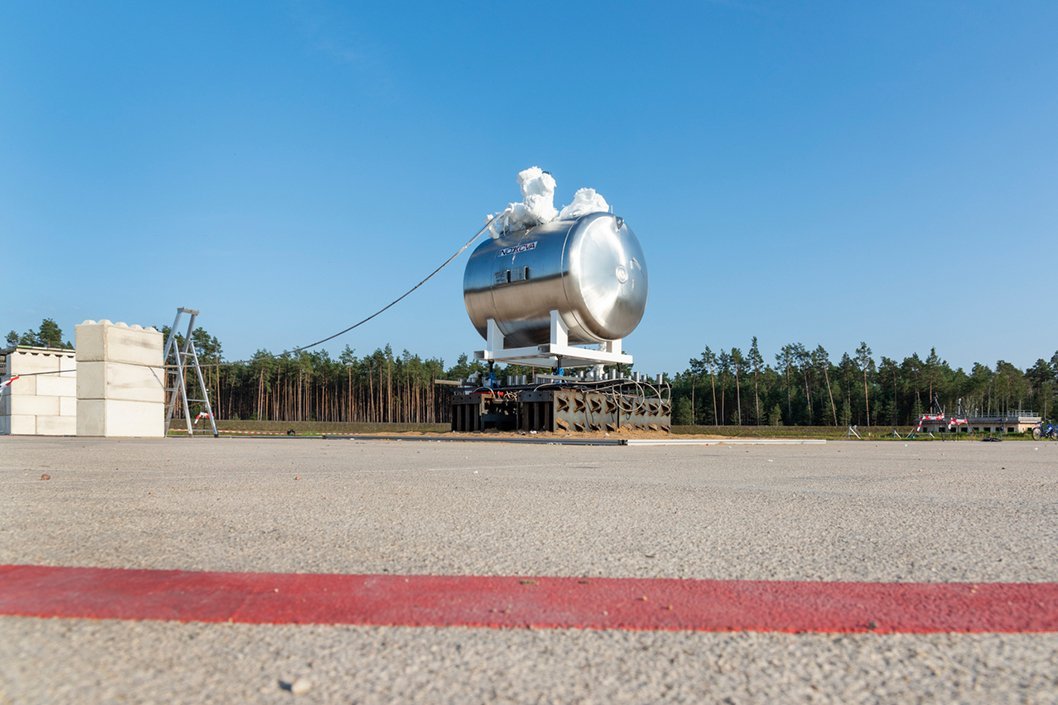
The module “H2Safety” can be used to investigate safety-critical issues: Components, such as pipes or valves, can be tested at pressures of up to 900 bar – well beyond normal operating limits. In the event of failure, the consequences can be analyzed in detail. Based on this, protective measures and safety concepts can be specifically improved and further developed.
With its testing infrastructure – which is unique in Germany and Europe – BAM is supporting the knowledge and technology transfer in the field of hydrogen safety. The further development of codes, regulations and standards is intended to ensure the safe operation of future hydrogen infrastructure and accelerate the market ramp-up of hydrogen technologies.
Partner
Federal Ministry for Economic Affairs and Energy