

Published on:
Description
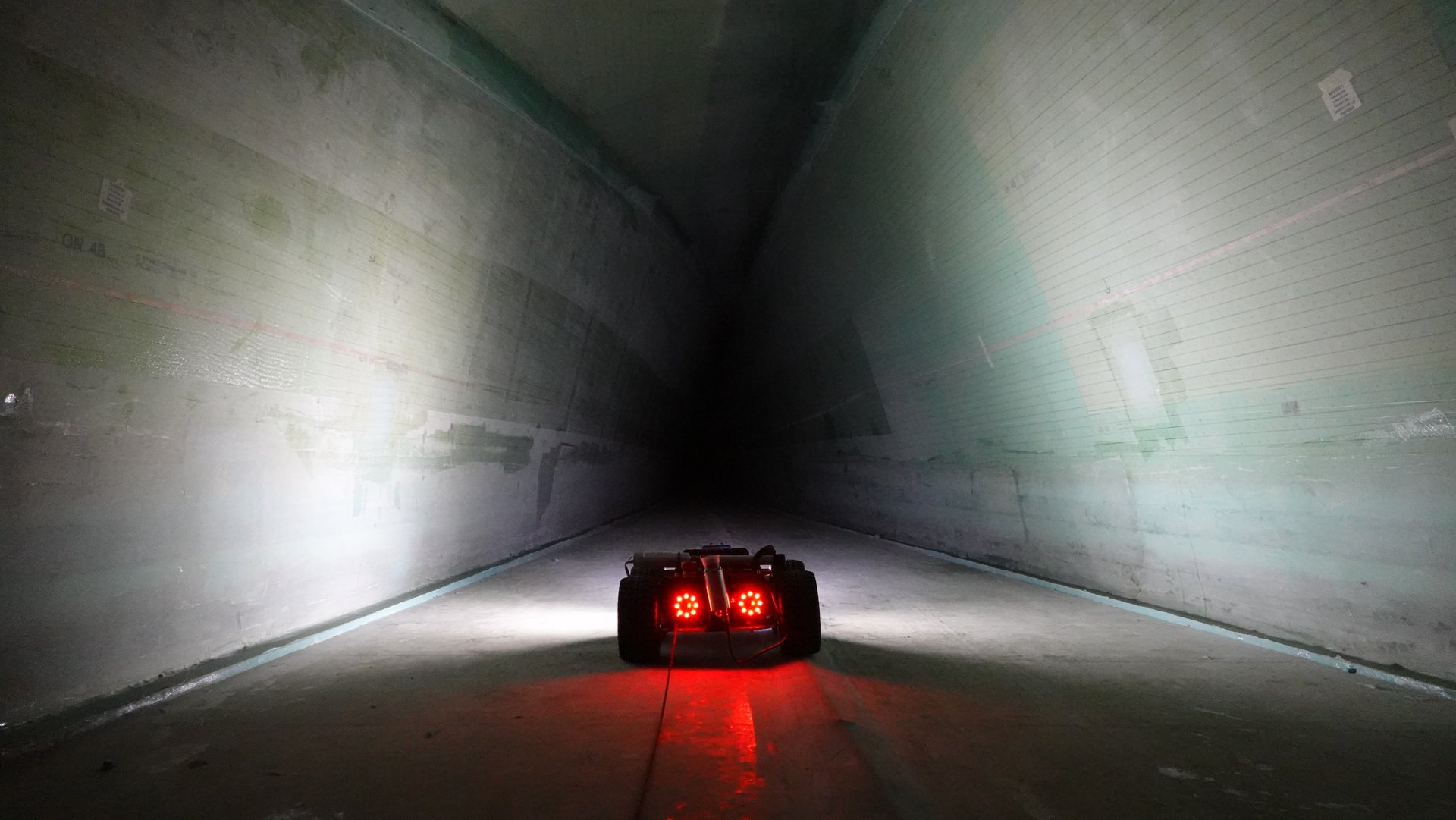
In InInspekt, four partners are developing and testing a mobile robot for the internal inspection of wind turbine rotor blades.
(copy 6)
Challenge
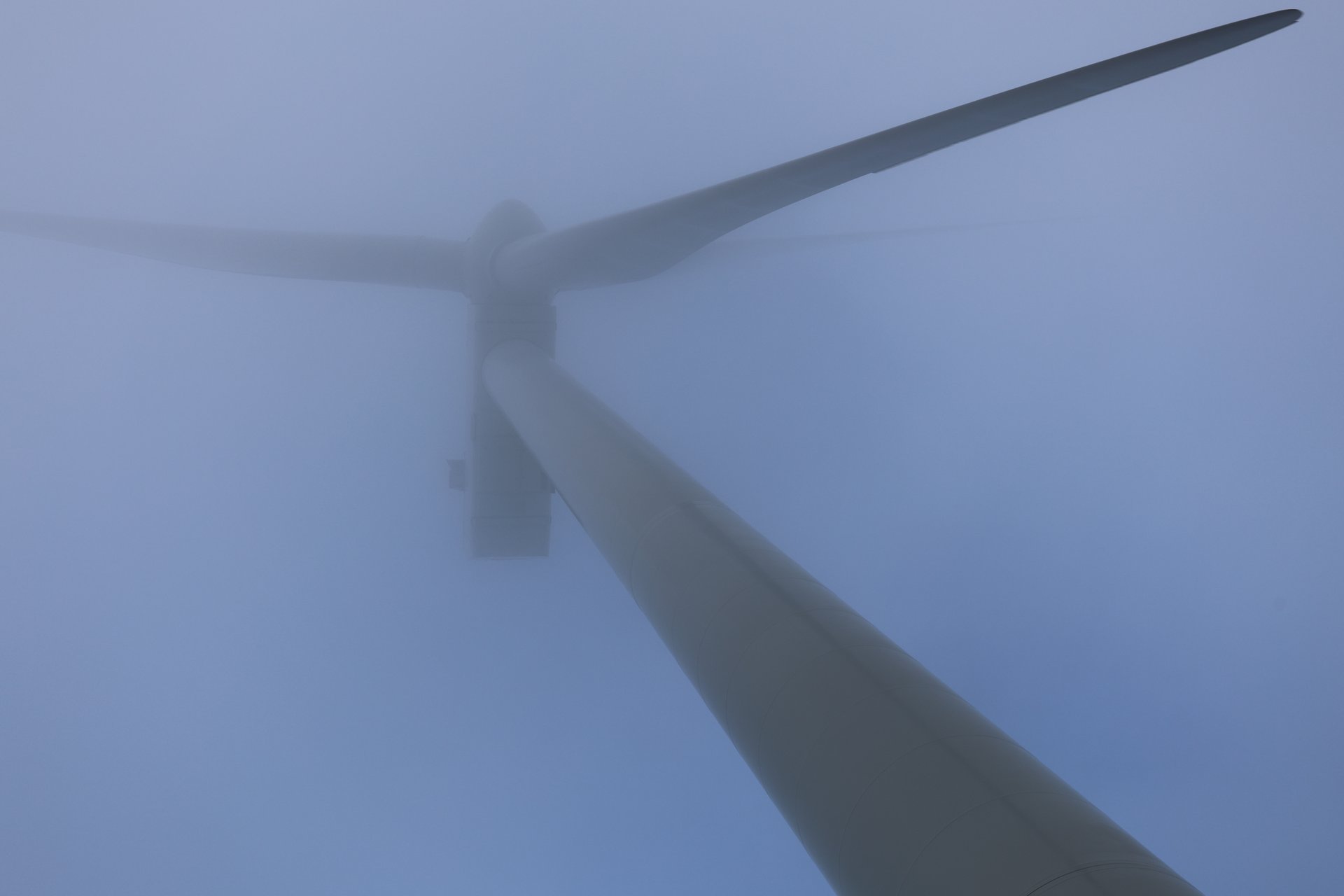
Modern wind turbines reach tower heights of over 130 m and rotor blades of over 100 m in length.
Despite increasing demands on ever-longer wind turbine rotor blades, inspection options remain limited to manual and visual checks to this day. In addition, internal inspection in particular is highly demanding and carries a non-negligible risk for personnel. This is where InInspekt comes in, automating the internal inspection of components up to 115 m long.
Objective

By the end of the two-year project period, a robot equipped with sensor technology is intended to carry out automated measurements inside the rotor blade. In addition to visual cameras, thermographic cameras are also used for this purpose — these have the advantage that damage beneath the surface can also be located and classified. This allows internal inspections of rotor blades to be carried out without personnel having to climb inside, and improves the quality of documentation for these large components.
Methods

By the end of the two-year project period, a robot equipped with sensor technology is intended to carry out automated measurements inside the rotor blade. In addition to visual cameras, thermographic cameras are also used for this purpose — these have the advantage that damage beneath the surface can also be located and classified. This allows internal inspections of rotor blades to be carried out without personnel having to climb inside, and improves the quality of documentation for these large components.

Motivation
The wind energy industry faces massive challenges in the maintenance of wind turbines, as current inspection processes are often associated with extremely high costs, long downtimes, and non-negligible safety risks. The internal inspection of rotor blades poses a particular problem, as these areas are difficult to access, narrow, and hazardous for inspectors. The InInspekt project was initiated to replace manual inspection with an automated process that increases efficiency and raises the reliability of damage detection to a new level. Digital capture and objective assessment of blade structure not only increase the safety of maintenance personnel but also secures the long-term economic viability and sustainability of renewable energy through optimized asset lifecycles. Complete documentation is also essential to ensure insurance claims and the long-term operating licenses of the installations.
Solution Approach
The technological core of the project is the development of a fully autonomous, robot-assisted system specifically designed for the complex requirements inside rotor blades. This robot features a combination of multimodal sensor technology that goes beyond the current state of the art: it integrates high-resolution RGB color cameras for visual assessment, passive and active thermography for the detection and classification of subsurface damage, and a precise 3D scanner for geometric capture. The fusion and geometric overlay of the different data types make it possible to assess both surface properties and structural characteristics and incorporate them into damage classification.
To efficiently process the resulting data volumes, the system uses a purpose-built AI-driven real-time analysis. While the robot autonomously traverses the blade, the AI immediately evaluates the measurement data for its informational value and potential damage. As soon as the primary inspection identifies an anomaly — such as delamination, a lightning-strike crack, or a bonding defect — the system automatically triggers a detailed inspection in the so-called "High-Precision Mode." In this mode, targeted visual, thermographic, and highly detailed 3D reconstructions of the damaged area are captured. This two-stage process ensures that the entire blade, with blade lengths of up to 115 m, is traversed quickly, while critical areas are documented with a level of detail that enables a well-founded engineering assessment from a remote location, even while the system is still deployed. Autonomous navigation also ensures that hard-to-reach areas at the blade tip are systematically captured.
Benefits for Industry
For wind farm operators and maintenance companies, the system developed within InInspekt offers significant economic and technical advantages, as automated inspection reduces dependence on subjective human assessments and creates a standardized, objective basis for evaluation. By accelerating inspection procedures and reducing the personnel deployments required in hazardous environments, operating costs and system downtimes are drastically reduced. In addition, the detection of deeper material defects via thermography — which would not be visually detectable from outside or inside — enables a proactive maintenance strategy. This prevents costly consequential damage or even blade failures, extends the overall service life of rotor blades, and provides greater planning certainty across the entire asset management of wind turbines. The digital archiving of data also allows for precise comparison over several years to closely monitor damage progression.
Roles of the Partners
The project is carried out by a consortium of specialists whose expertise interlocks seamlessly:
EduArt Robotik GmbH: Acts as consortium lead and technical pioneer. The company is responsible for overall project coordination as well as the development and manufacturing of the autonomous mobile robot platform, which must withstand the extreme conditions inside the rotor blade.
Bundesanstalt für Materialforschung und -prüfung (BAM): Contributes its scientific excellence in the field of non-destructive testing. BAM focuses on thermographic analysis and the validation of detection accuracy.
LATODA / Adoxin UG: Is the specialist for the system's digital intelligence. The company is responsible for implementing the AI models for automated damage detection as well as the efficient processing and fusion of complex sensor data in real time to enable live evaluation.
Julius-Maximilians-Universität Würzburg (JMU): Supports the project with in-depth research expertise in the fields of autonomous robotics and computational sensor data processing. The university ensures that the localization and mapping algorithms (SLAM) function reliably even under the challenging geometries of a rotor blade.