

Radioactive Materials Module of the Dangerous Goods Database
Picture gallery
Radioactive Materials Module of the Dangerous Goods Database
-
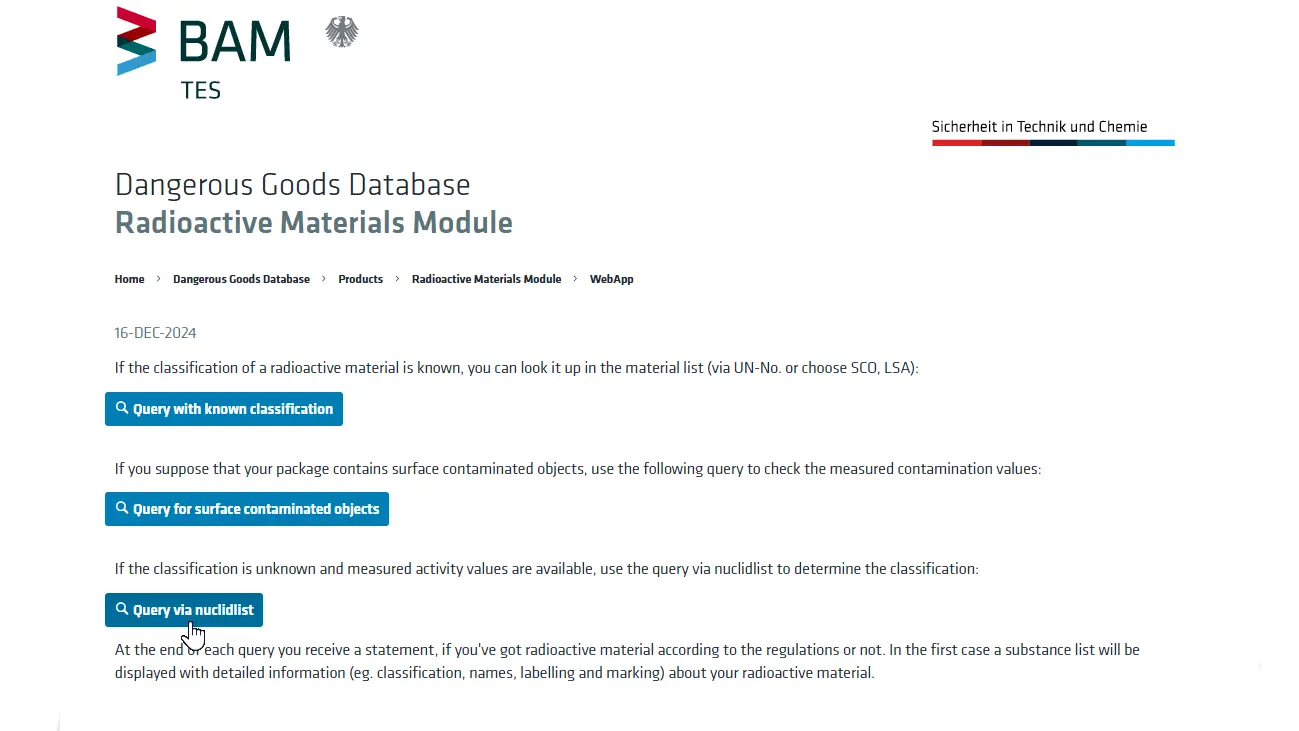
Radioactive Materials Module start
-
© BAM Division 3.1
1 of 7
-
-
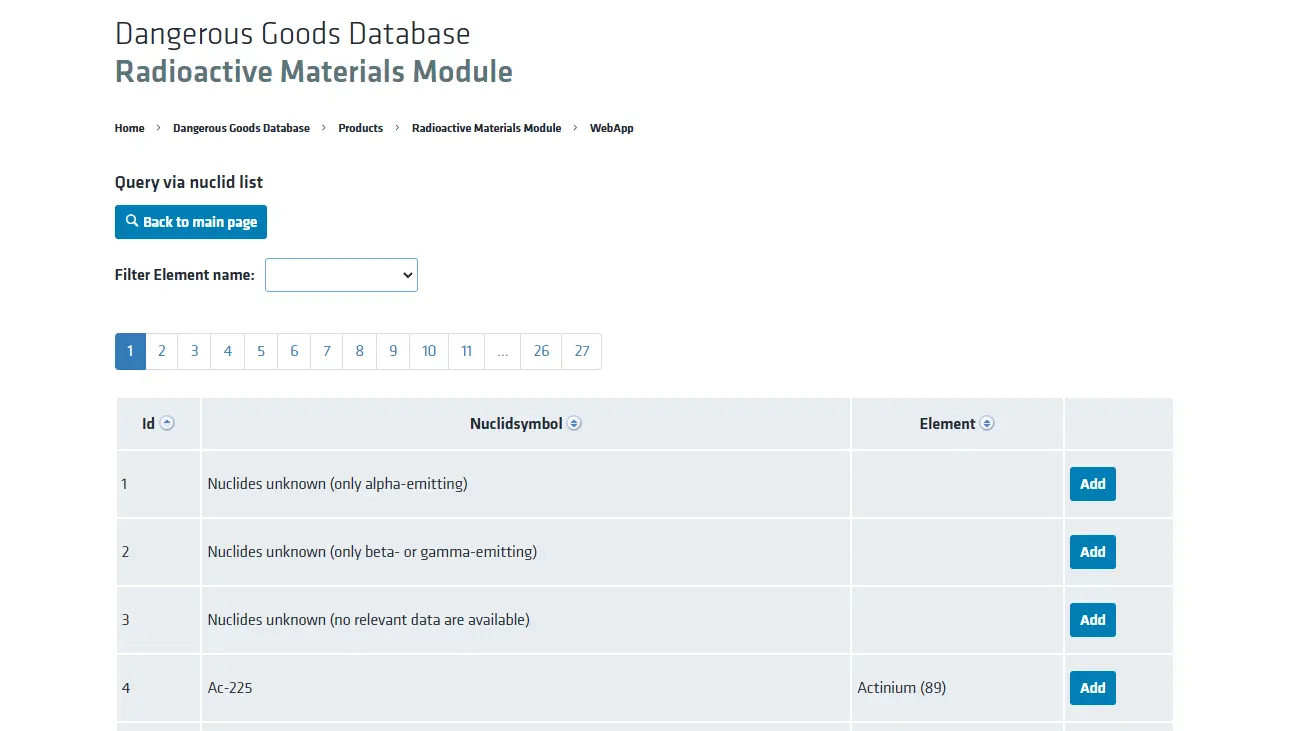
Radioactive Materials Module choose of nuclides
-
© BAM Division 3.1
2 of 7
-
-
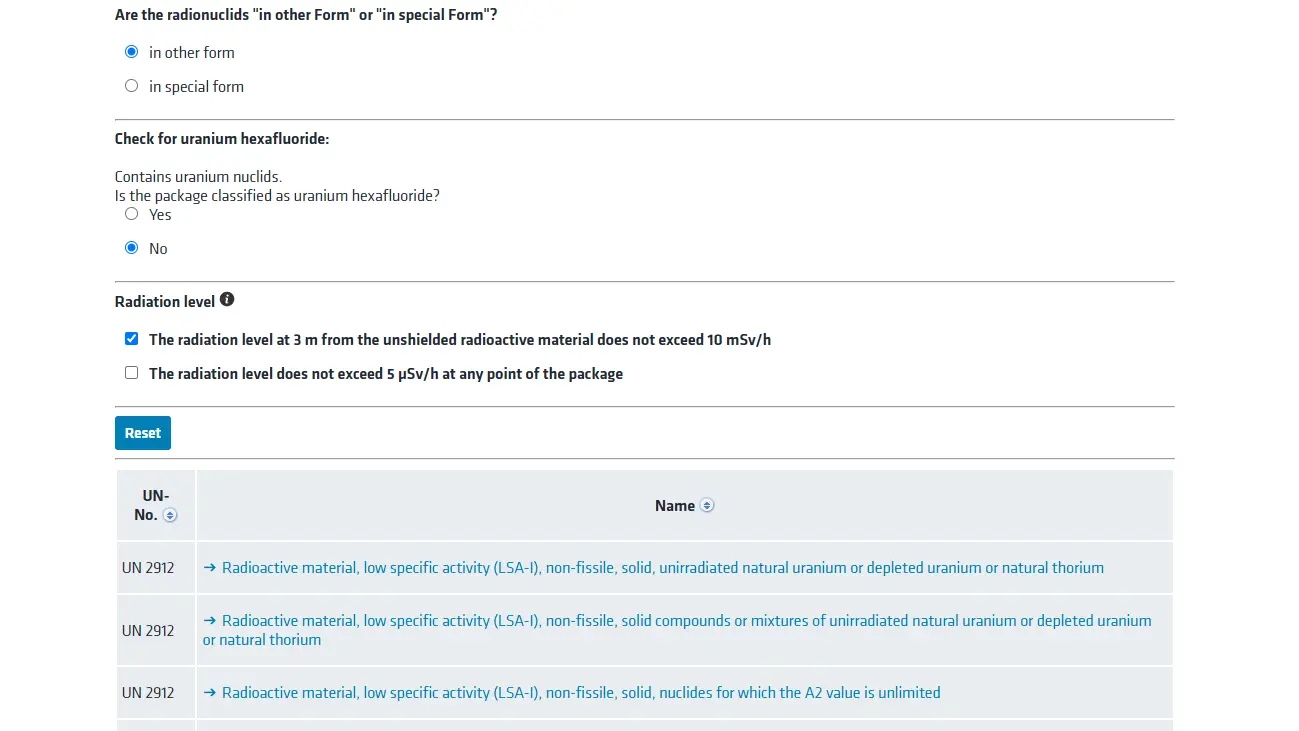
Radioactive Materials Module result list
-
© BAM Division 3.1
3 of 7
-
-
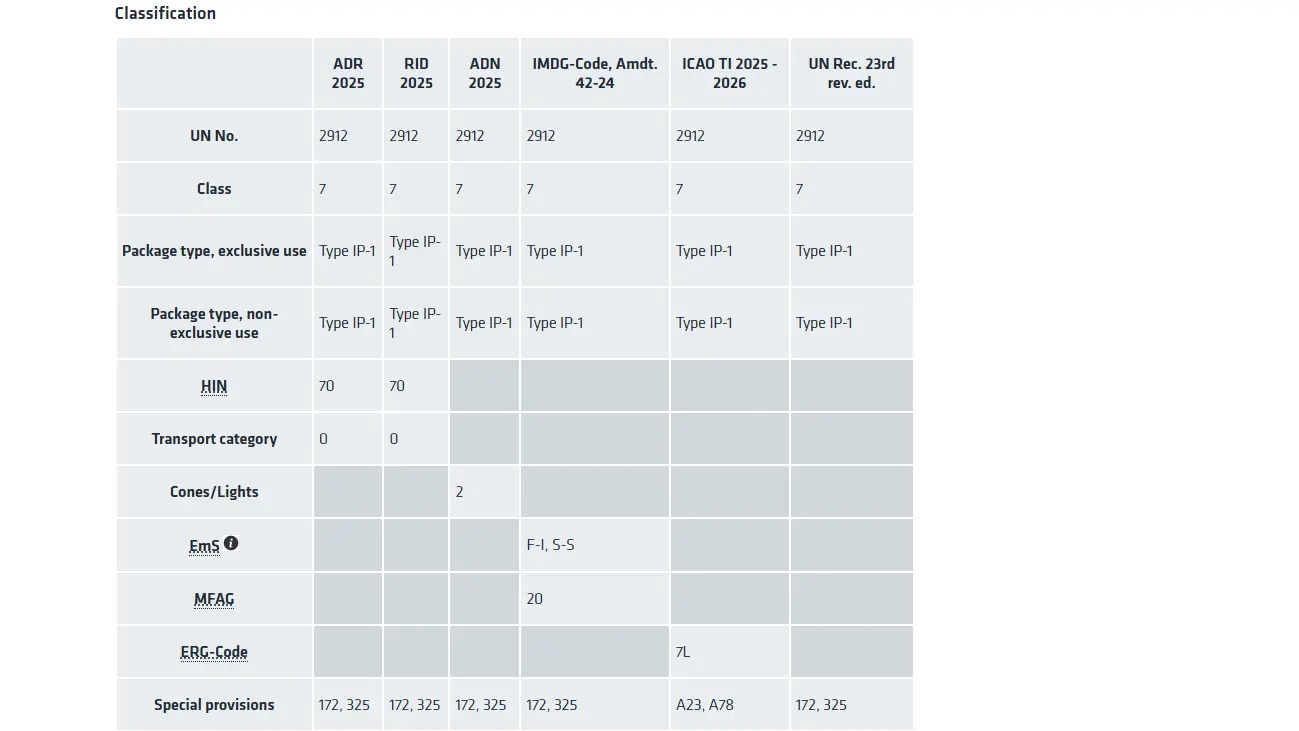
Radioactive Materials Module classification
-
© BAM Division 3.1
4 of 7
-
-
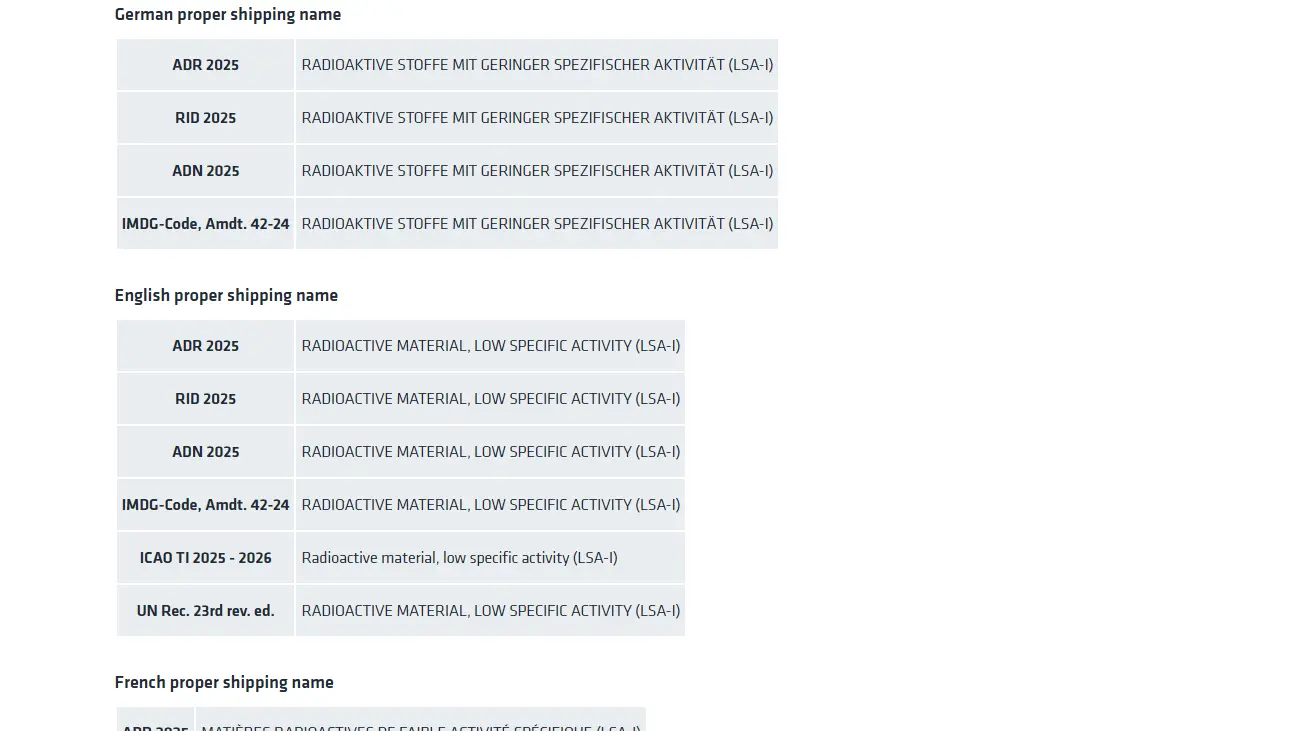
Radioactive Materials Module names
-
© BAM Division 3.1
5 of 7
-
-
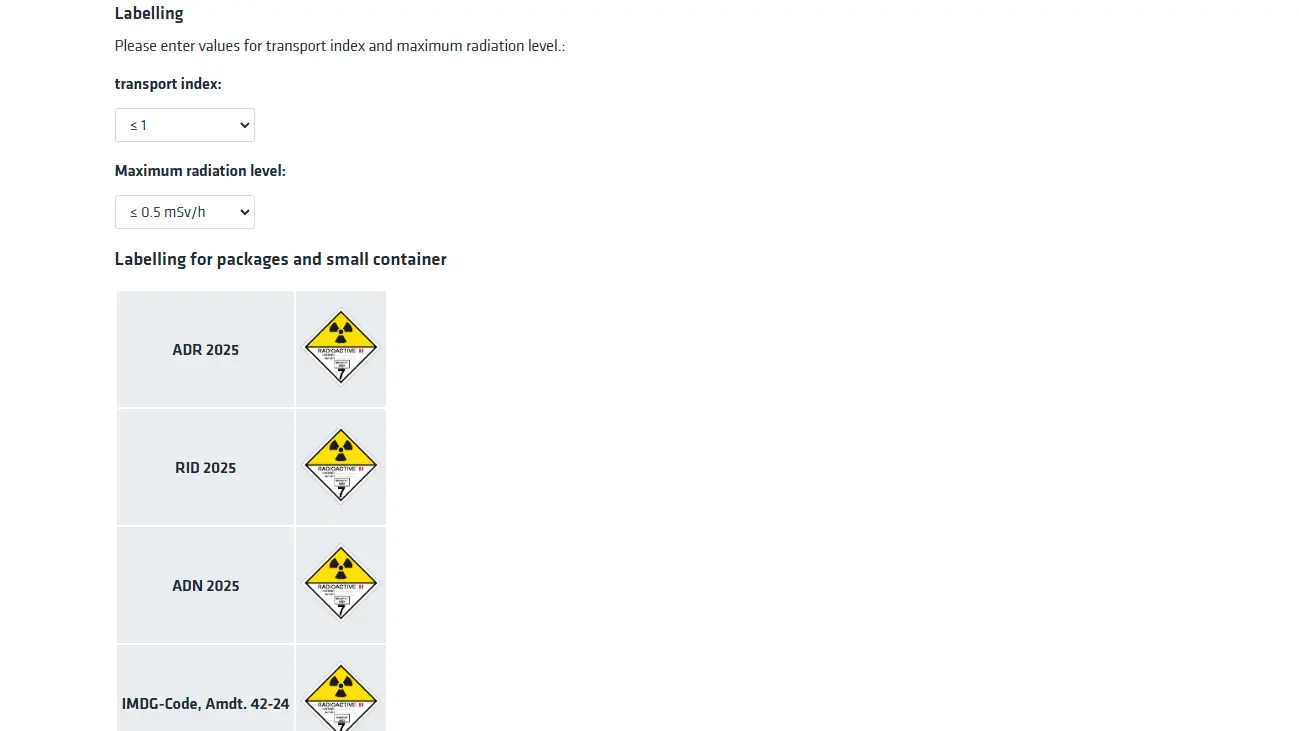
Radioactive Materials Module labelling
-
© BAM Division 3.1
6 of 7
-
-
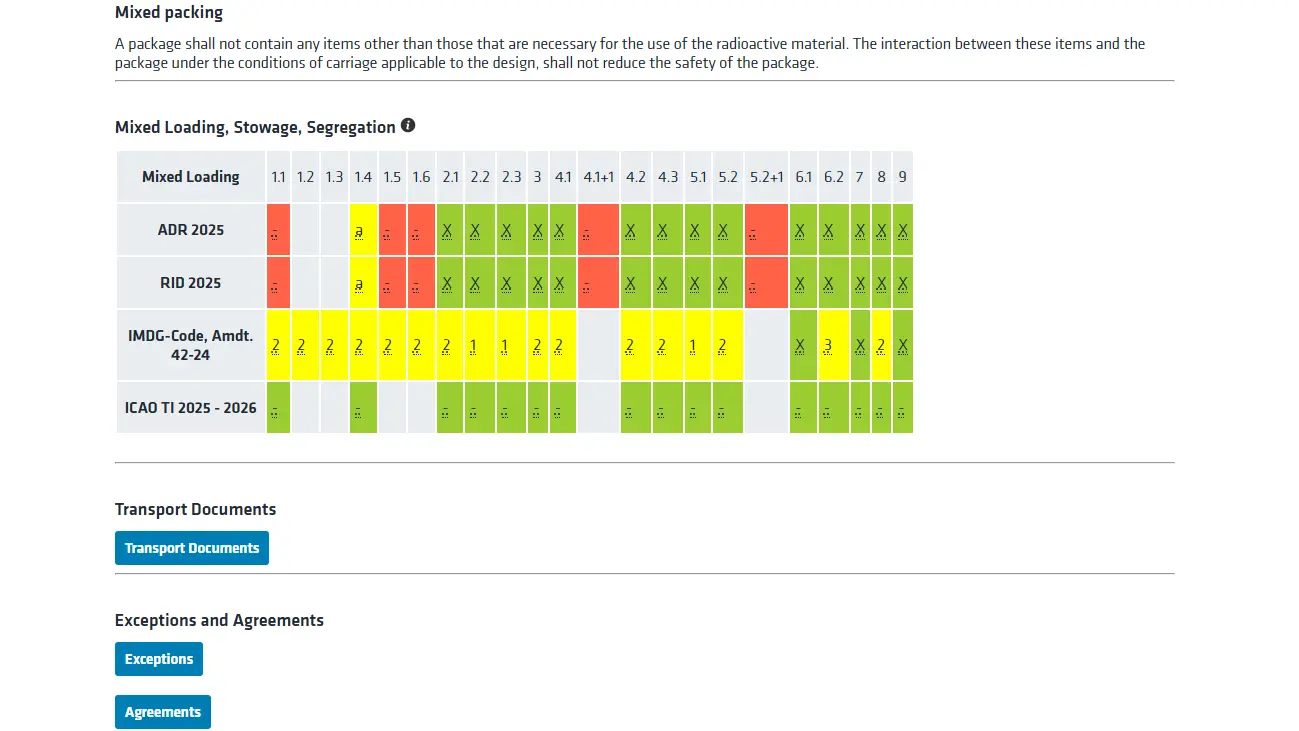
Radioactive Materials Module mixed loading
-
© BAM Division 3.1
7 of 7
-
BAM List
Picture gallery
BAM List
-
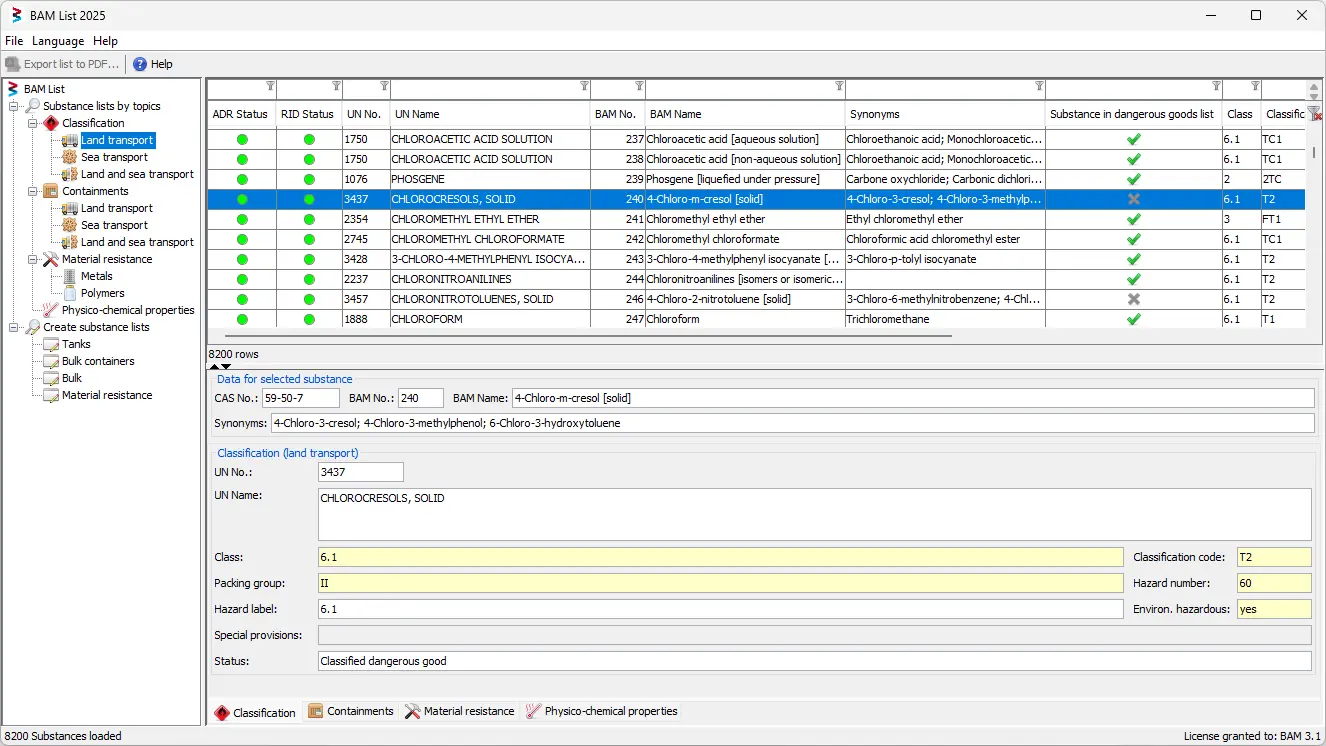
BAM List - Substance enquiry
-
© BAM Division 3.1
1 of 4
-
-
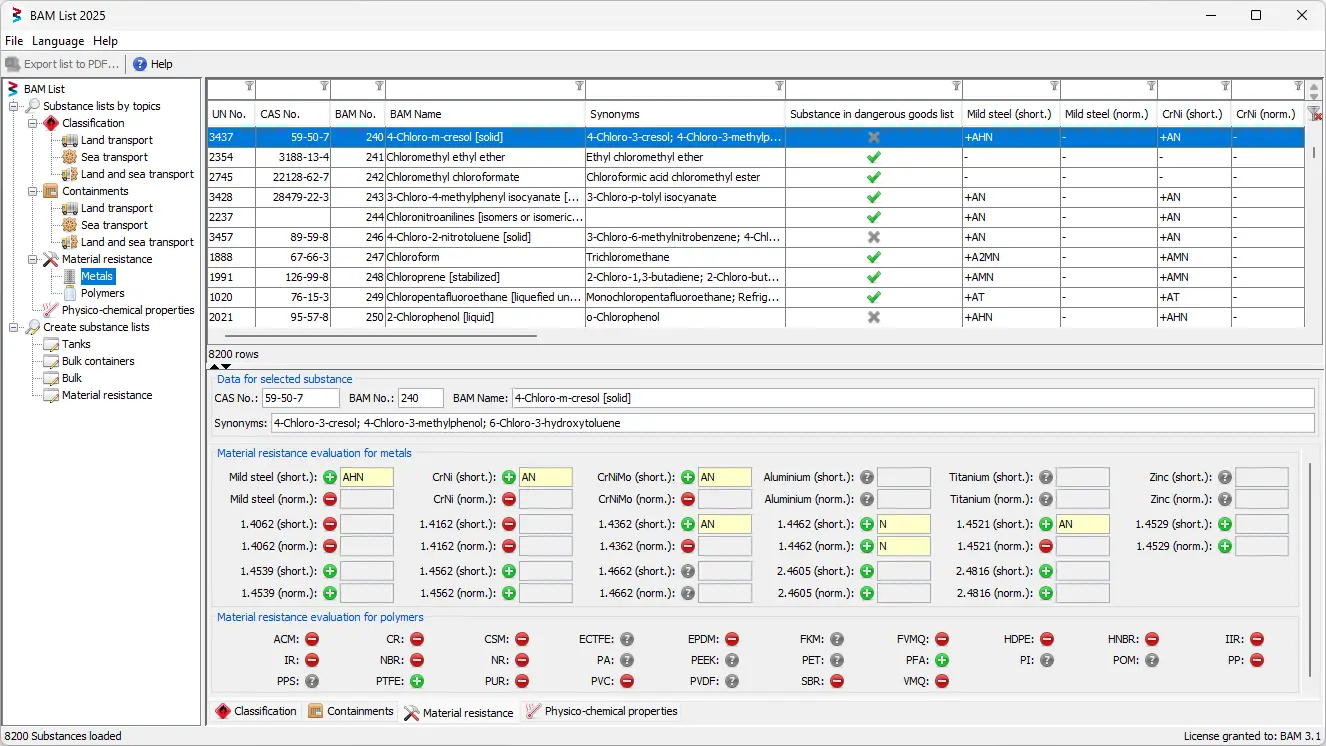
BAM List - Material resistance
-
© BAM Division 3.1
2 of 4
-
-
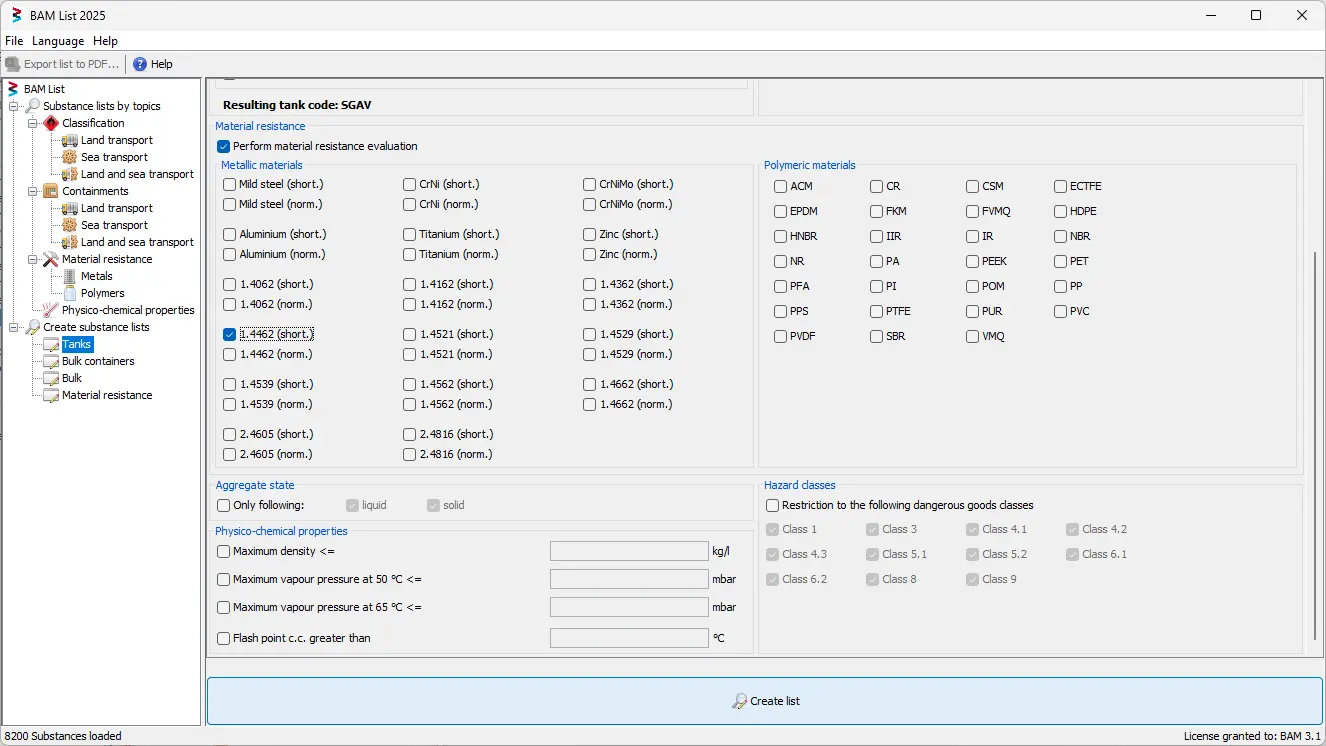
BAM List - Creation of a substance list
-
© BAM Division 3.1
3 of 4
-
-
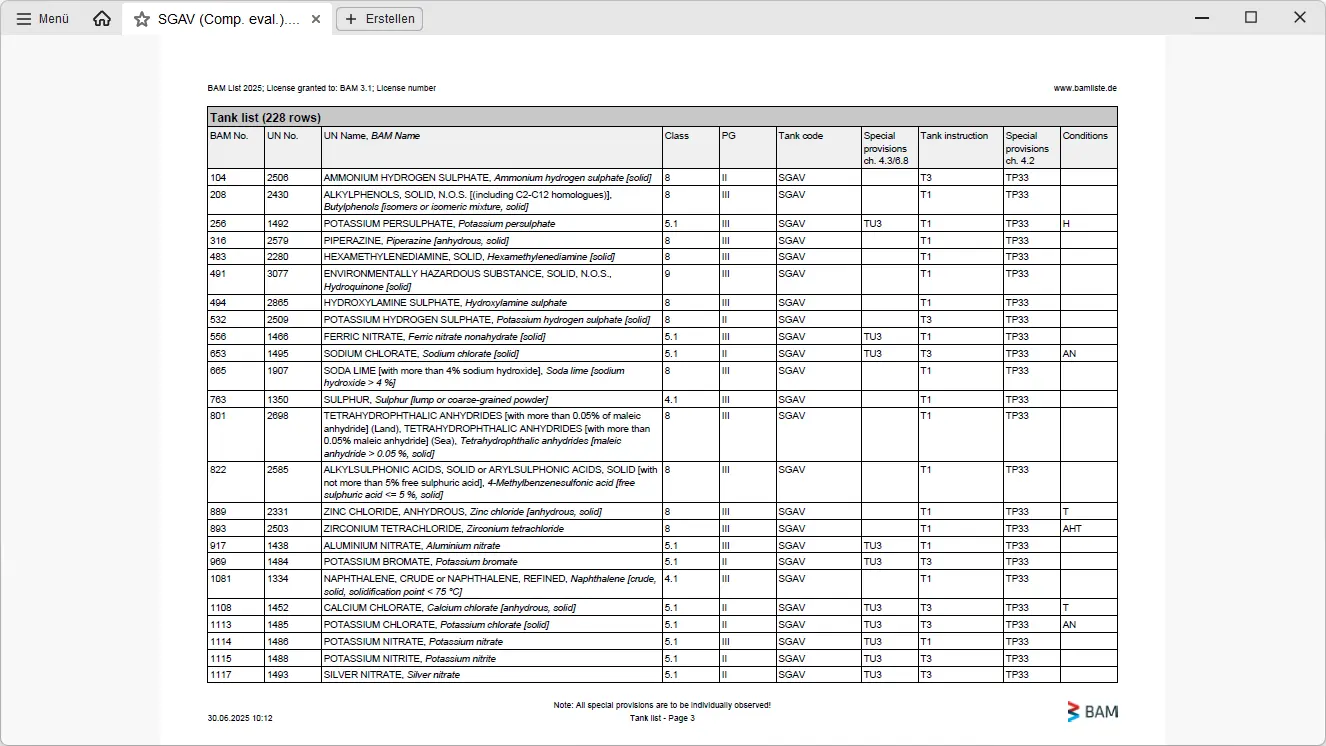
BAM List - Display of a substance list
-
© BAM Division 3.1
4 of 4
-
Dangerous Goods - Quick Info of the Dangerous Goods Database
Picture gallery
Dangerous Goods - Quick Info of the Dangerous Goods Database
-
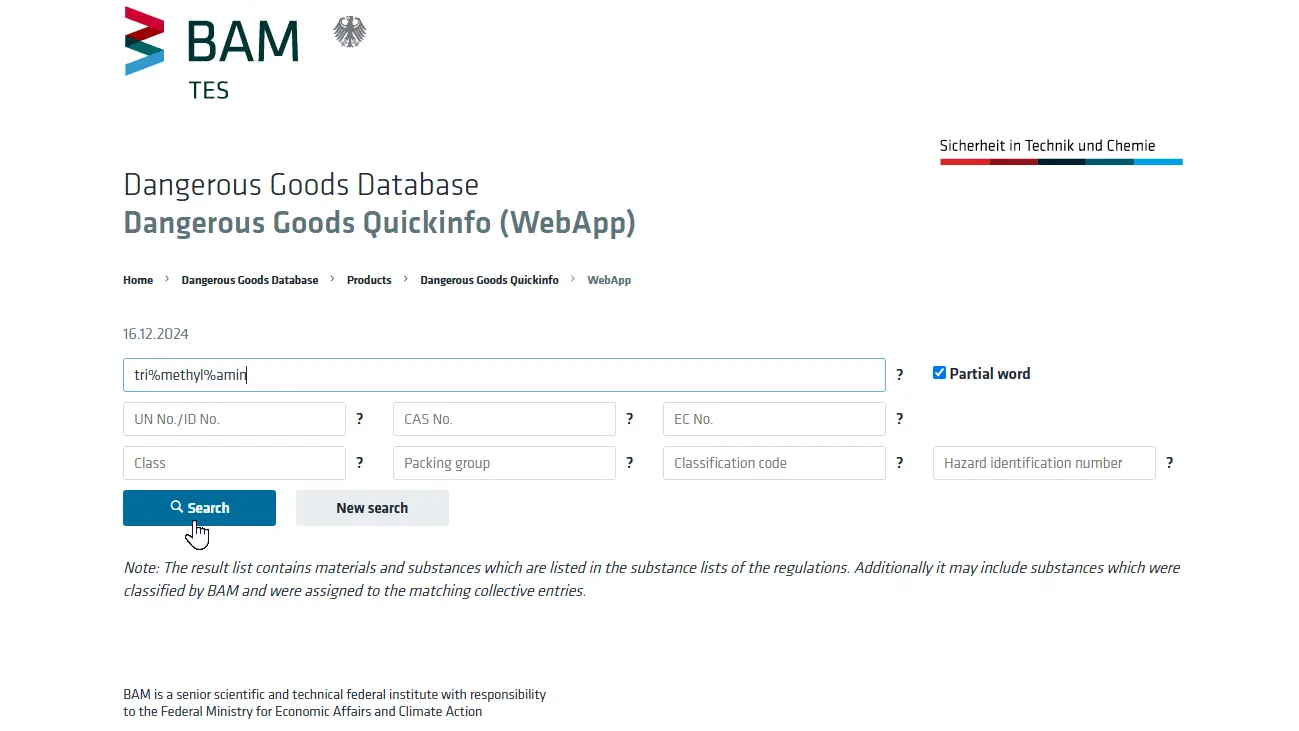
Dangerous Goods Quickinfo Search
-
© BAM Division 3.1
1 of 4
-
-
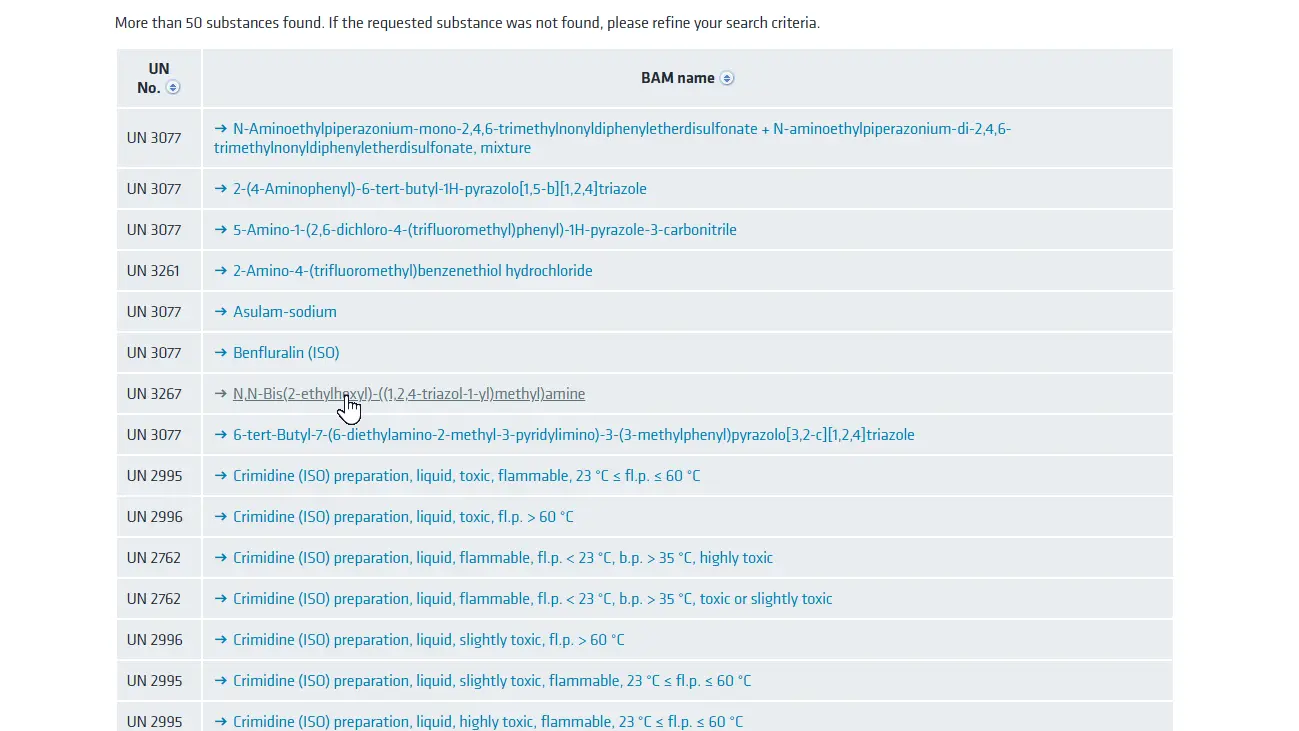
Dangerous Goods Quickinfo result list
-
© BAM Division 3.1
2 of 4
-
-
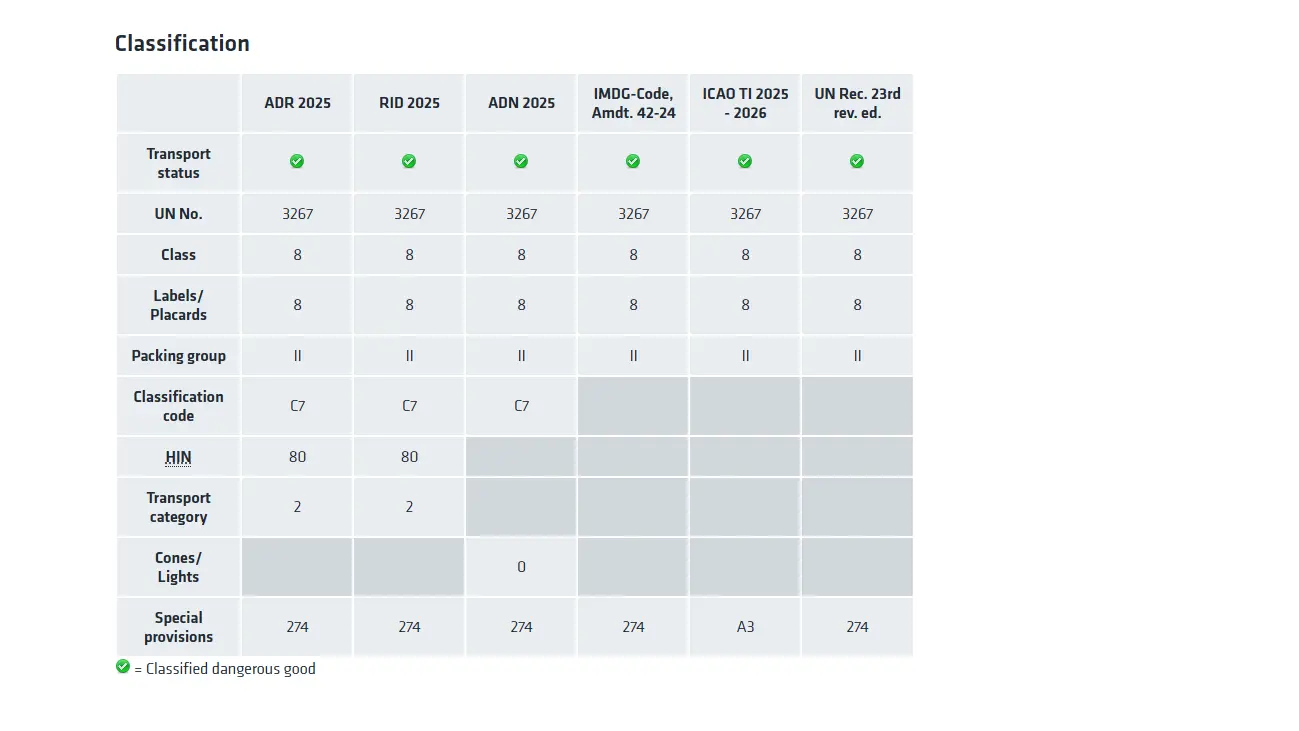
Dangerous Goods Quickinfo classification
-
© BAM Division 3.1
3 of 4
-
-
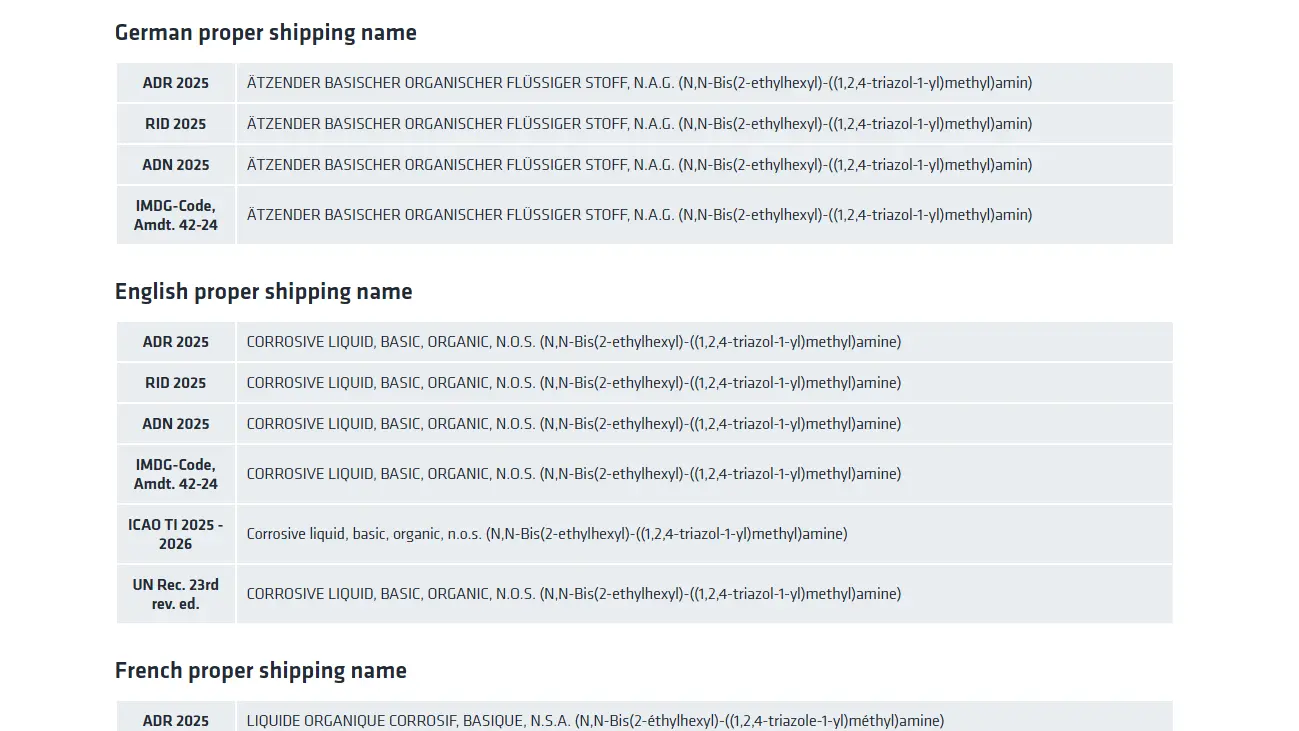
Dangerous Goods Quickinfo names
-
© BAM Division 3.1
4 of 4
-
Non-radioactive materials research of the Dangerous Goods Database
Picture gallery Dangerous Goods Database (non-radioactive materials research)
Non-radioactive materials research of the Dangerous Goods Database
-
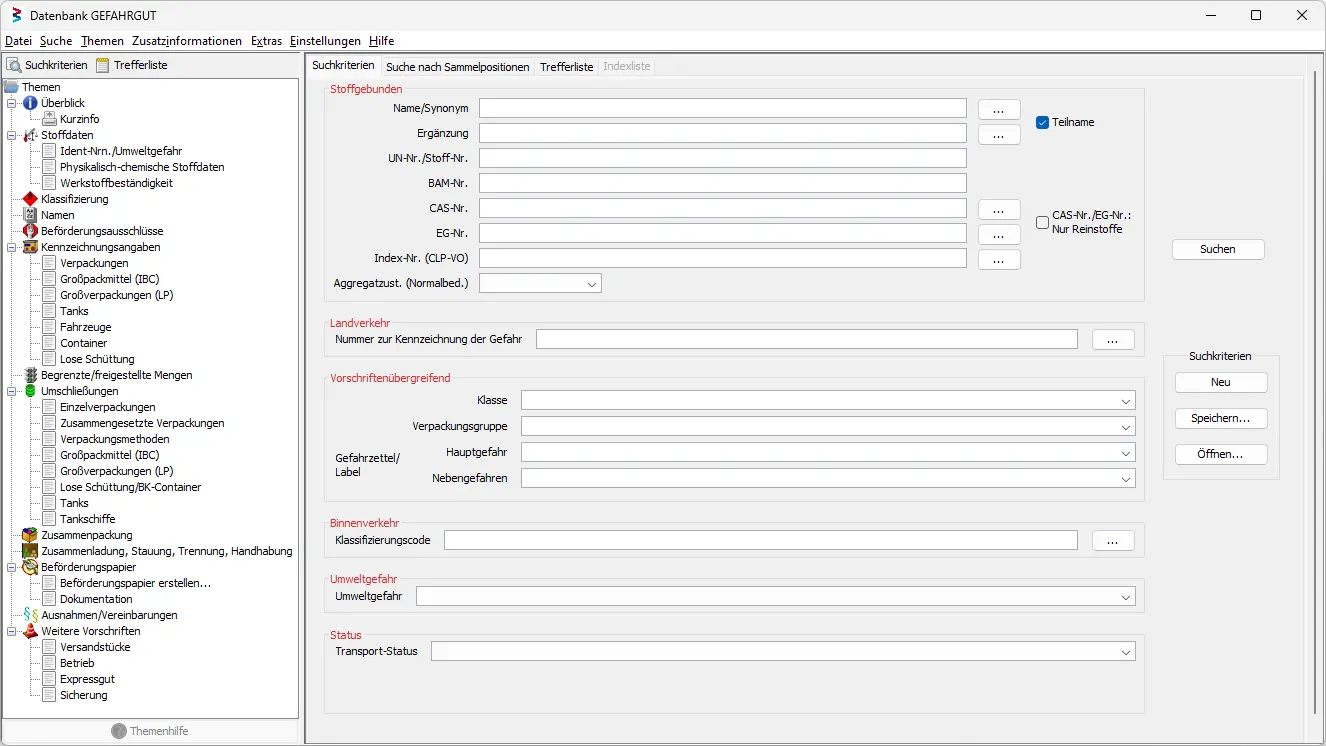
Non-radioactive materials research theme searching
-
© BAM Division 3.1
1 of 6
-
-
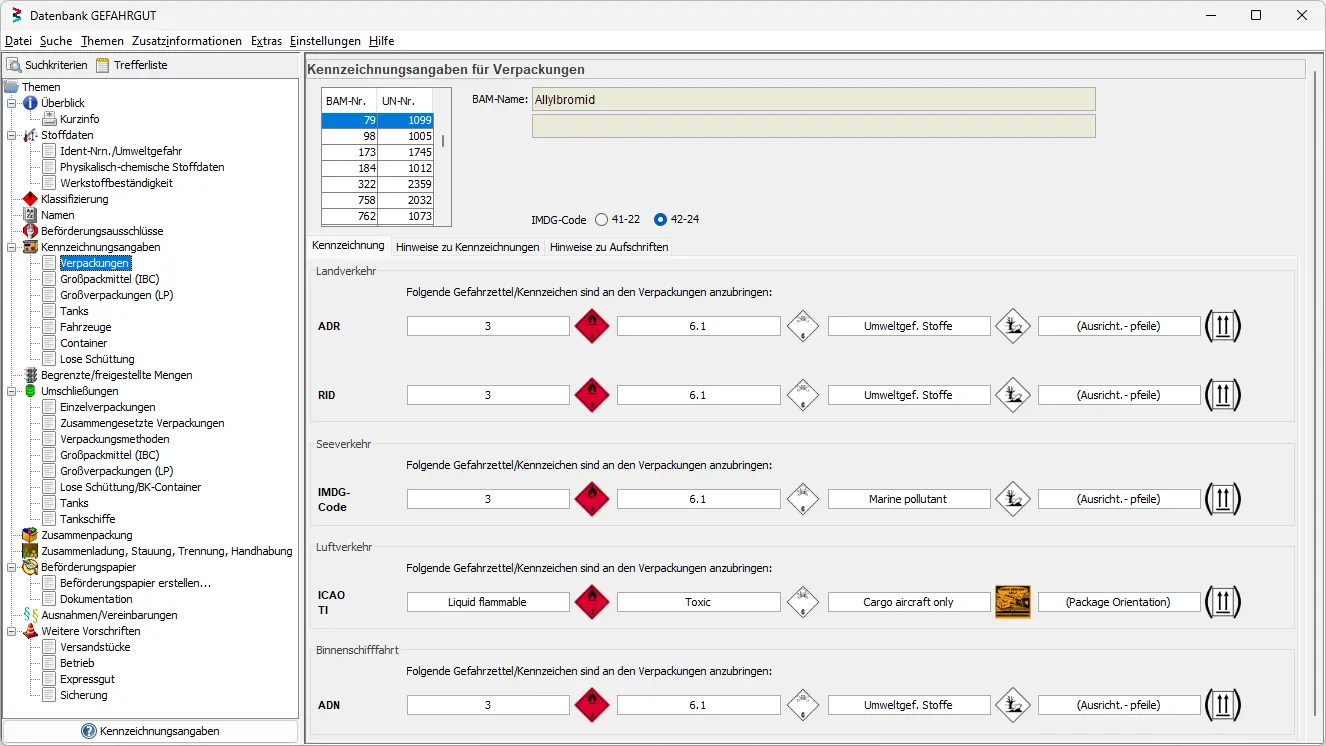
Non-radioactive materials research theme labelling for packagings
-
© BAM Division 3.1
2 of 6
-
-
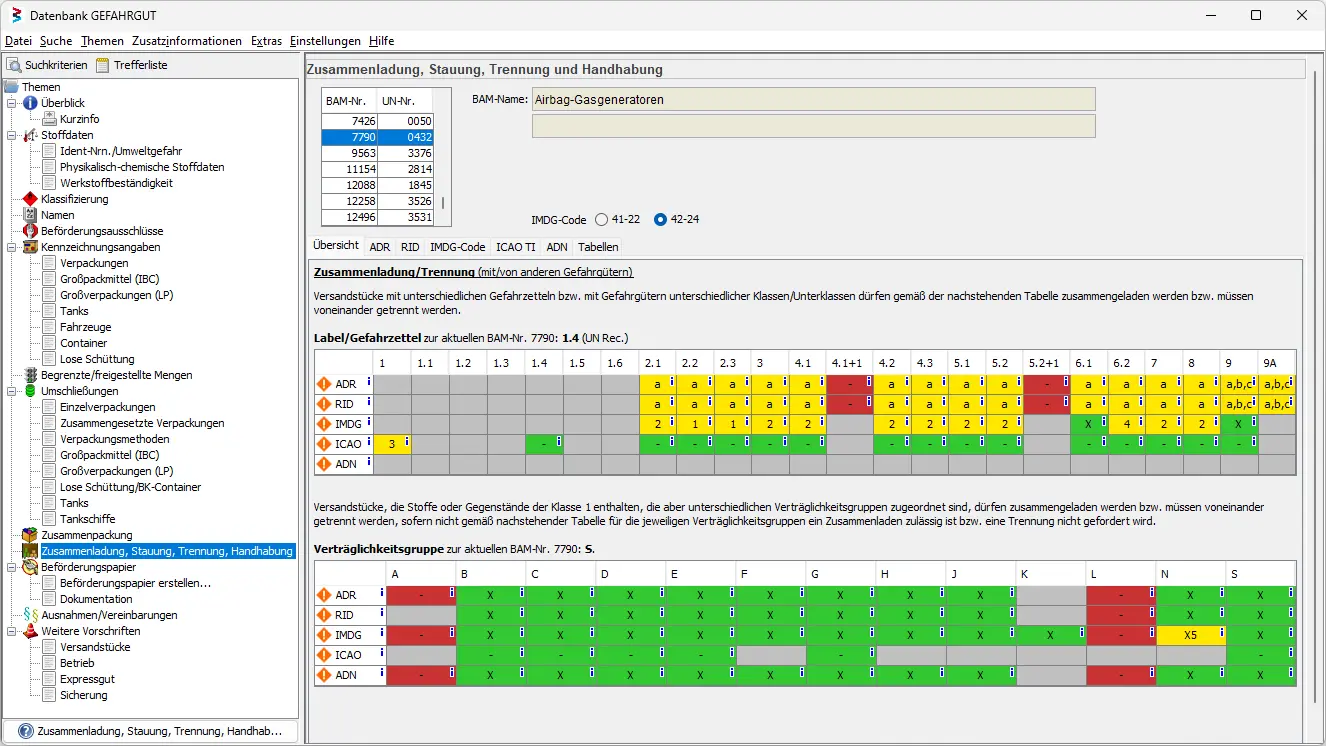
Non-radioactive materials research theme separation
-
© BAM Division 3.1
3 of 6
-
-
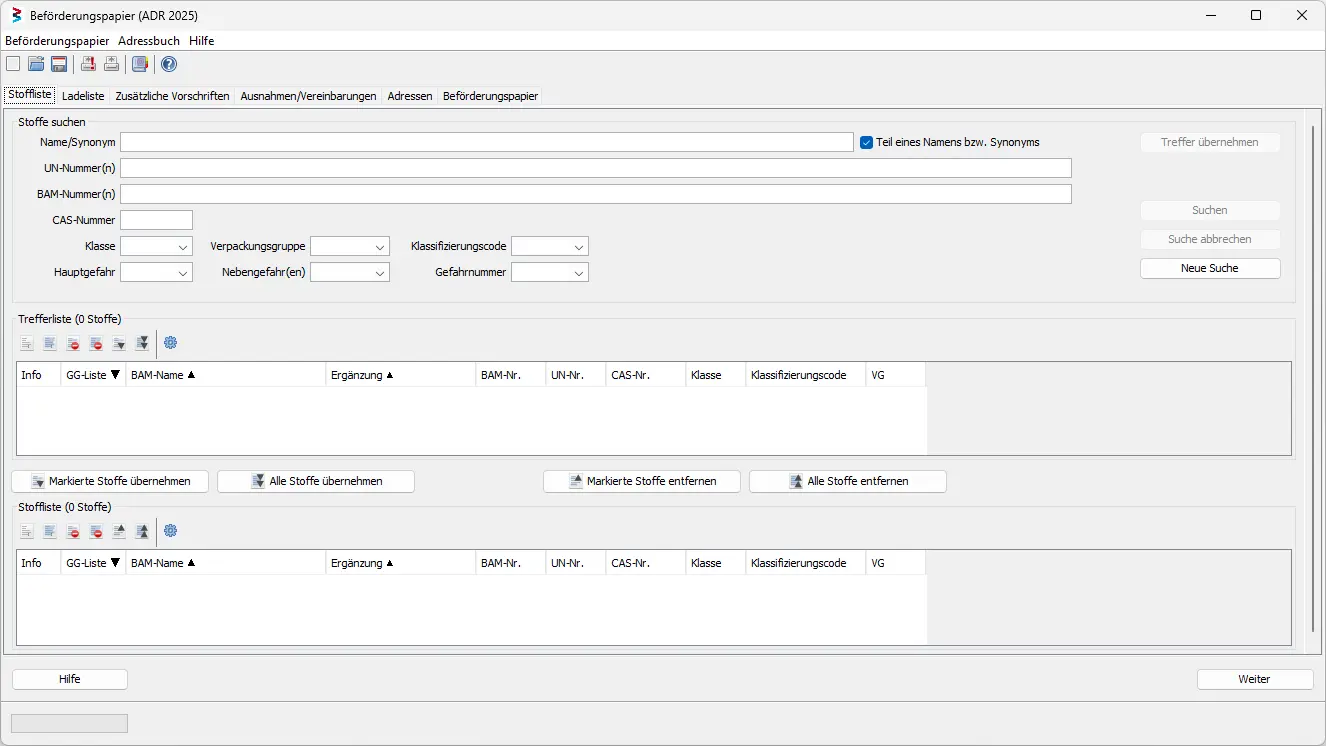
Search form of the in the Dangerous Goods Database integrated Transport Documents Modul
-
© BAM Division 3.1
4 of 6
-
-
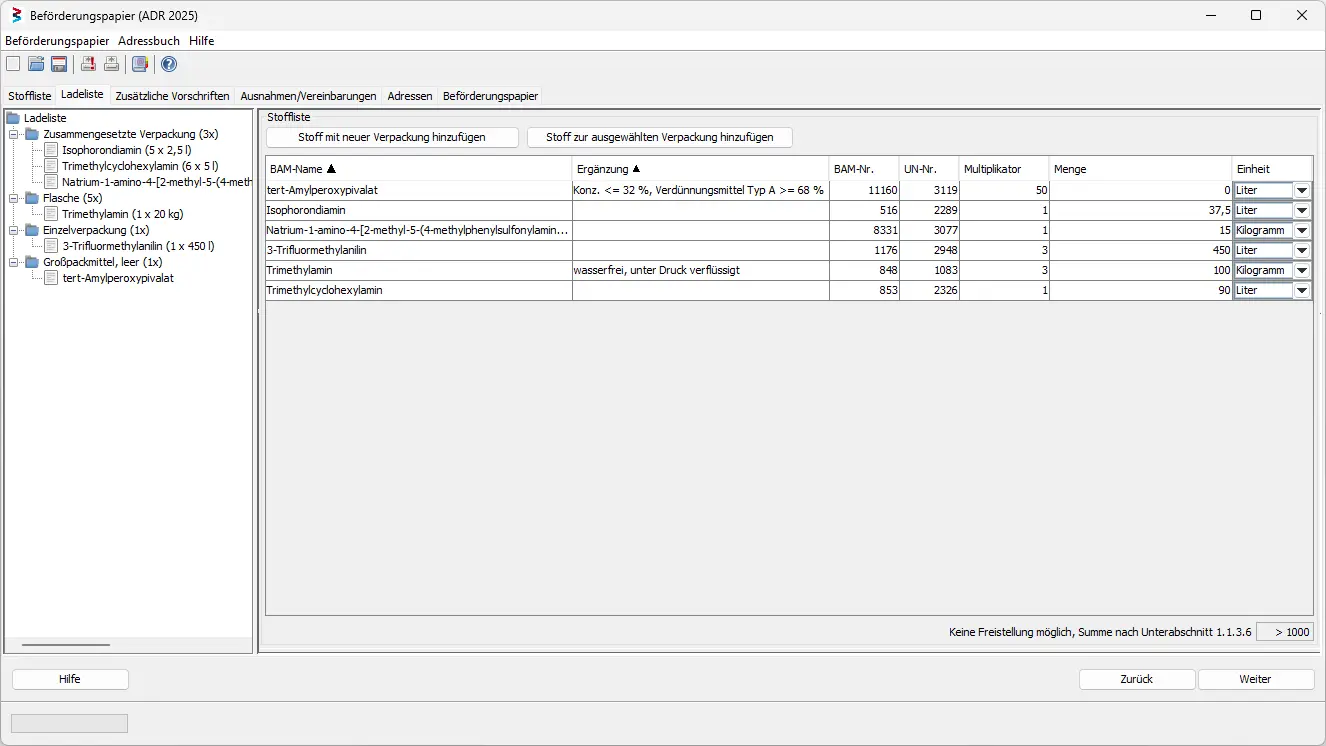
Contentlist of the integrated Transport Documents Module of the Dangerouus Goods Database
-
© BAM Division 3.1
5 of 6
-
-
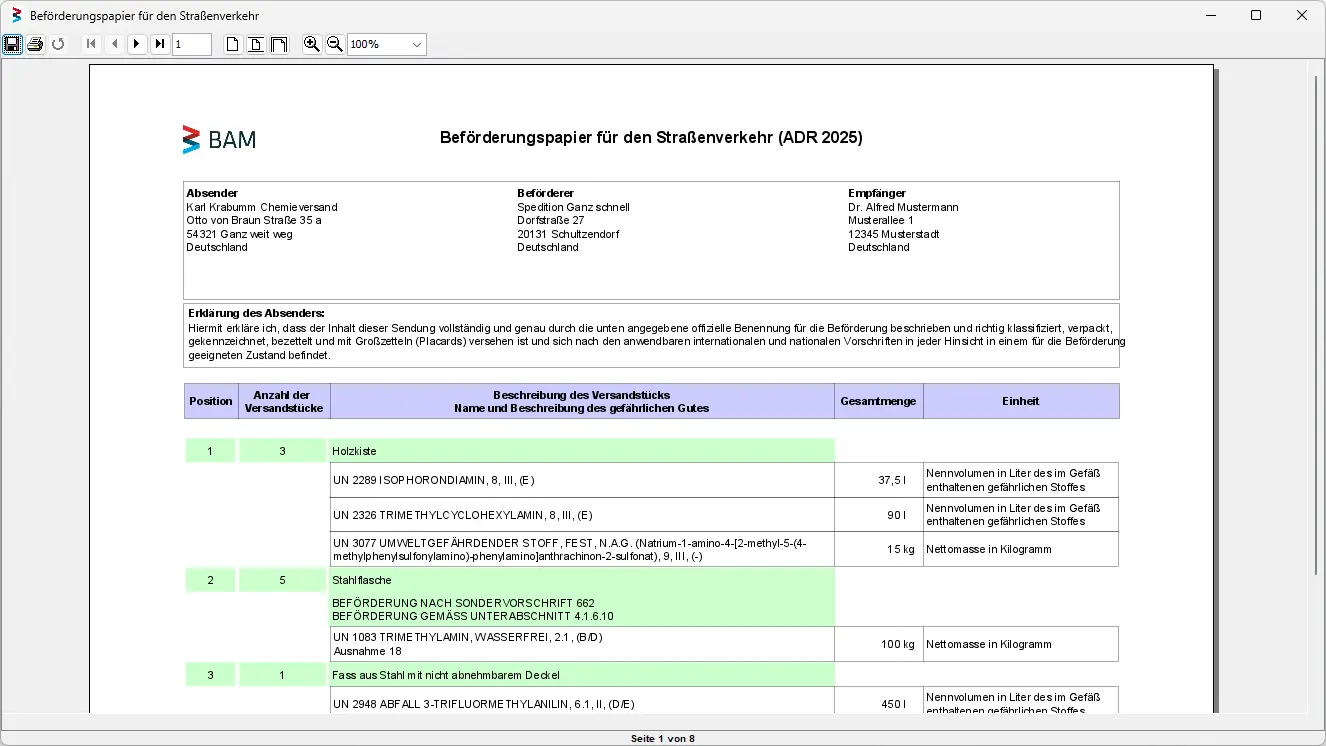
Transport Document of the in the Dangerous Goods Database integrated Transport Documents Module
-
© BAM Division 3.1
6 of 6
-
DGG-Info of the Dangerous Goods Database
Picture gallery
DGG-Info of the Dangerous Goods Database
-
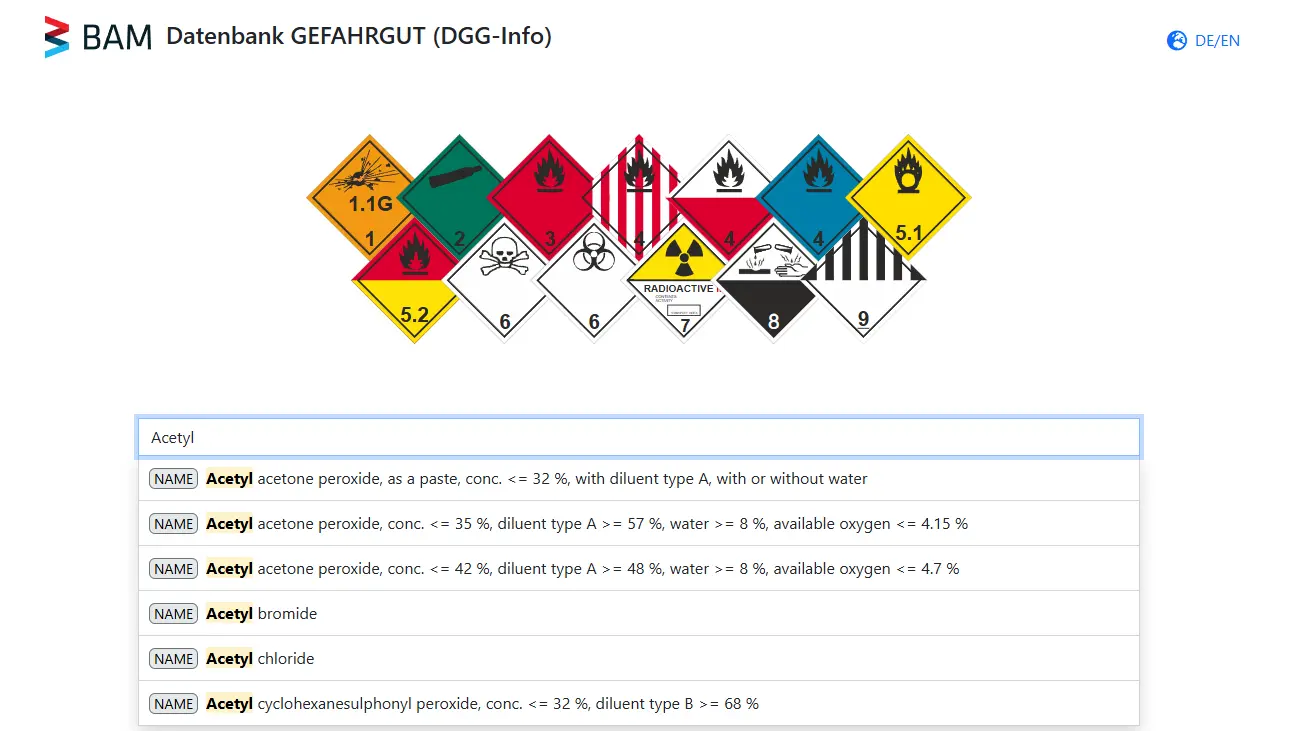
Simple search in DGG-Info
-
© BAM Division 3.1
1 of 9
-
-
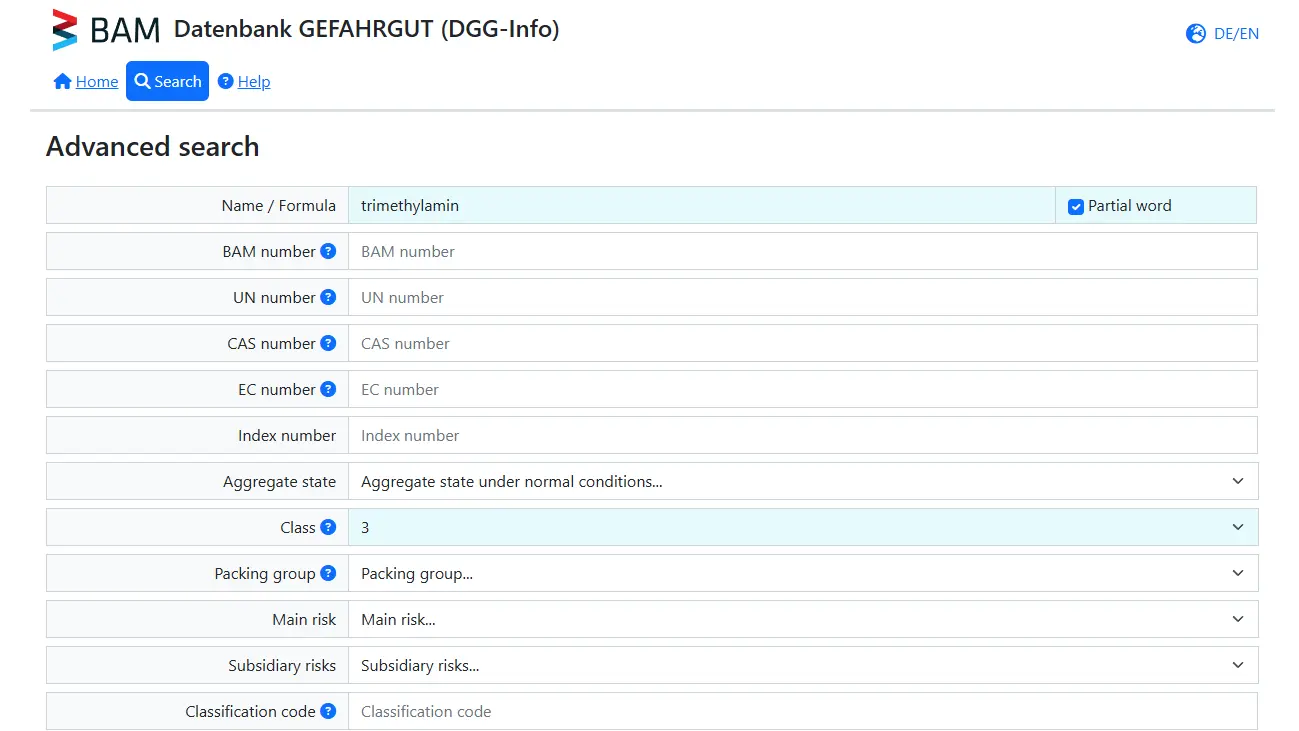
Advanced search in DGG-Info
-
© BAM Division 3.1
2 of 9
-
-
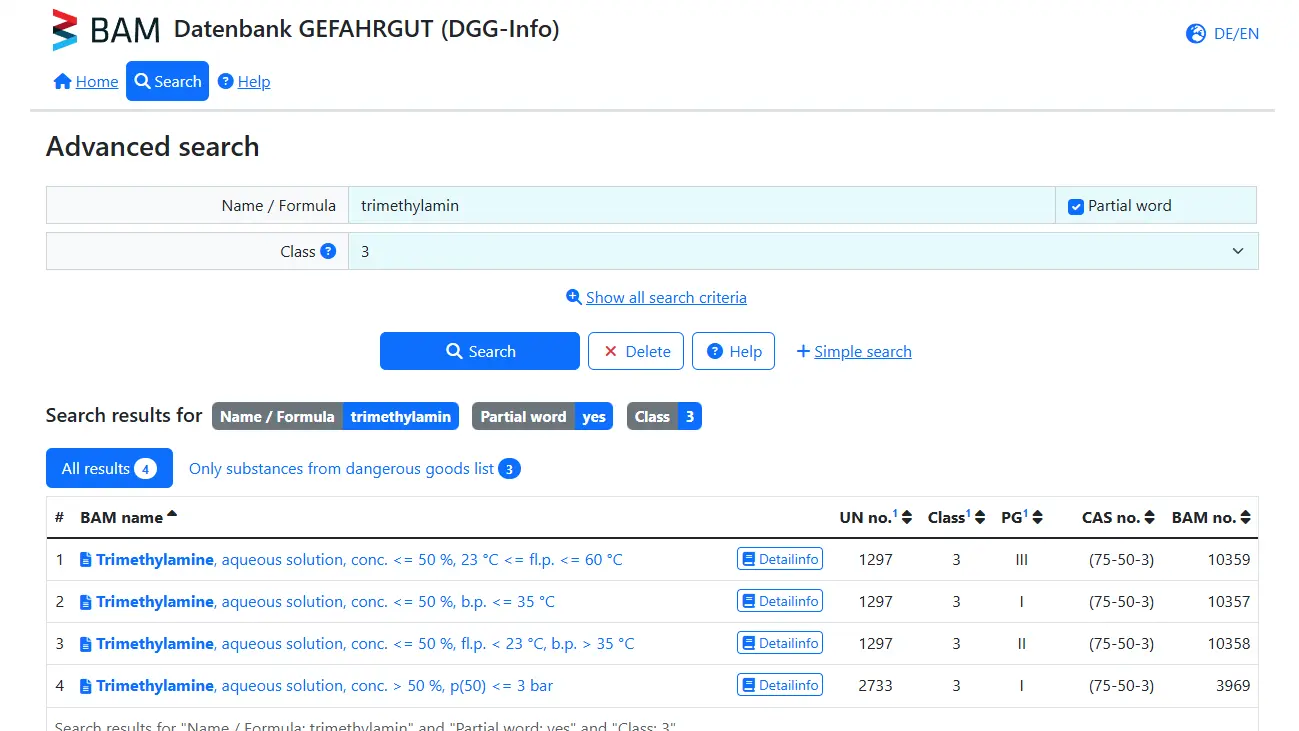
Advanced search with search results in DGG-Info
-
© BAM Division 3.1
3 of 9
-
-
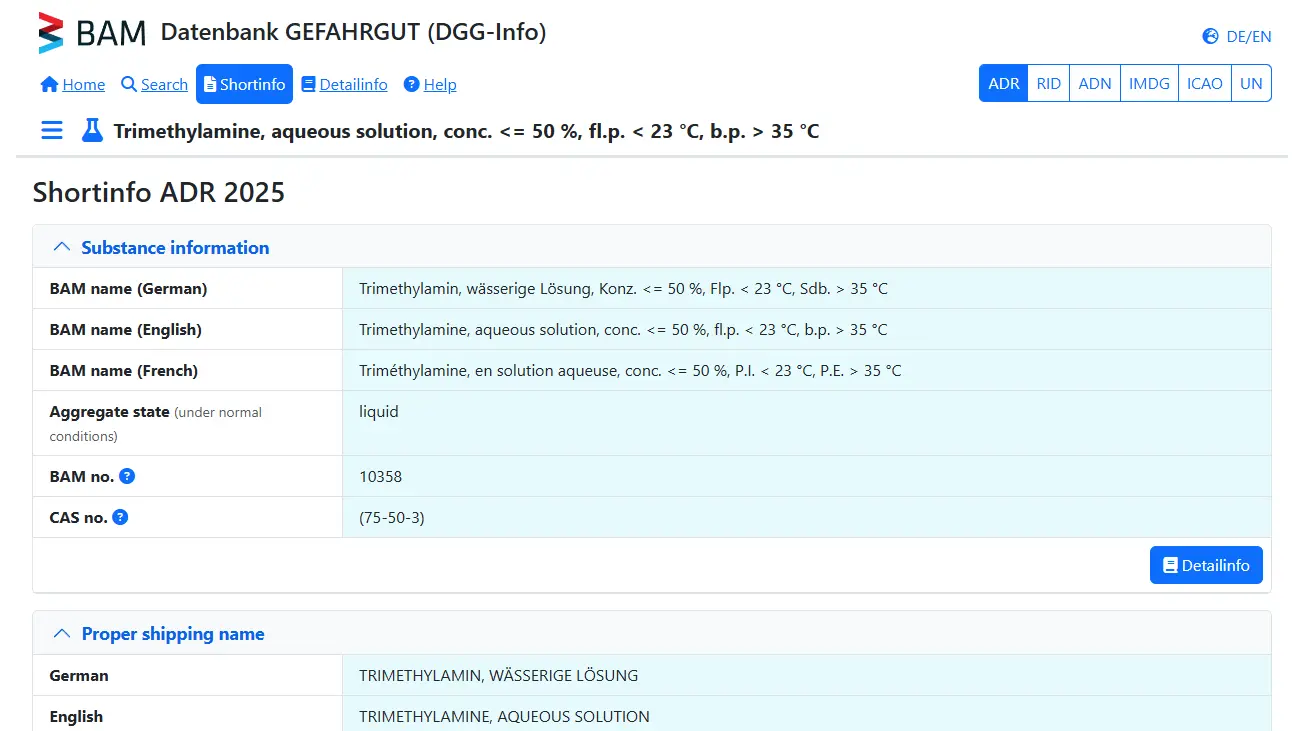
PShortinfo in DGG-Info Part 1
-
© BAM Division 3.1
4 of 9
-
-
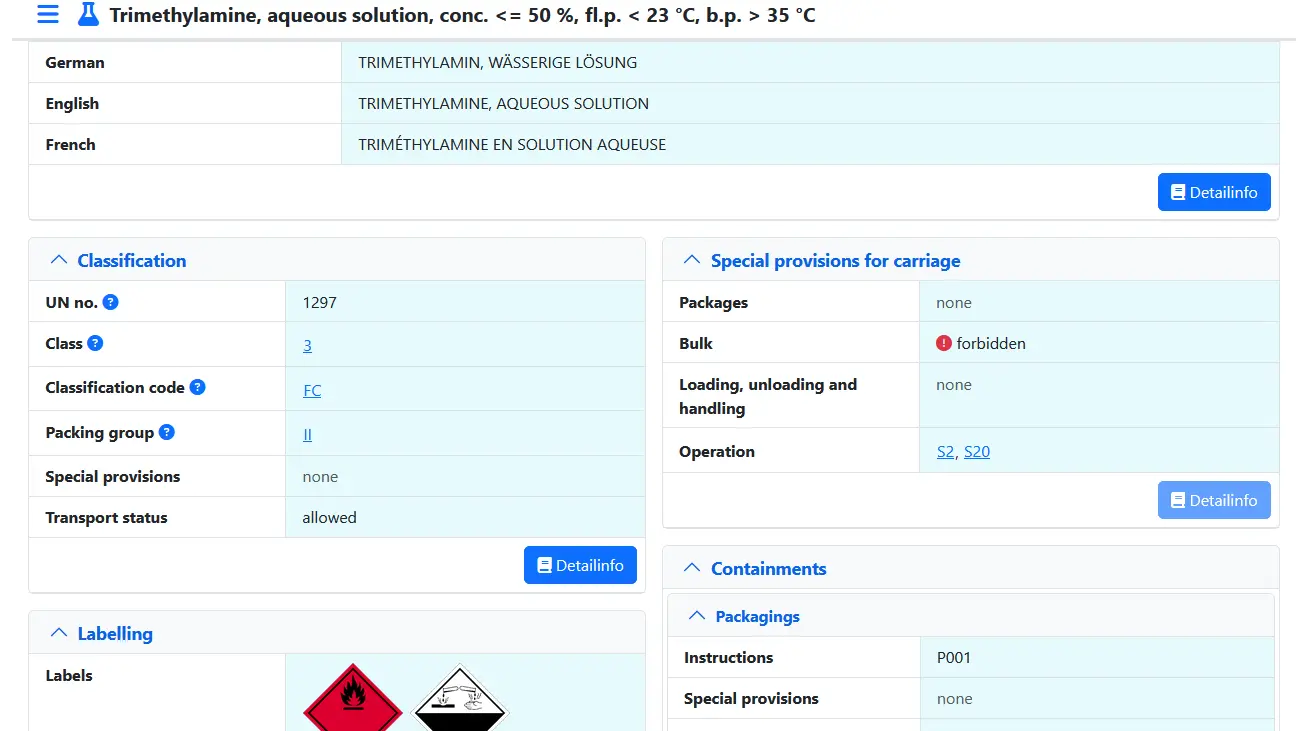
Shortinfo in DGG-Info Part 2
-
© BAM Division 3.1
5 of 9
-
-
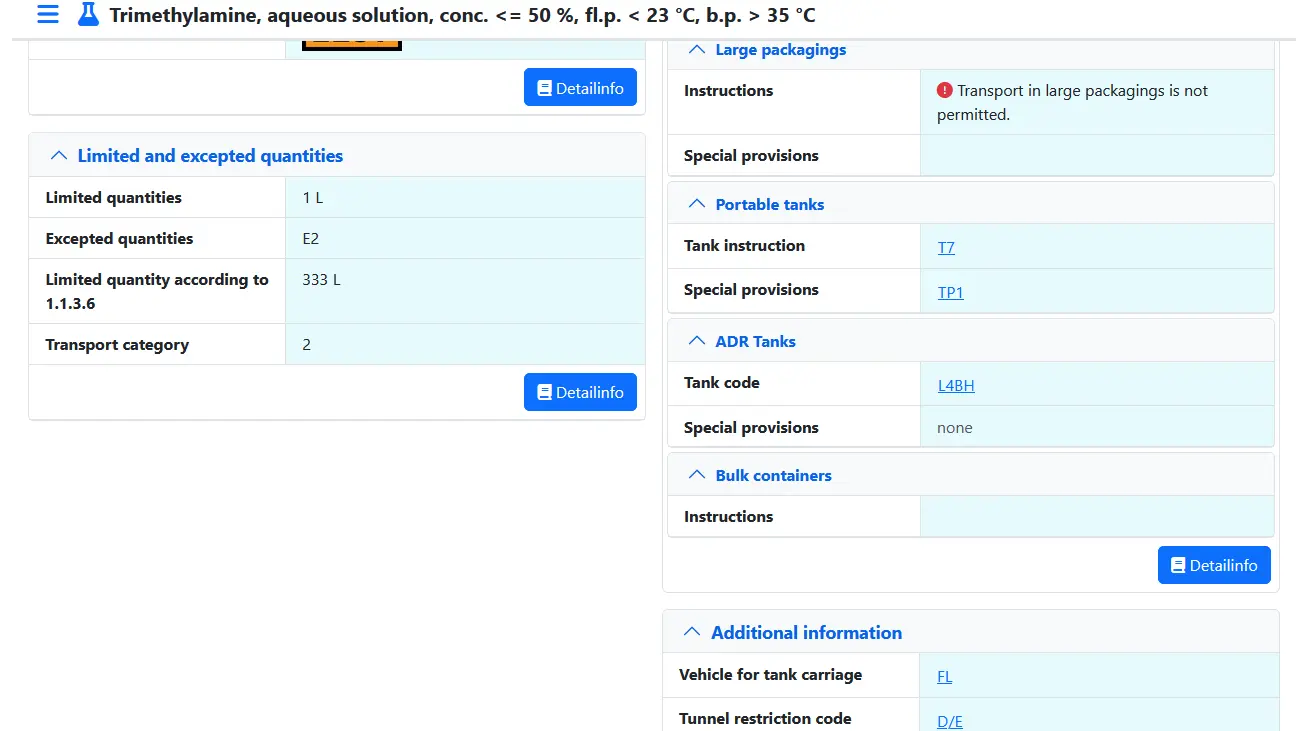
Shortinfo in DGG-Info Part 3
-
© BAM Divison 3.1
6 of 9
-
-
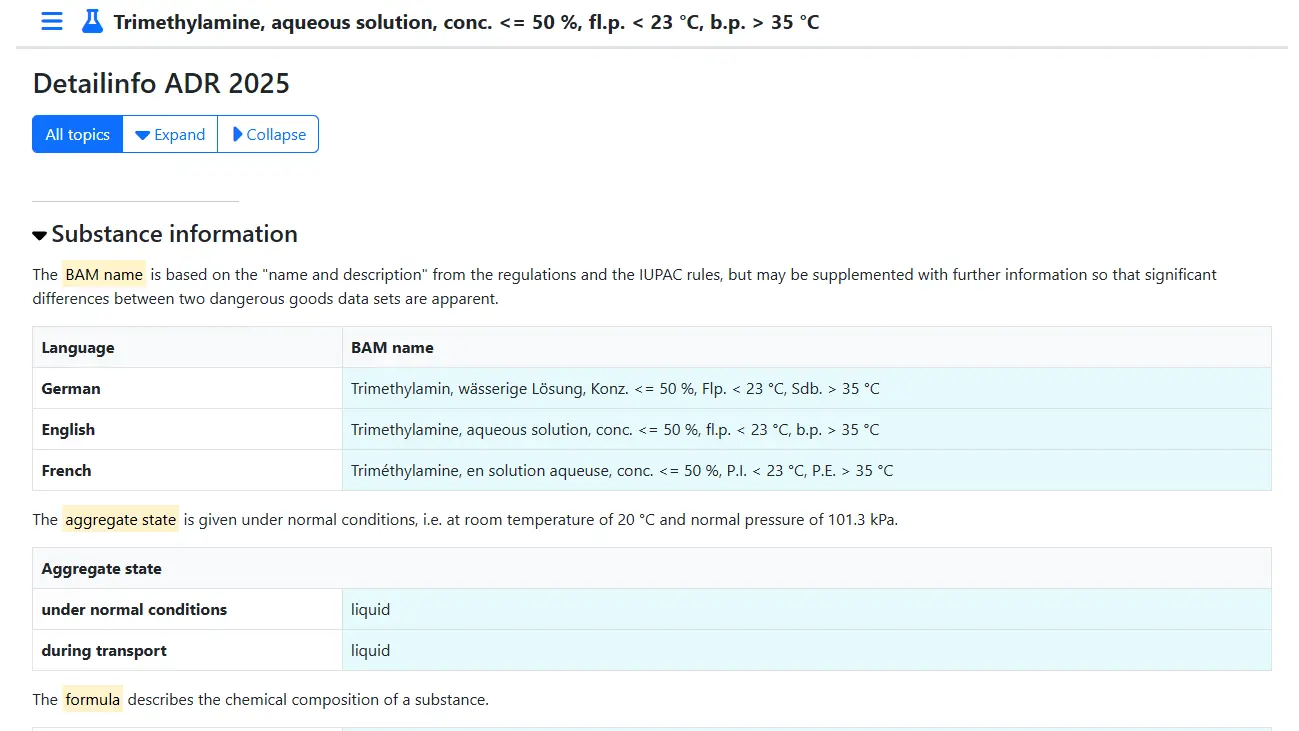
Detailinfo Names in DGG-Info
-
© BAMDivision 3.1
7 of 9
-
-
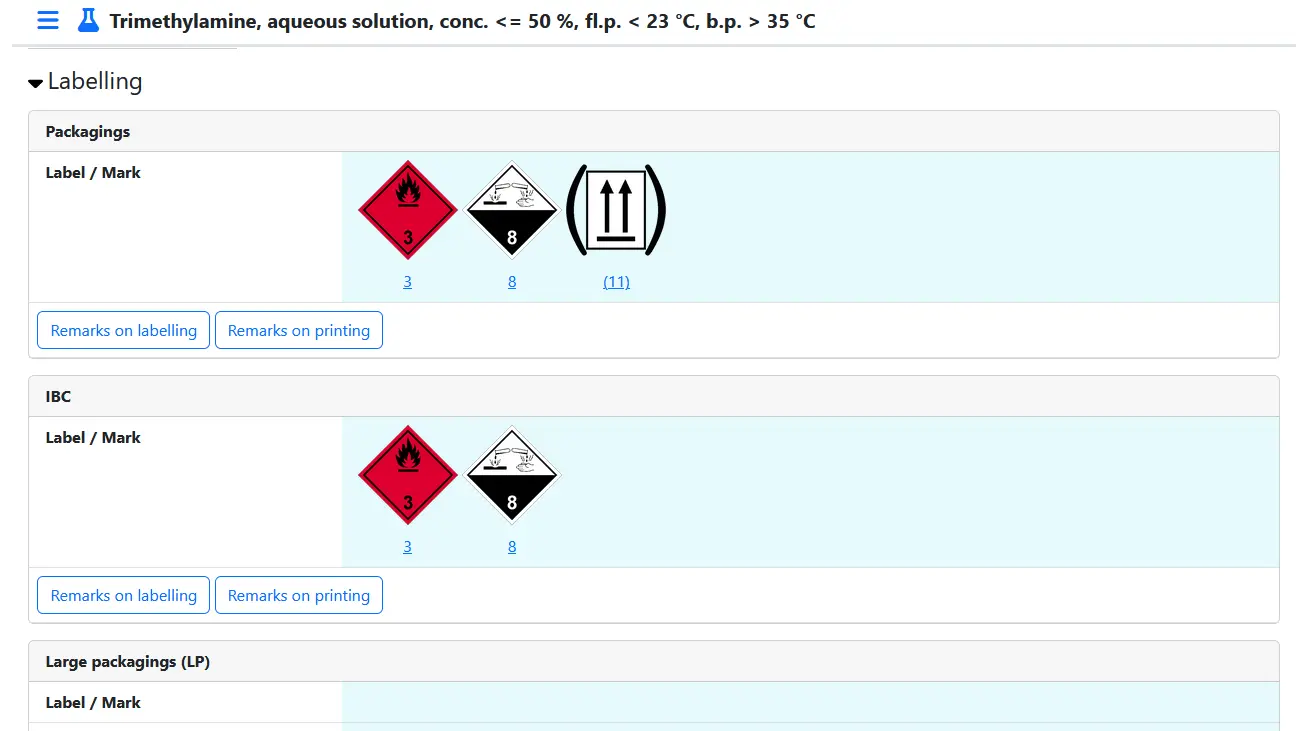
Detailinfo Labelling in DGG-Info
-
© BAM Division 3.1
8 of 9
-
-
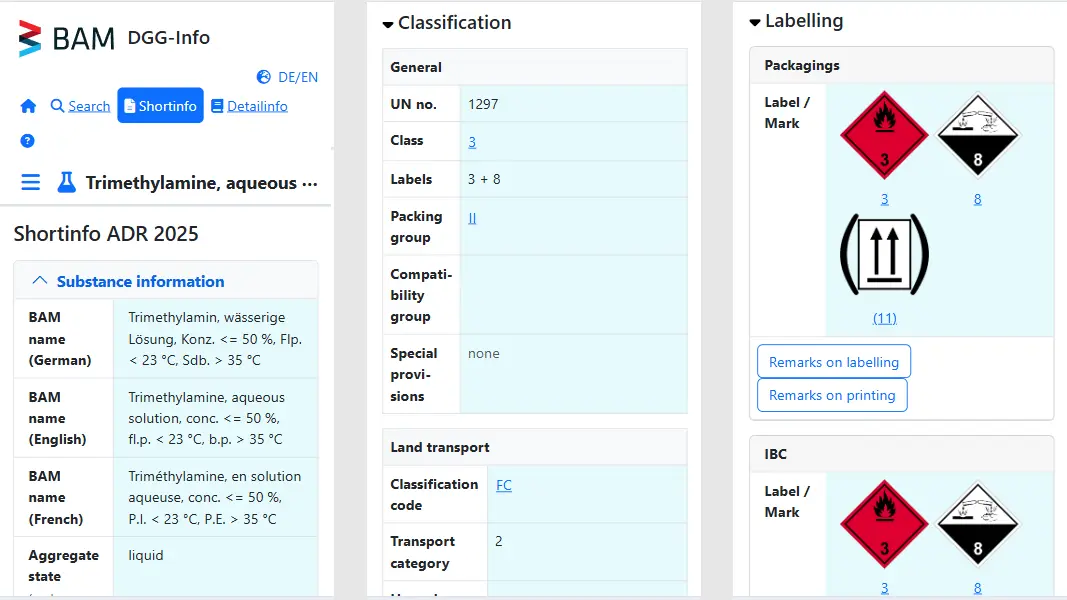
Mobile View in DGG-Info
-
© BAM Divison 3.1
9 of 9
-
Wooden shock absorbers for CASTOR containers
Strict safety precautions are in place for the transport of highly radioactive waste. One component of this is the wooden shock absorbers that are placed at the ends of the containers. If an accident should happen, they would absorb the impact energy, deform and protect the CASTOR® container. BAM is researching the material properties of spruce wood for this.
740 wooden cubes were compressed for this purpose at BAM's Test Site for Technical Safety (TTS) in Horstwalde. Scientists from BAM's Safety of Transport Containers Division documented and assessed the results. Numerical stress analysis can be used to measure whether shock absorbers are working correctly and safely. BAM's evaluation feeds into the decision process for type testing, which is a prerequisite for the approval of any given container type.
Wooden shock absorbers for CASTOR containers
-

A CASTOR® HAW28M container for highly active waste from reprocessing on the loading crane. At each end are the white shock absorbers filled with wood.
-
© GNS
1 of 6
-
-
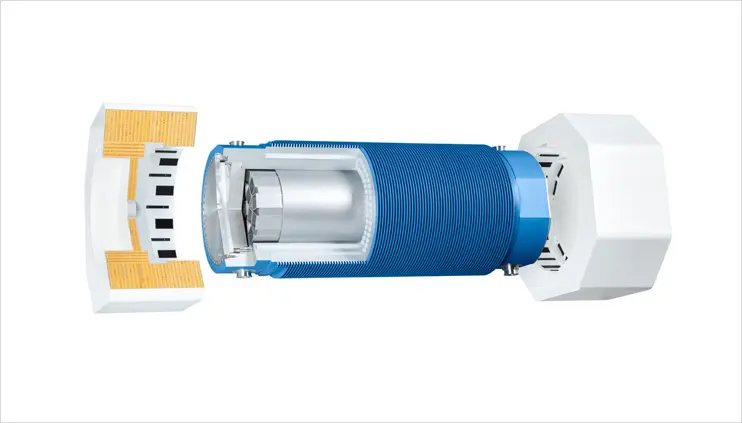
Cross-section of a shock absorber. The wood (left) lies in packets arranged at right angles and is coated in sheet steel. If the CASTOR® falls, the wood gets compressed. It acts like an air bag to absorb the energy that would otherwise have gone straight into the container.
-
© GNS
2 of 6
-
-

Drop test of a CASTOR® container for highly radioactive waste. At 181 tonnes, this was the heaviest container ever subjected to a drop test – a world record at BAM's Test Site for Technical Safety (TTS) in Horstwalde. During the drop test, attention was also focussed on the behaviour of the shock absorber.
-
© BAM
3 of 6
-
-
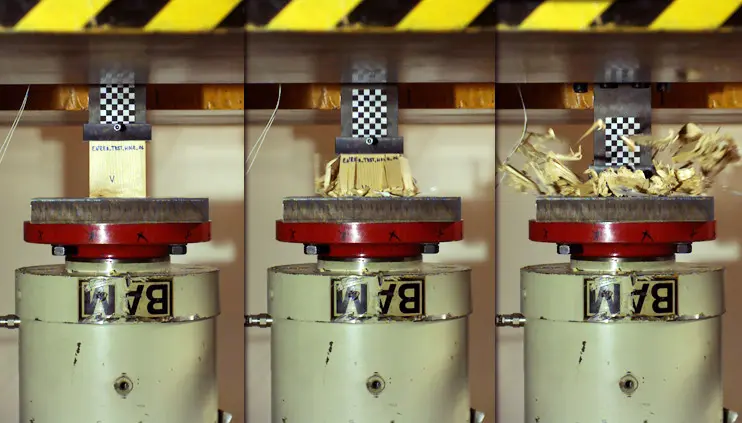
Stress test at BAM's testing station: the stamp of the hydraulic press compresses a wooden cube with a force equivalent to about 100 tonnes
-
© BAM
4 of 6
-
-
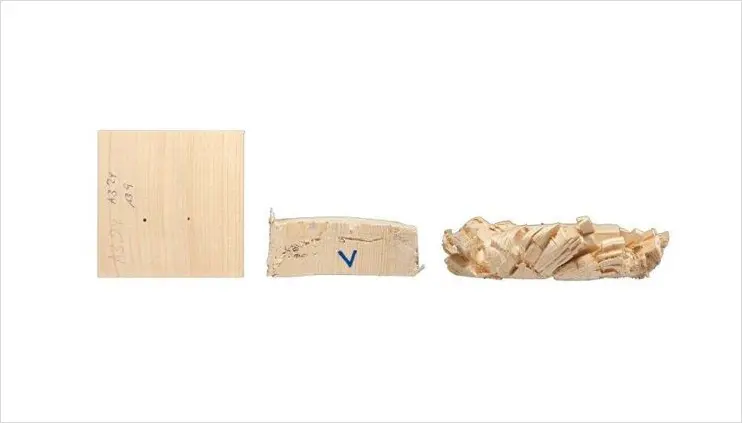
Initial sample (left) and deformed sample following compression test with (middle) and without (right) lateral clamp. The wooden cube is compressed until it is only 30 percent of its original size.
-
© BAM
5 of 6
-
-
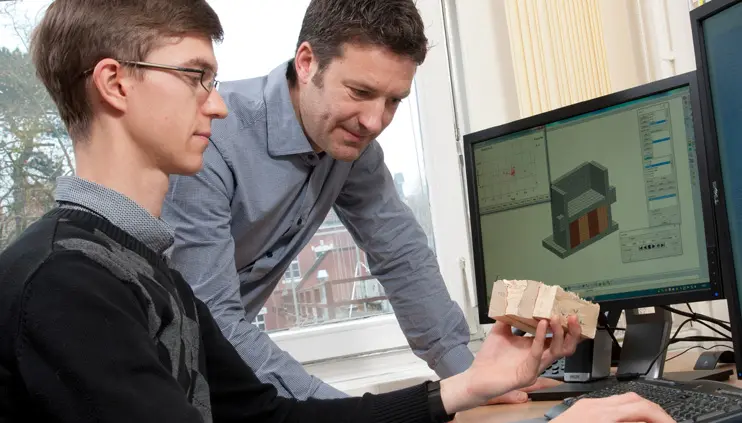
Insights gleaned from experiments about the properties of wood help BAM scientists with their computer-based calculations. In this way, possible stress scenarios resembling actual accident situations can be simulated for the CASTOR® containers.
-
© BAM
6 of 6
-
Gas explosions: more safety for rescuers
Image Gallery
A car involved in an accident caught fire near Bad Segeberg in 2014. When the firefighters started extinguishing the fire, the vehicle’s gas tank exploded seriously injuring ten firefighters. If the helpers had been aware of the danger and the potential impact, they would have been able to keep the necessary safety distance.
Measurements using infrared cameras and drones
To minimise such risks, BAM experts are investigating worst-case accident scenarios where vehicle gas tanks could get damaged and leak fuel. If at that time oxygen and an ignition source are present, an explosion could occur. A BAM research project investigates which levels of temperature and gas pressure are dangerous and could potentially harm people in the event of a fire. BAM has developed a measuring system made up of several infrared cameras to determine heat radiation from such highly dynamic processes. The measurement system is mounted on an unmanned aerial vehicle (UAV), also called a drone, to determine gas concentrations and is currently being implemented and tested under realistic conditions. This will enable rescuers to detect gas leakage from a safe distance.
Various containers for alternative fuels are being investigated
In another scenario destructive effects are being examined when alternative fuel tanks do not fail but get underfired accidentally. In preliminary studies, 15 commercial propane gas cylinders were tested by underfiring and the effects of pressure, temperature, heat radiation and flying debris, documented. BAM experts plan to conduct systematic, destructive large-scale tests for various tanks (steel tanks, composite tanks) to be underfired by alternative fuels such as liquefied petroleum gas (LPG), compressed natural gas (CNG) and hydrogen.
BAM’s objective is to increase safety of alternative fuels in general. The results from the experiments that Dr. Martin Kluge and his interdisciplinary expert team conducted will be used to develop safety recommendations for rescuers and emergency personnel.
Gas explosions: more safety for rescuers
-
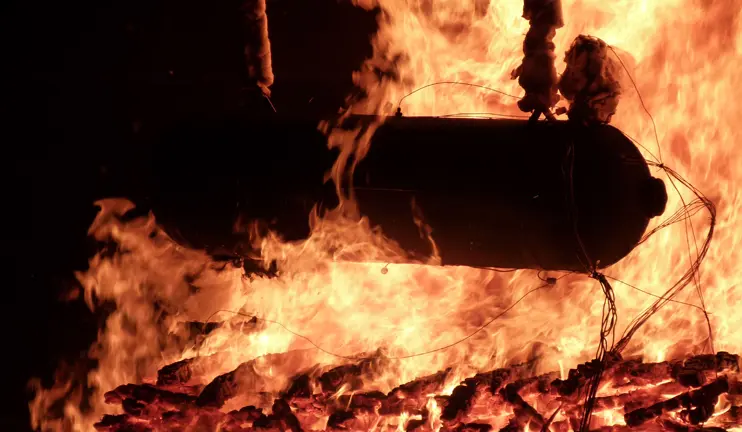
The use of gas-powered vehicles is increasing. BAM is therefore developing test methods for the accident-related failure of fuel tanks for various fire and explosion scenarios.
-
© BAM, Division Constructive Fire and Explosion Safety for Gases
1 of 5
-
-
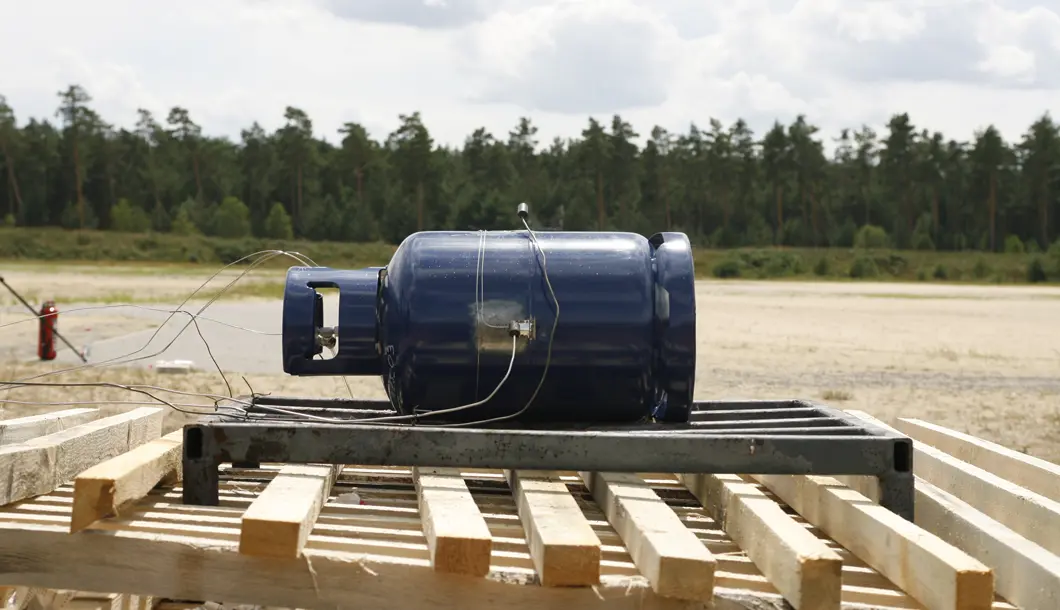
An 11 kg propane gas cylinder is being prepared for an underfiring test with wood.
-
© BAM, Division Constructive Fire and Explosion Safety for Gases
2 of 5
-
-
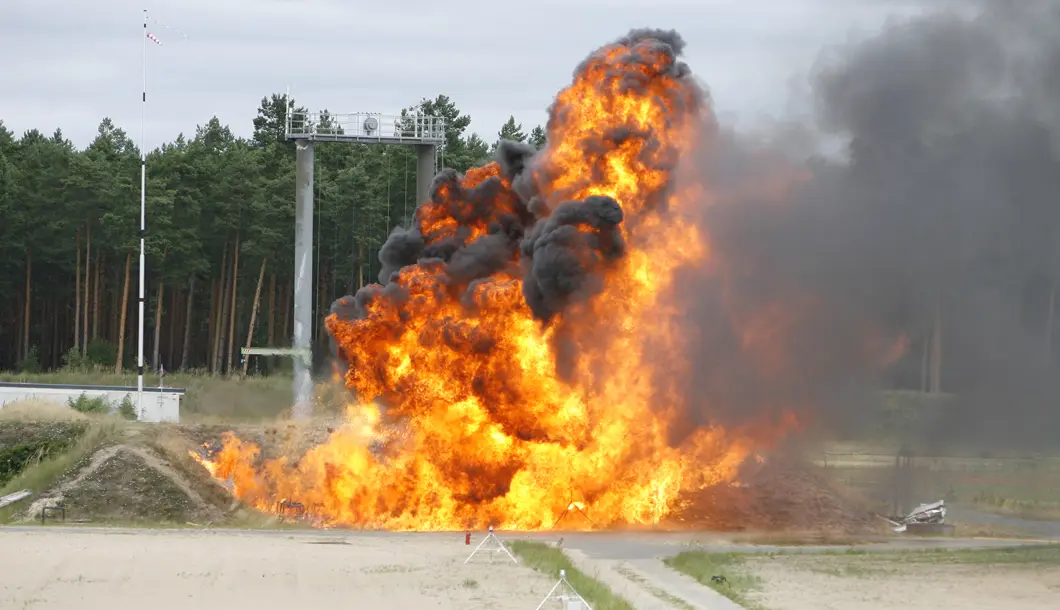
An 11 kg propane cylinder is underfired which results in the failure of the container and a fireball.
-
© BAM, Division Constructive Fire and Explosion Safety for Gases
3 of 5
-
-
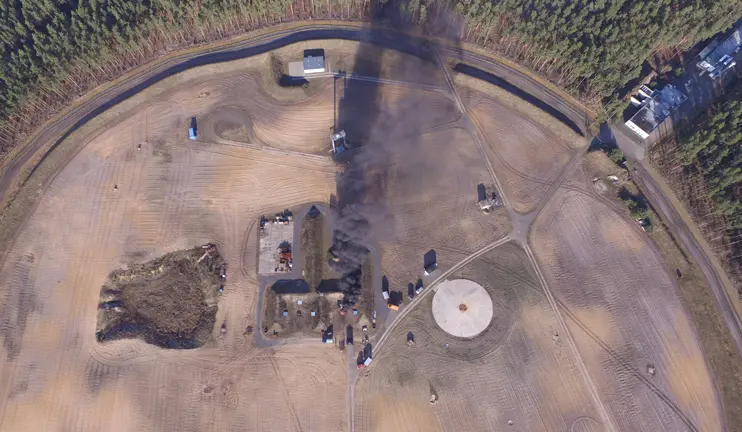
View from a drone’s perspective: explosion tests require large safety distances. BAM’s Test Site for Technical Safety provides the proper conditions.
-
© BAM, Division Constructive Fire and Explosion Safety for Gases
4 of 5
-
-
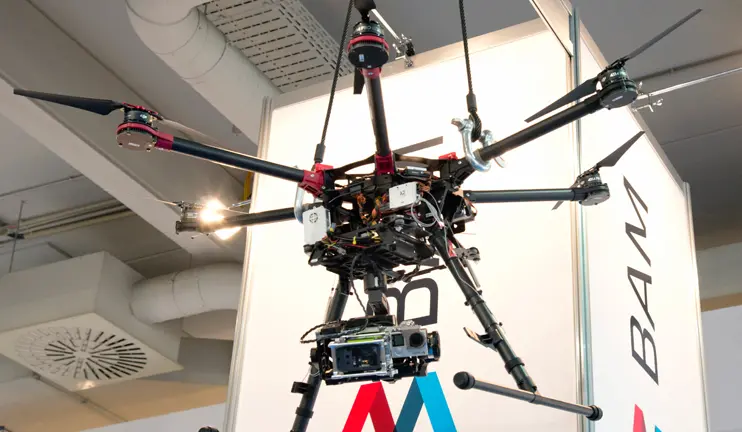
At the 2016 Hanover Fair, BAM presented a hexacopter equipped with gas sensors. It will enable rescuers to detect gas leaks from a safe distance in the future.
-
© BAM, Division Constructive Fire and Explosion Safety for Gases
5 of 5
-
Measuring light efficiency
Optical technologies
How well photoluminescent materials store light and emit it again plays an important role in many areas, for example in light, medicine or display technologies. But how do we measure light efficiency and what sort of applications are there? This image gallery shows the use of the integrating or Ulbricht sphere and photoluminescent substances.
Measuring light efficiency
-
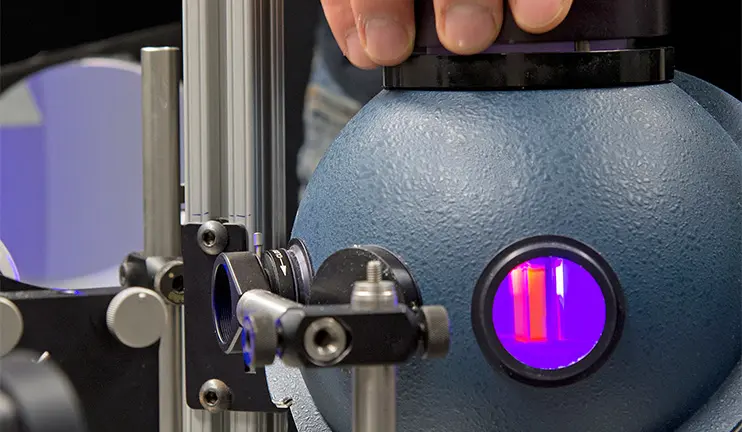
Possible reference materials are tested in the Ulbricht sphere. This involves them being irradiated with a light source.
-
© BAM
1 of 5
-
-
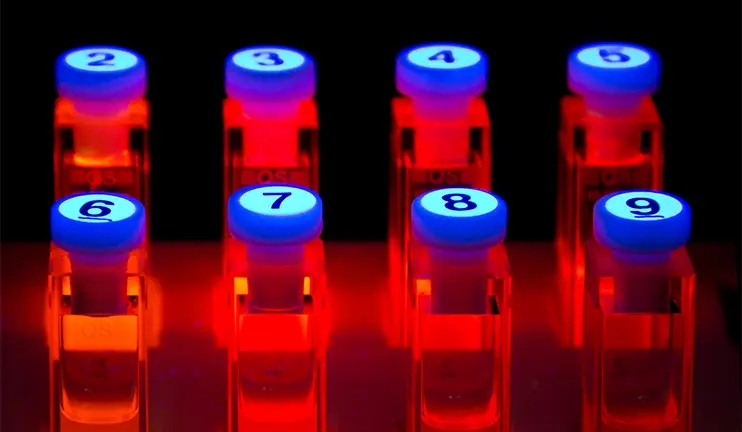
The samples must always be lit under the same conditions and ideally should absorb the same amount of light. The amount of light emitted can then be measured and the efficiency of the substance examined can be given in comparison with the reference material.
-
© BAM
2 of 5
-
-

A classic application: under UV light the bank note seems to glow. Photoluminescent substances can be used to distinguish between real and fake notes.
-
© BAM
3 of 5
-
-
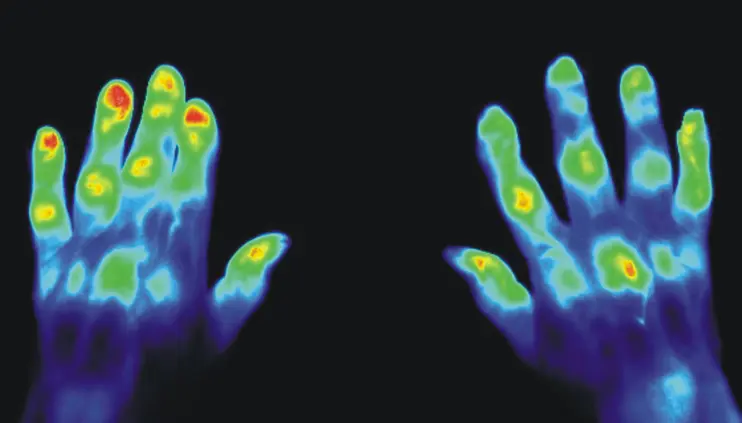
Photoluminescent substances are used in medical technology in imaging diagnostics to accurately identify diseases such as cancer or gout. The substances need to be highly efficient in order to create the best possible pictures.
-
© Physikalisch-Technische Bundesanstalt (PTB)
4 of 5
-
-
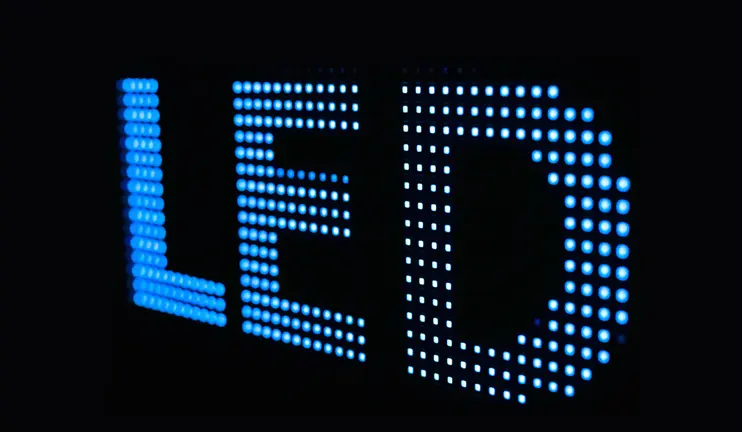
The triumphant march of LEDs cannot be halted. Thanks to highly efficient photoluminescent substances, they are much more energy-efficient than conventional light bulbs.
-
© iStock.com/Tailex
5 of 5
-
A closer look at corrosio
Image gallery
Dr.-Ing. Özlem Özcan is an expert when it comes to interfacial processes and corrosion. She joined the BAM three years ago – and has accompanied the development of the division of the same name from the very beginning. There is no end in sight to the foundational work as she and her colleagues will soon move into larger laboratories.
A closer look at corrosio
-
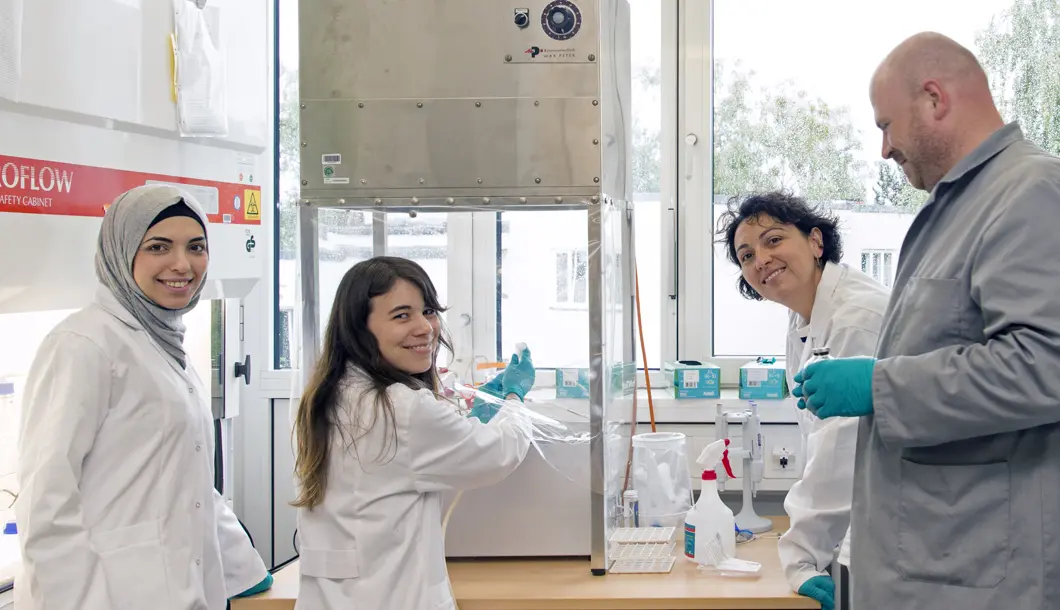
The team in the Division of Interfacial Processes and Corrosion taking samples from the bioreactor, as they call it. This solution, which also contains bacteria, is immediately poured into an electrochemical cell for investigating the resistance of coatings to biocorrosion.
-
© BAM
1 of 4
-
-
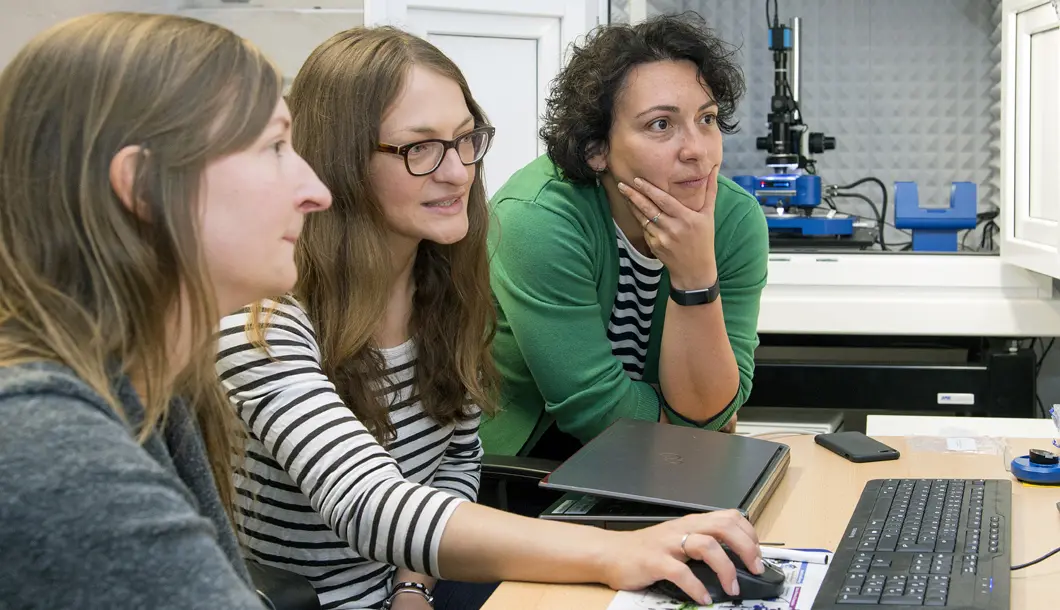
Working at the atomic force microscope: …
-
© BAM
2 of 4
-
-
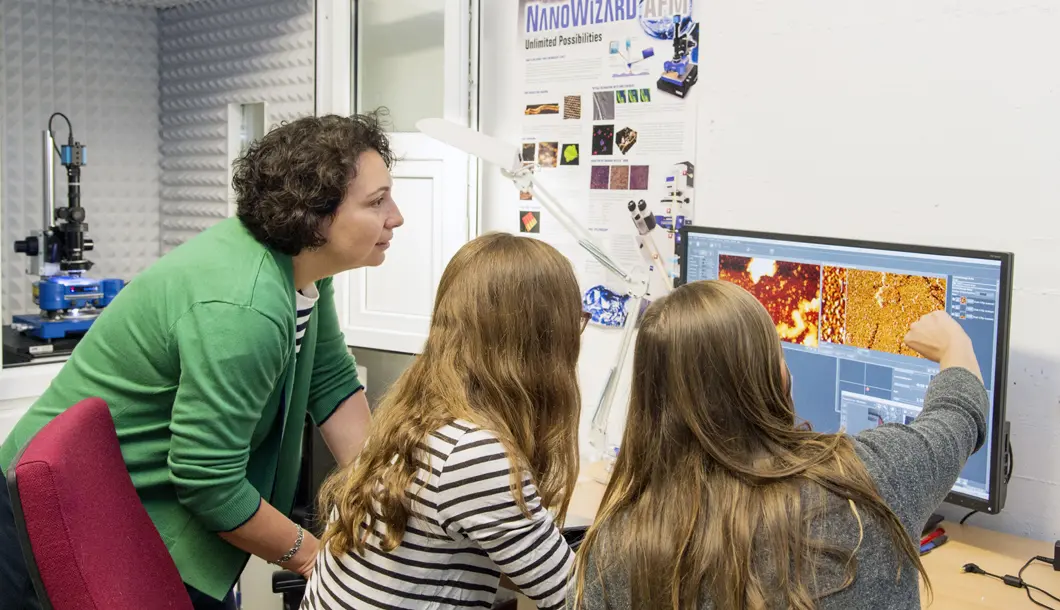
… Nina Wurzler and Dr. Julia Witt examine different surfaces with Dr.-Ing. Özlem Özcan. Which surfaces attract more bacteria?
-
© BAM
3 of 4
-
-
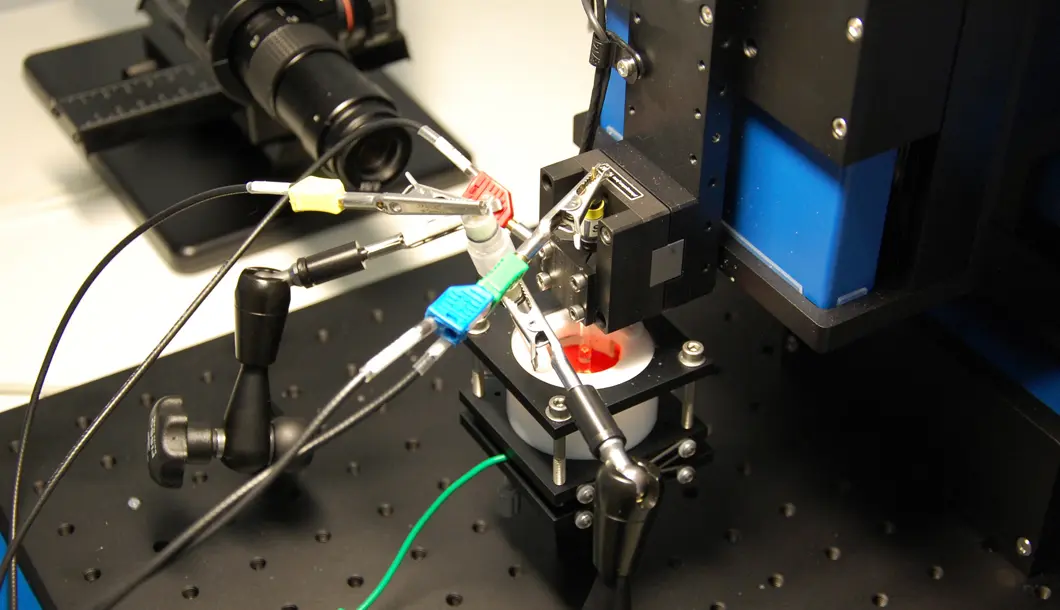
And this is what a scanning microscope looks like: here it is the setup for experiments allowing the analysis of localised corrosion processes.
-
© BAM
4 of 4
-
The coordinator
Image gallery
If BAM--Bundesanstalt für Materialforschung und -prüfung scientists need a special component or material samples for their work, these are manufactured in the central workshops. The number of steps between idea and realisation doesn’t matter - Martin Hollesch always directs the process. As production manager in Testing Devices and Equipment division, he coordinates the entire production process. During the tour through the workshops, it quickly becomes clear that almost anything that could be needed in BAM can be manufactured here. Many planned work steps can now be transmitted to modern machine tools and executed by software.
The coordinator
-
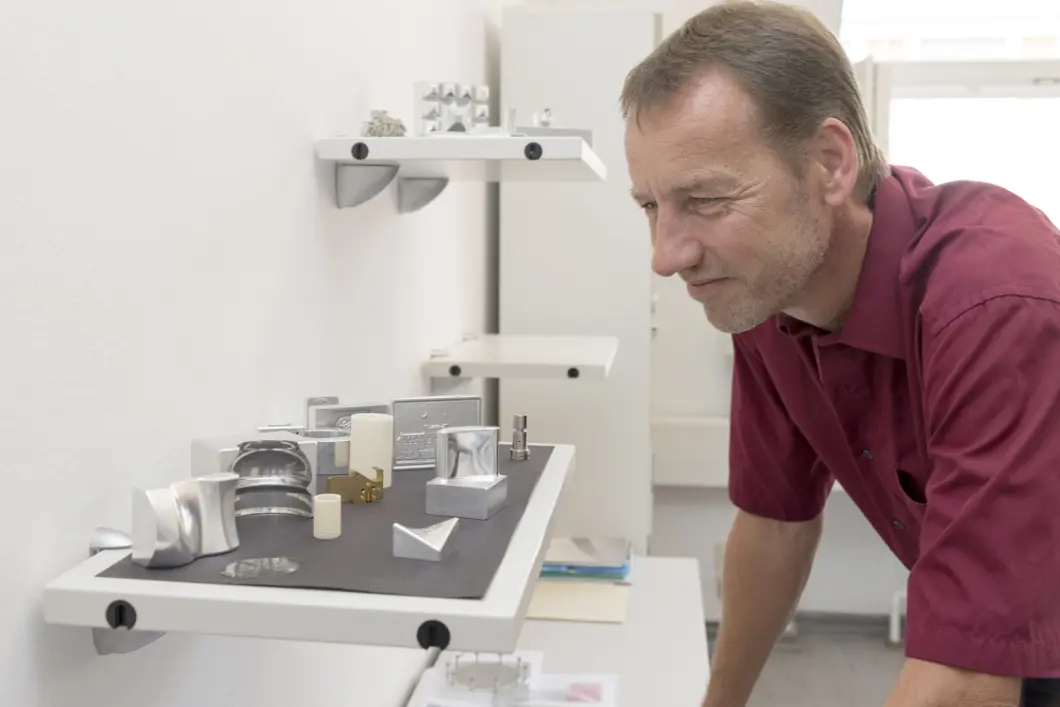
Diversity of forms: Martin Hollesch with a selection of processed samples.
-
© BAM
1 of 5
-
-
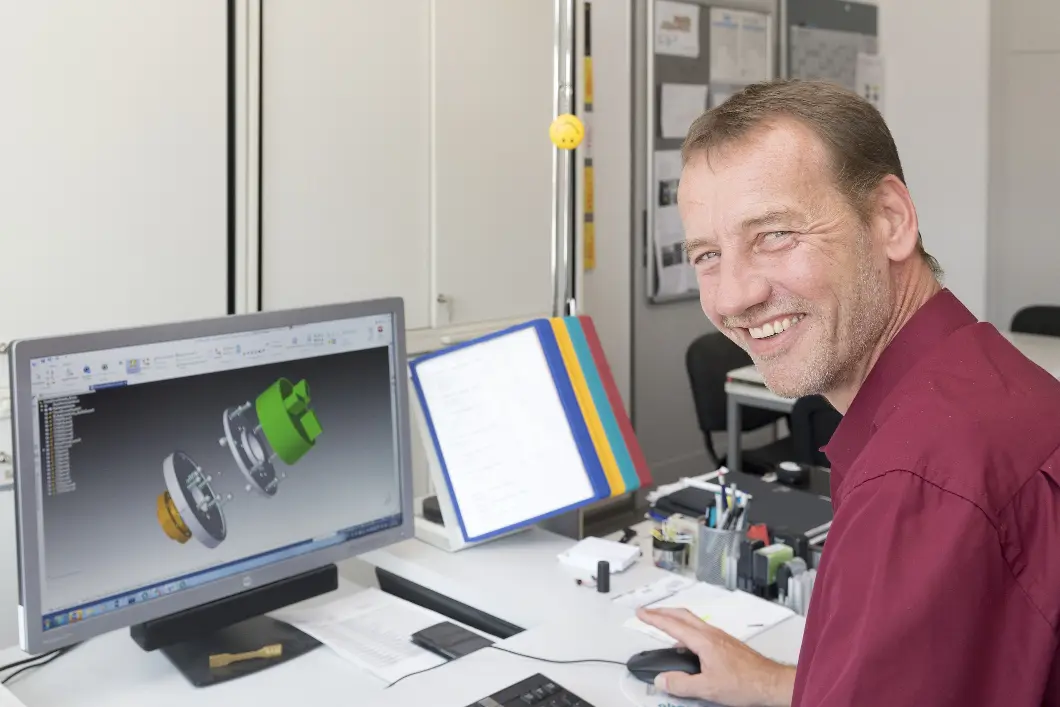
Between office and workshop: Development and construction of a three-jaw chuck flange system …
-
© BAM
2 of 5
-
-
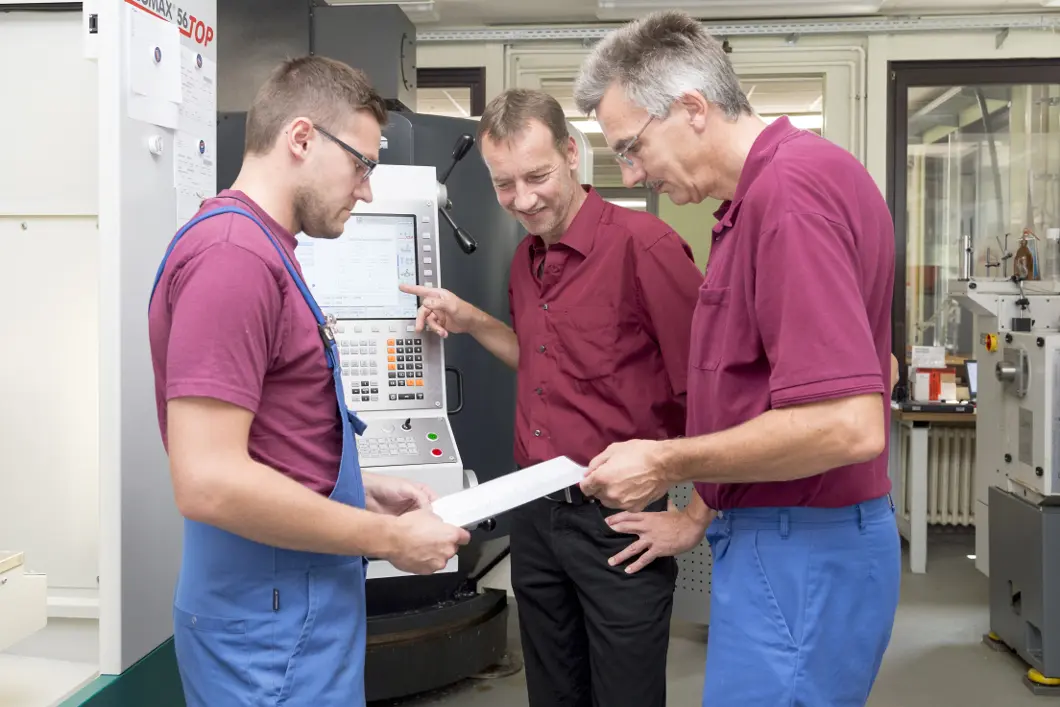
… and job briefing with colleagues on a precision milling machine.
-
© BAM
3 of 5
-
-
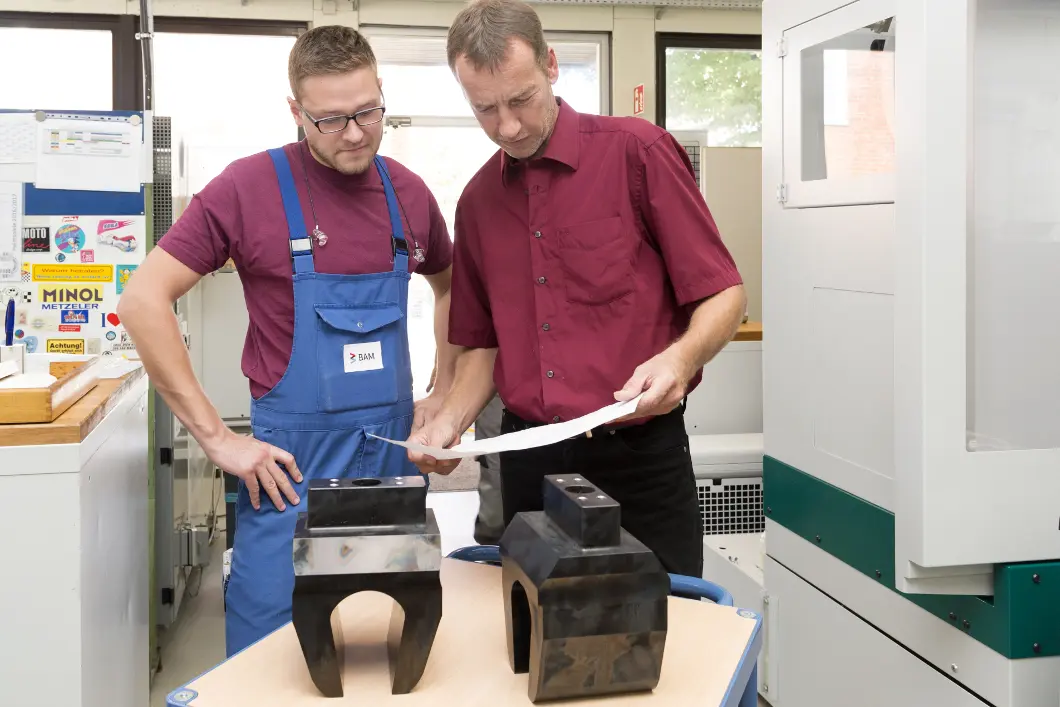
Everything OK? Preliminary check on two prefabricated fork heads …
-
© BAM
4 of 5
-
-
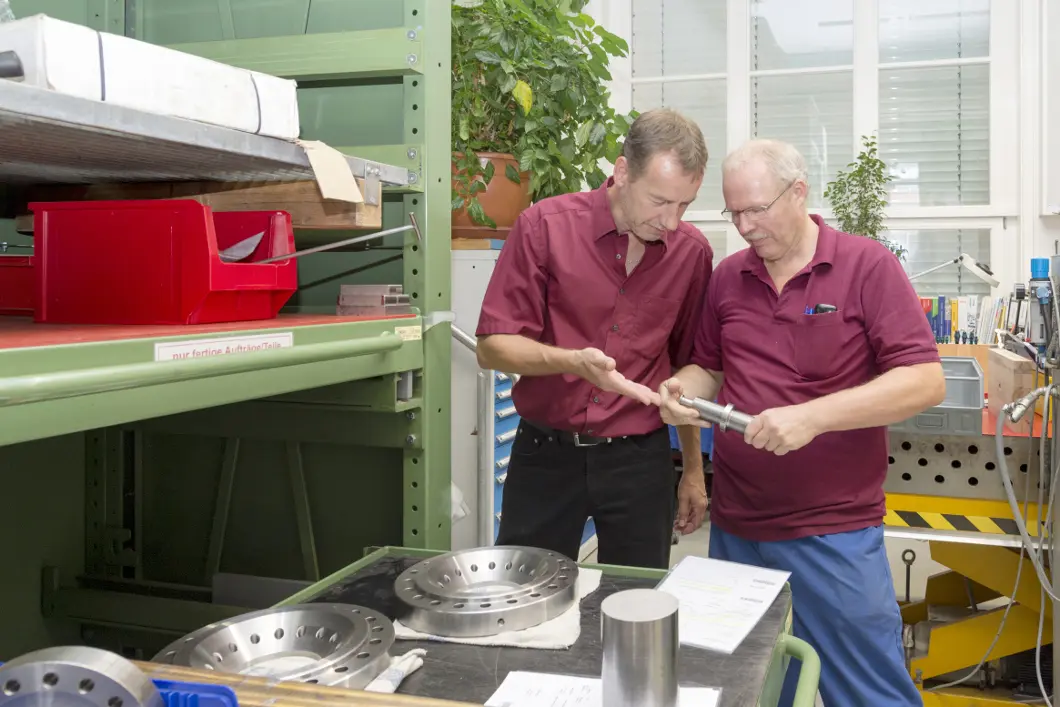
… and final inspection of a spindle drive before delivery.
-
© BAM
5 of 5
-
Transition quartet
Image Gallery
Transition quartet
-
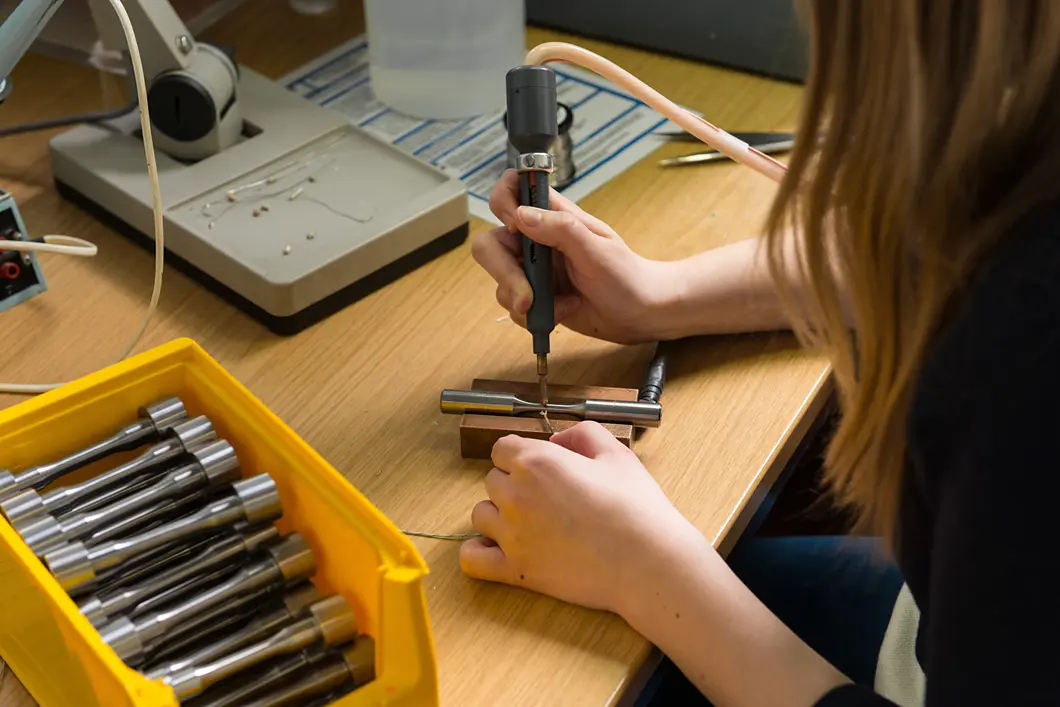
Maria Jürgens prepares a sample, which is then clamped in the experimental rig for load measurement.
-
© BAM, Image: Michael Danner
1 of 5
-
-
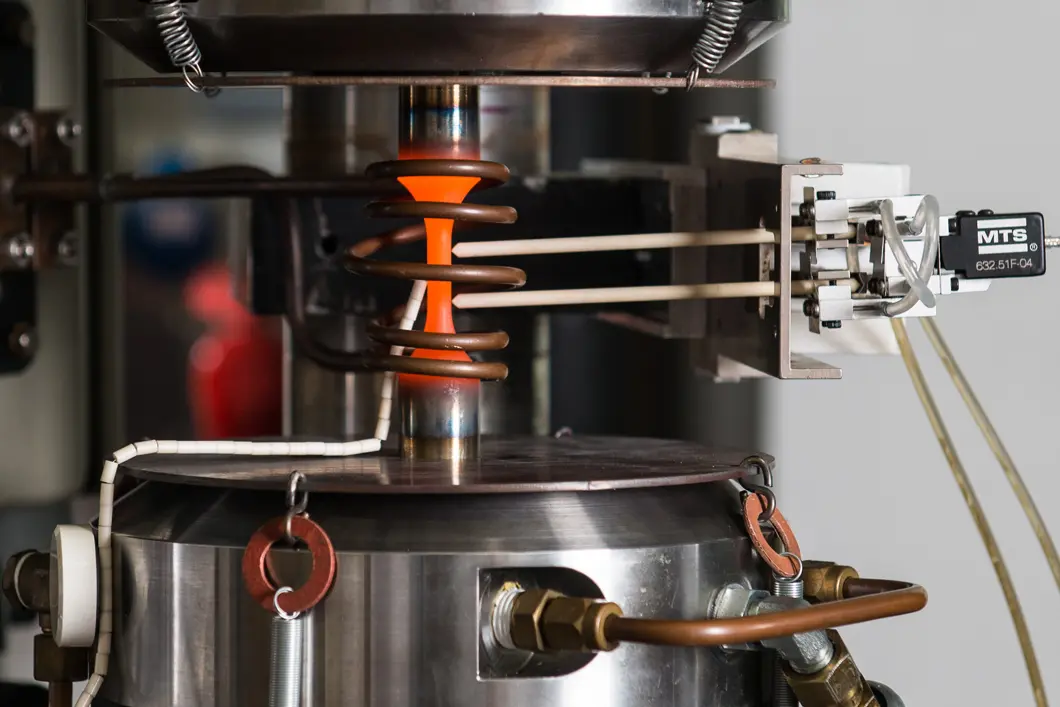
This is what the experimental set-up looks like in detail: the column-shaped steel sample is clamped solidly and exposed to compression and tension. Sensors measure the resulting changes in the metal.
-
© BAM, Image: Michael Danner
2 of 5
-
-
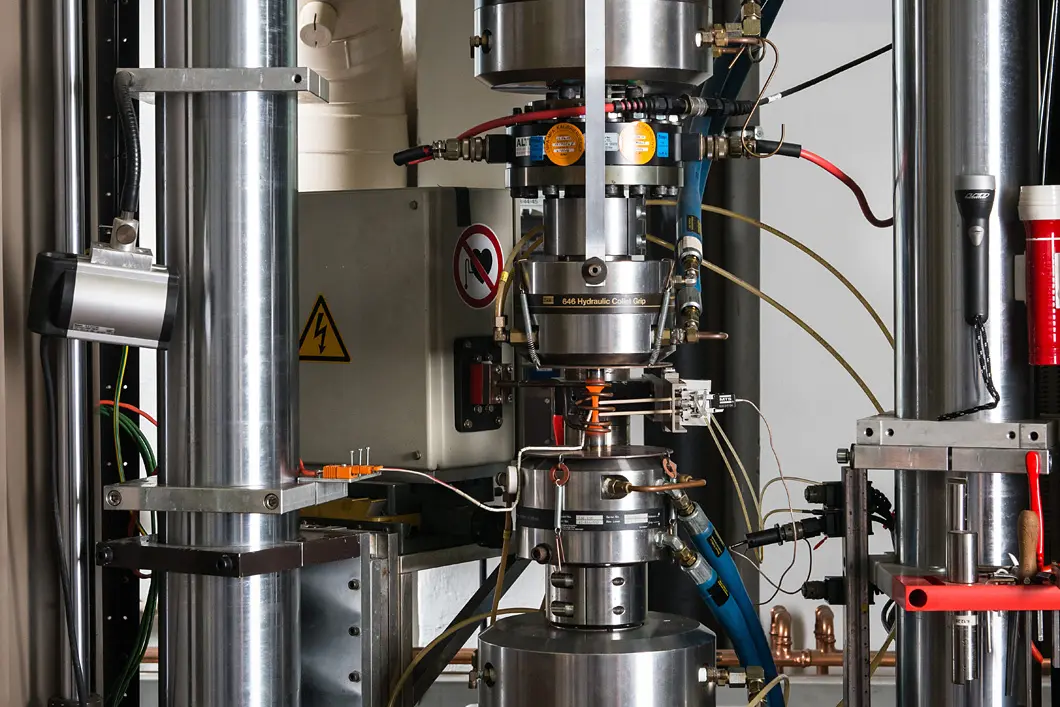
A lot of technology around the sample is necessary to record the detailed results of the material’s behaviour.
-
© BAM, Image: Michael Danner
3 of 5
-
-
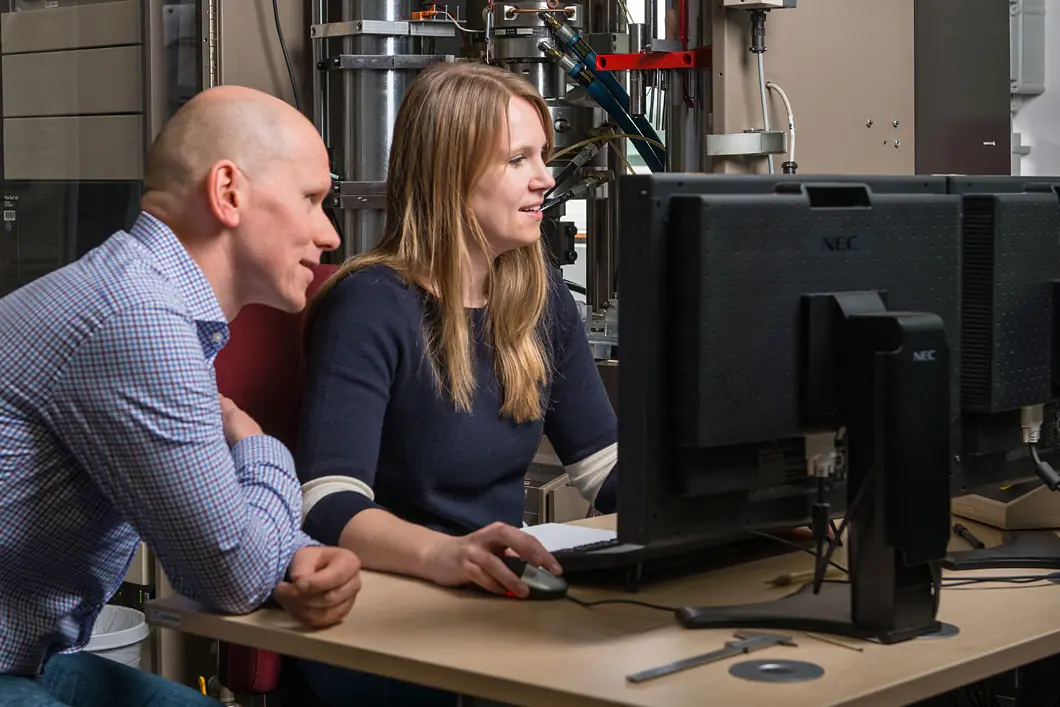
Dr.-Ing. Jürgen Olbricht and Maria Jürgens analyse incoming data from the sample’s tensile and compression testing.
-
© BAM, Image: Michael Danner
4 of 5
-
-
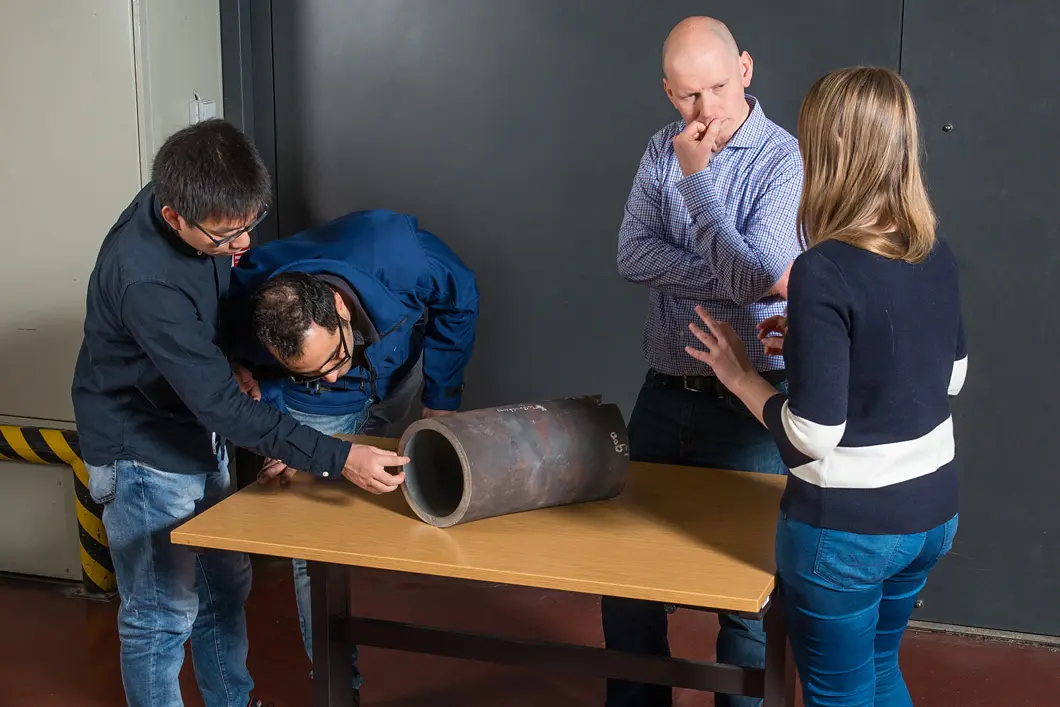
In this case, the sample comes from real life for the young scientists: the pipe from the power plant had already been used for 70,000 operating hours before it landed on the scientist quartet’s bench.
-
© BAM, Image: Michael Danner
5 of 5
-
Passion for detail
Image gallery
Prof. Dr. Christiane Stephan-Scherb is a junior professor at the FU Berlin and researches high-temperature corrosion in the Materials Engineering Department at the BAM. The trained mineralogist applies her experience from working on solar cells to the classic field of materials engineering: Corrosion research.
Passion for detail
-
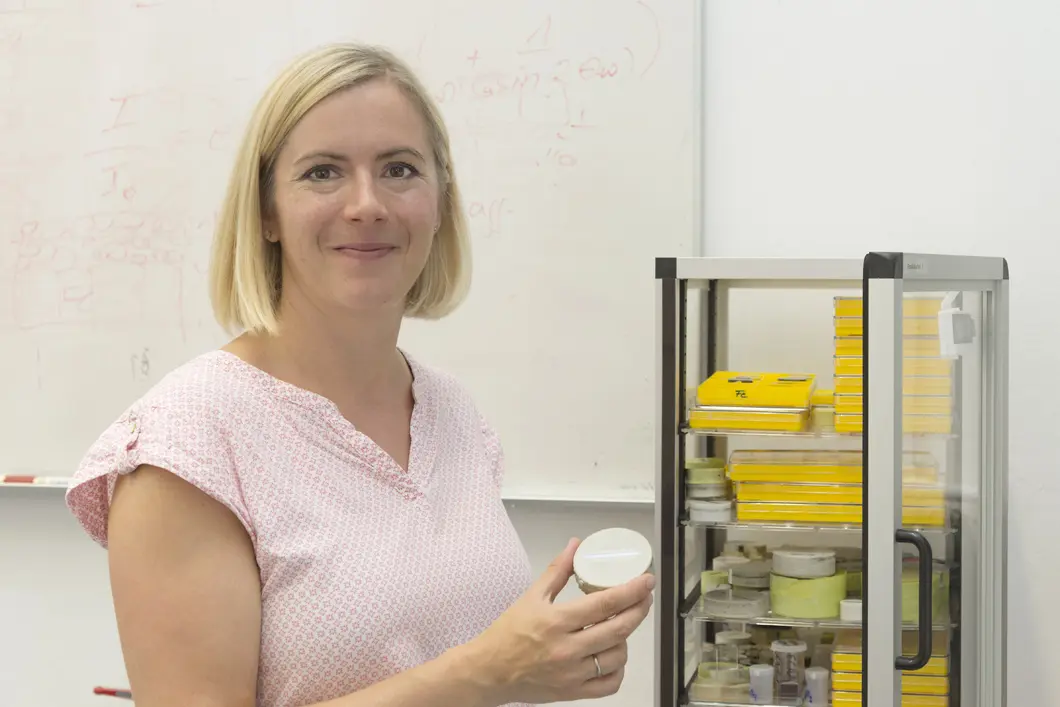
Prof. Dr. Christiane Stephan-Scherb researches the high-temperature corrosion of high-performance materials at the BAM
-
© BAM
1 of 4
-
-
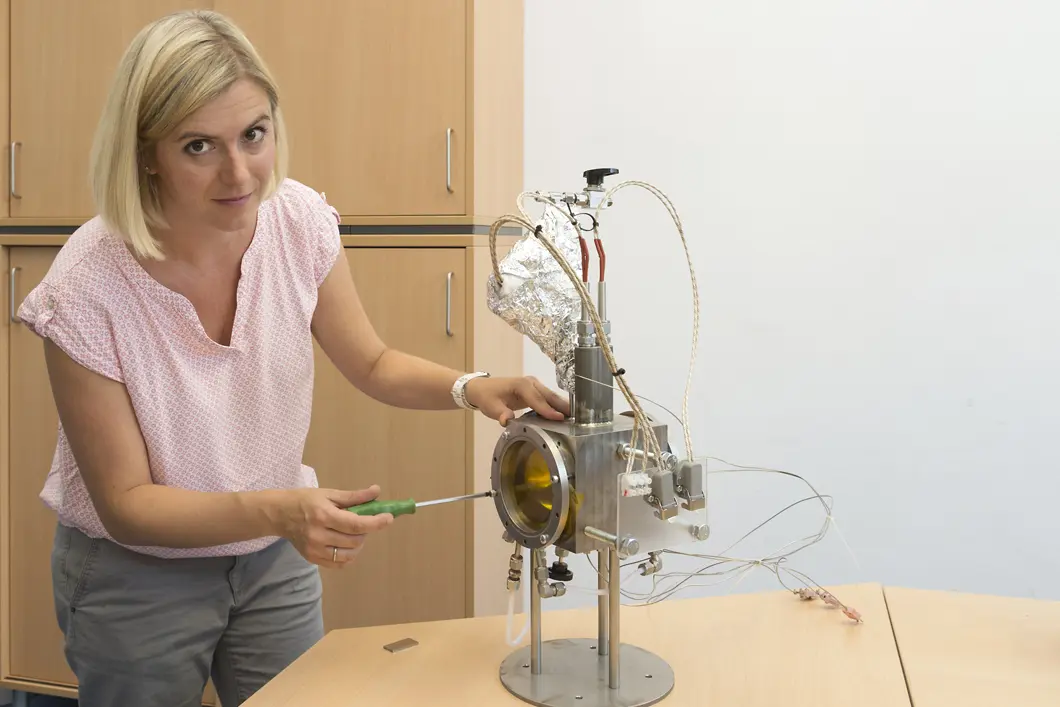
The “X-Cor II” device (X-ray transparent corrosion reactor) was developed to facilitate the investigation of crystallisation processes at temperatures of up to 500 degrees Celsius under real-world conditions with X-ray absorption spectroscopy.
-
© BAM
2 of 4
-
-

This facilitates the observation of corrosion processes through X-ray absorption spectroscopy. And it is also good for mobile use.
-
© BAM
3 of 4
-
-
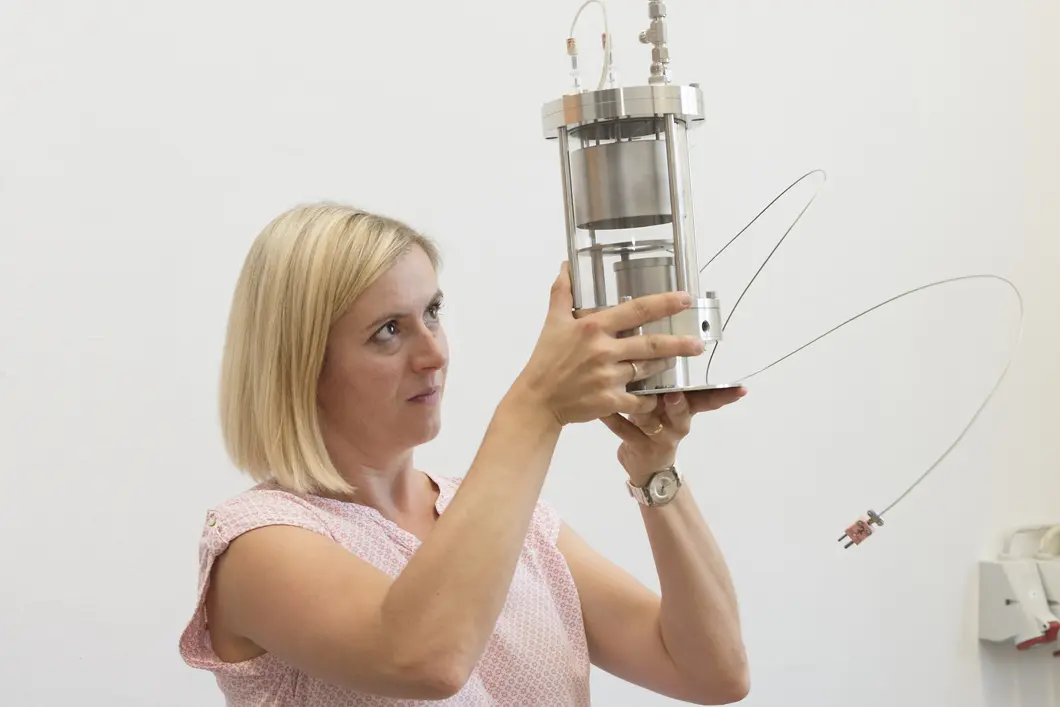
The goal is to gain a better understanding of how materials can be designed to reduce corrosion. This can be used to develop recommendations for how to customise alloys in order to form protective layers under the respective conditions of use.
-
© BAM
4 of 4
-
Bio-concrete pioneer
Image Gallery
Bio-concrete pioneer
-
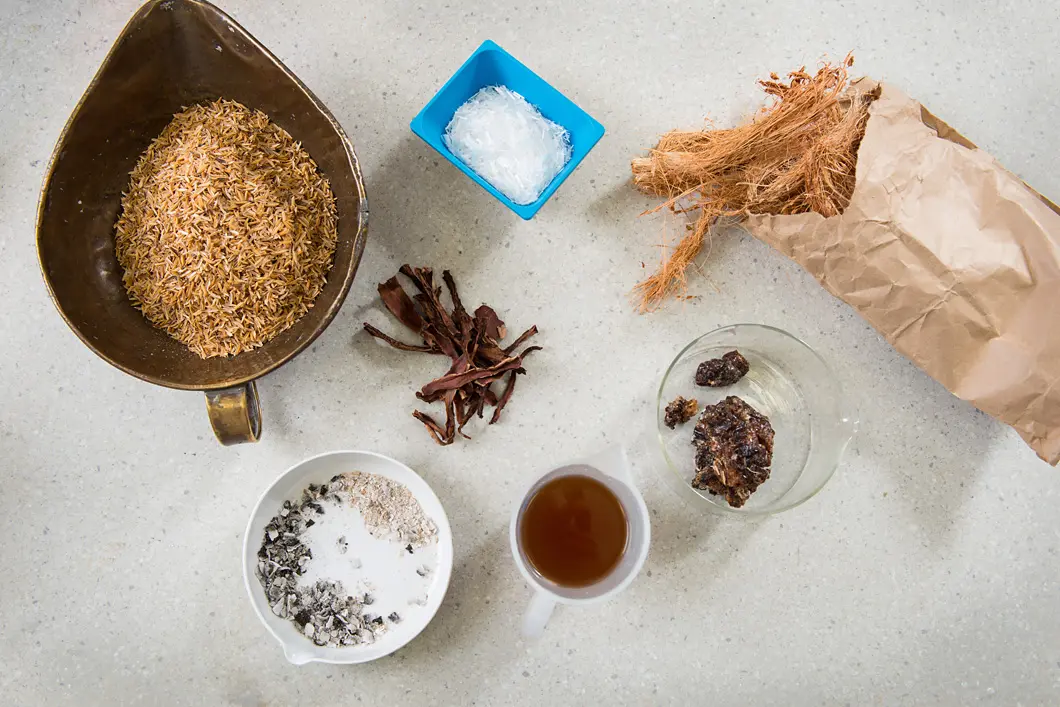
Ingredients with bio content: they include rice husks (top left), ash from cassava peels (bottom left), karroo gum (centre) and coconut fibres (right).
-
© BAM, Image: Michael Danner
1 of 5
-
-
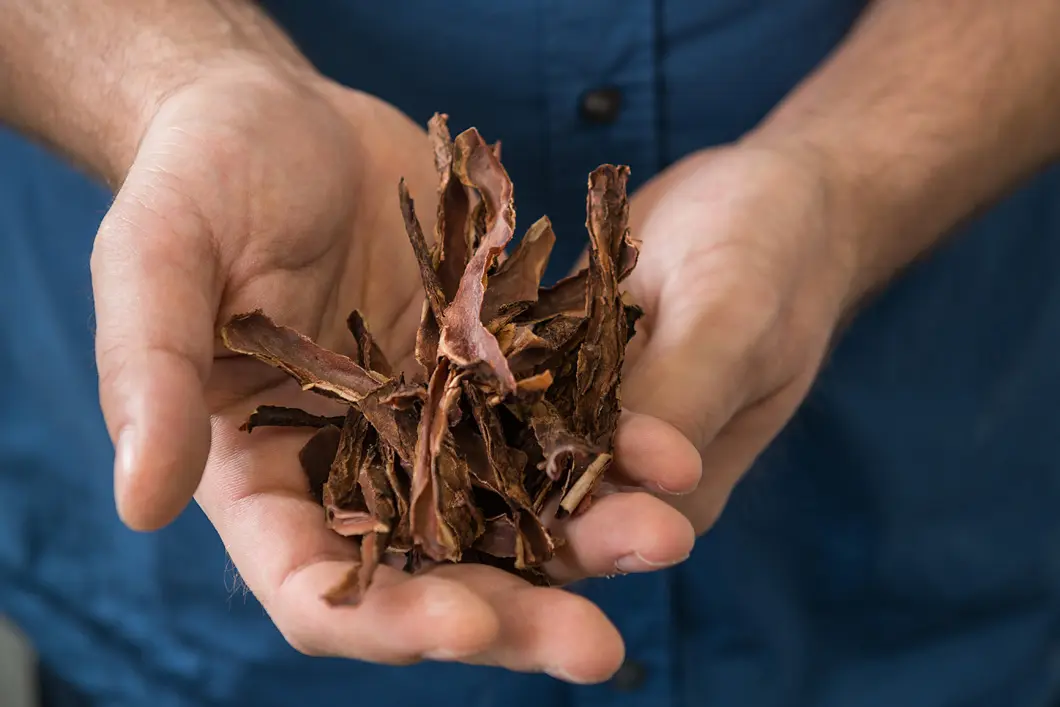
Precious plant remains: Wolfram Schmidt uses the shells of karroo acacia for his experiments. Strictly speaking, its juice.
-
© BAM, Image: Michael Danner
2 of 5
-
-
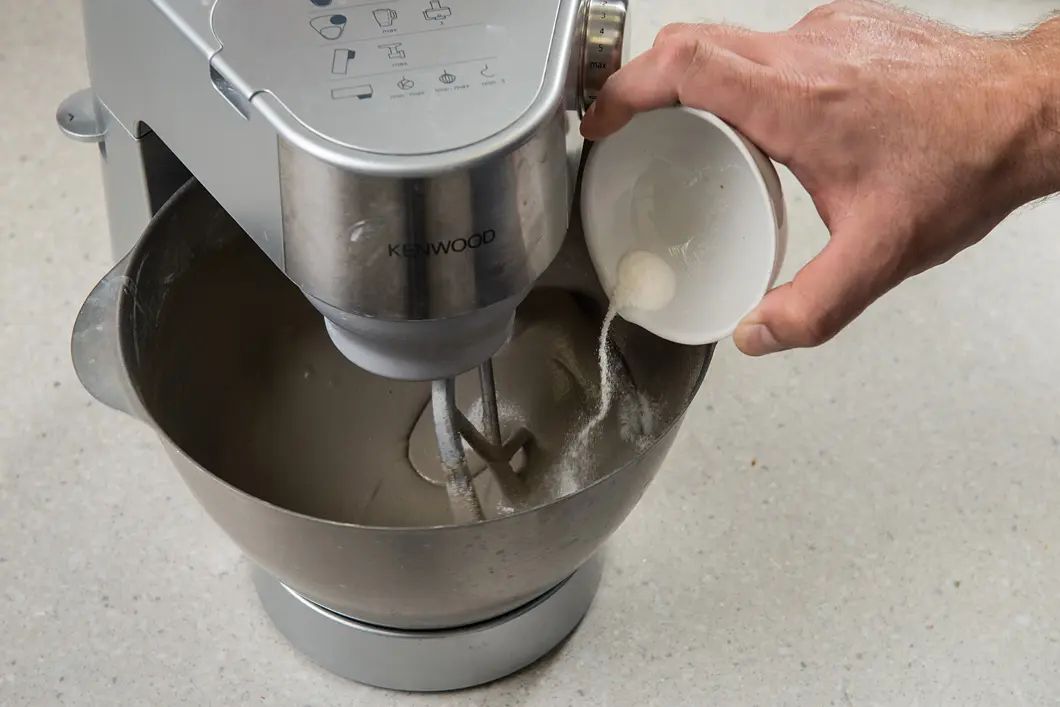
He adds a lot of plant ingredients to the mix in the laboratory; they are supposed to replace the current chemical and mineral concrete additives.
-
© BAM, Image: Michael Danner
3 of 5
-
-

Concrete made from cement, sand, limestone flour as well as plasticisers and binders is mixed in a liquidiser, from which a flat sample is cast...
-
© BAM, Image: Michael Danner
4 of 5
-
-
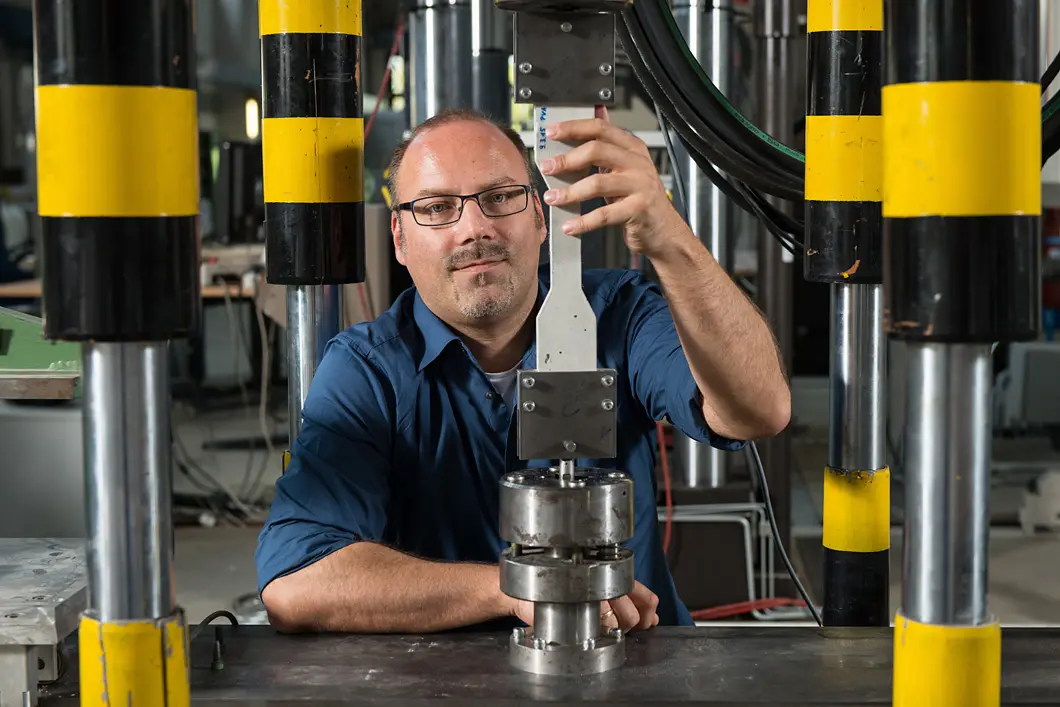
... that is then tested using heavy machinery. Such a flat sample can contain sisal or coconut fibre reinforcement.
-
© BAM, Image: Michael Danner
5 of 5
-
Teamwork as inspiration
Image gallery
Physicist Dr. Anja Waske has a doctorate in Engineering and has led the Division of Radiological Methods at BAM since May 2018. Her interest in scientific work really sparked after her doctorate, while being in a project position, she experienced and learned to value collaborating in a large scientific network while working. During this time she also discovered her leadership qualities, and today she is able to look back at her own career and declare, “Women, believe in yourselves!”
Teamwork as inspiration
-
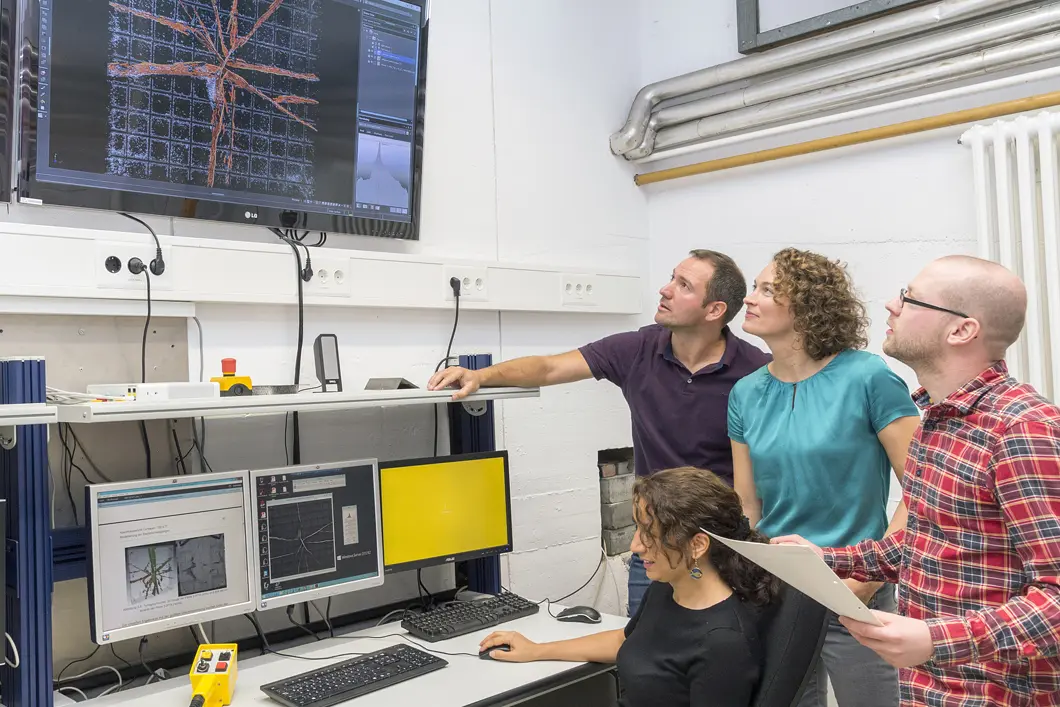
Tricky! The team discusses the latest studies on fracture mechanics in concrete under impact load.
-
© BAM
1 of 4
-
-
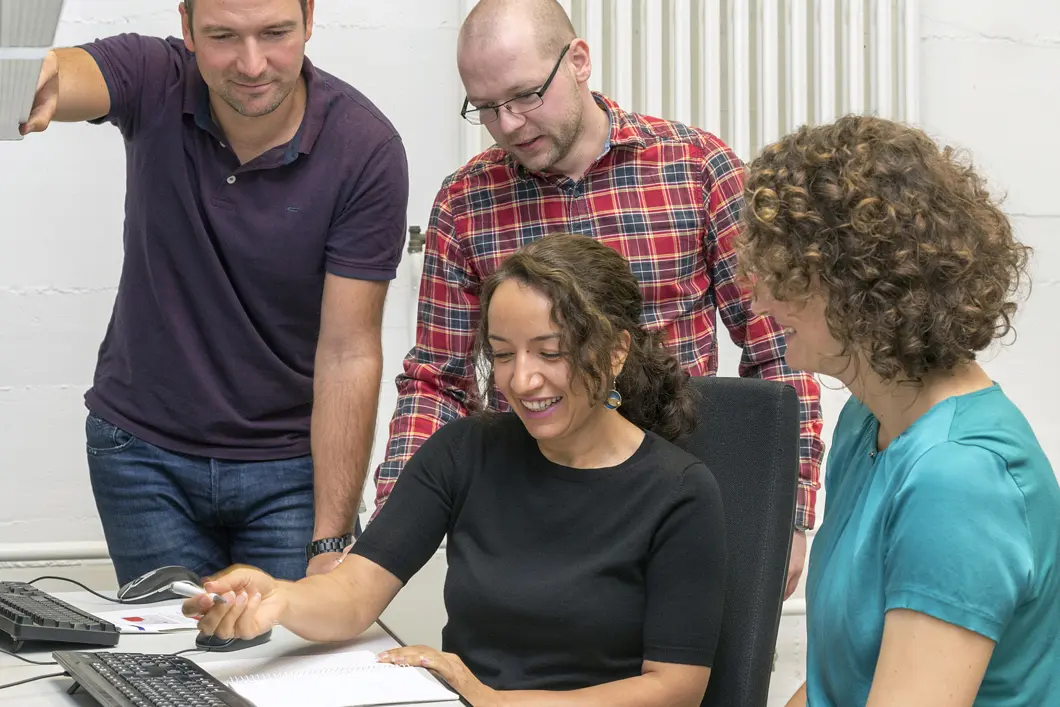
Scientific discussions will be a stronger focus in the future.
-
© BAM
2 of 4
-
-
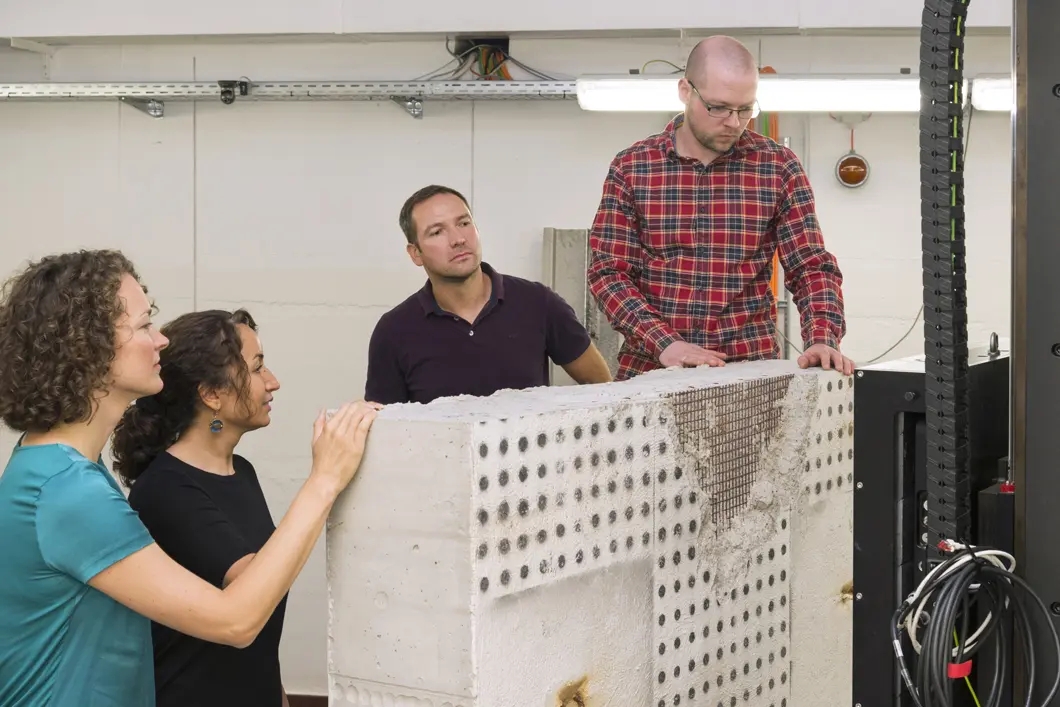
The department’s main focus was on non-destructive testing of larger components. An emphasis on materials science will now be added.
-
© BAM
3 of 4
-
-

Dr. Anja Waske advises women, “Believe in yourselves! Your talents and ideas are needed.”
-
© BAM
4 of 4
-
Popular cuts
Image gallery
Popular cuts
-
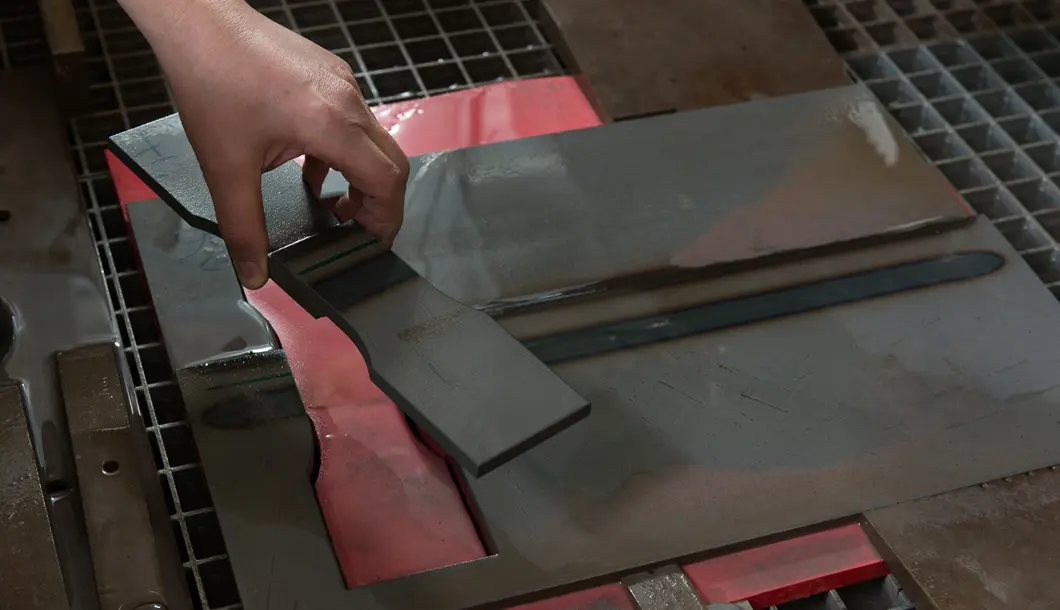
This is what they look like, the typical bone-shaped pieces of metal that Harald Götsch produces by the water jet cutter.
-
© BAM, Photo: Michael Danner
1 of 5
-
-
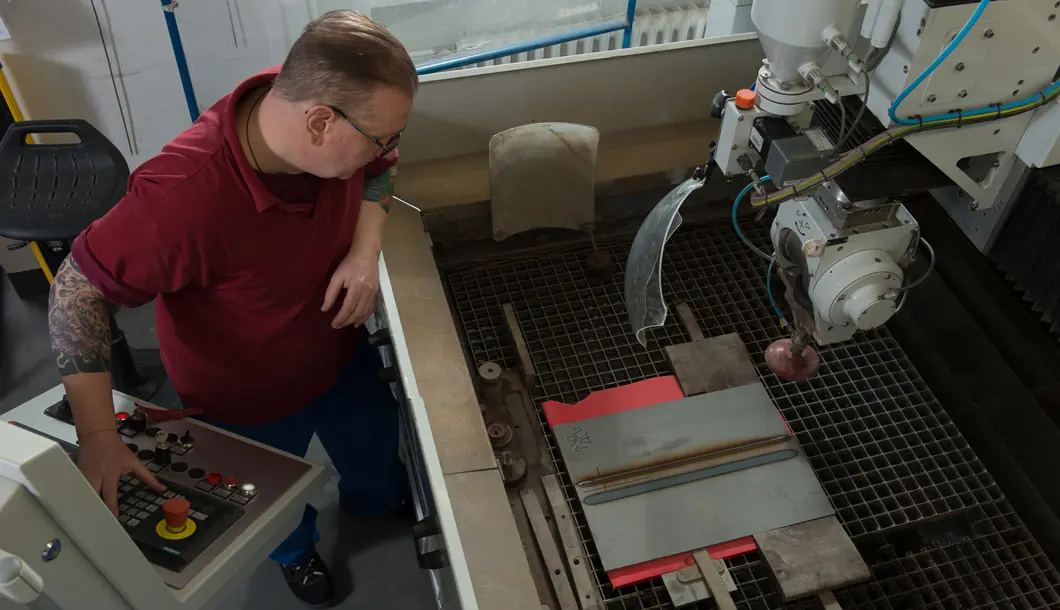
For this purpose, the piece of metal to be cut is inserted into the water jet cutter...
-
© BAM, Photo: Michael Danner
2 of 5
-
-
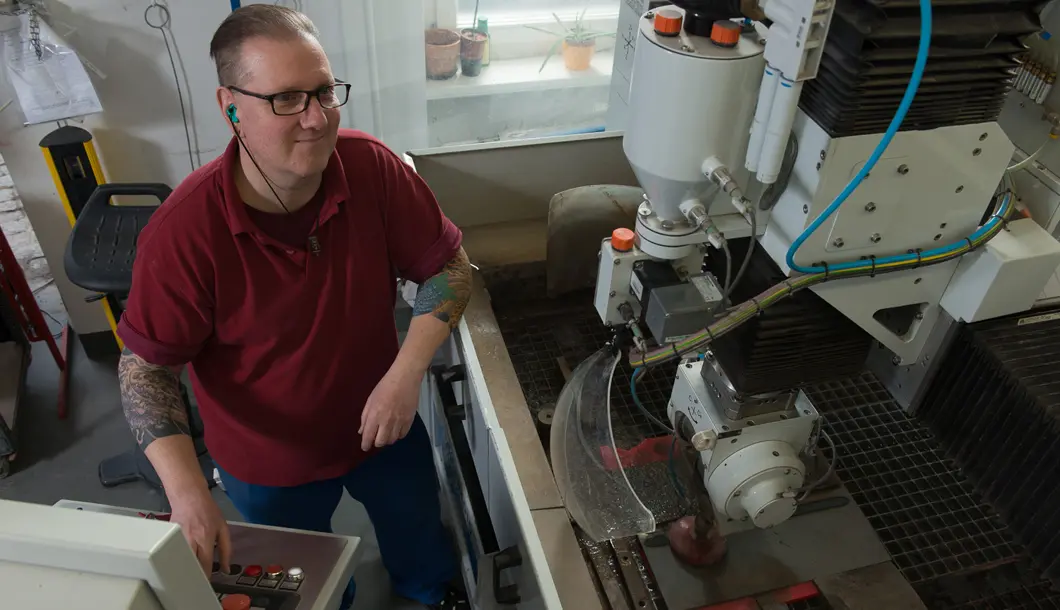
... and then cut by a mixture of water and fine-grained sand, also known as abrasive agent, at about 3000 bar pressure.
-
© BAM, Photo: Michael Danner
3 of 5
-
-
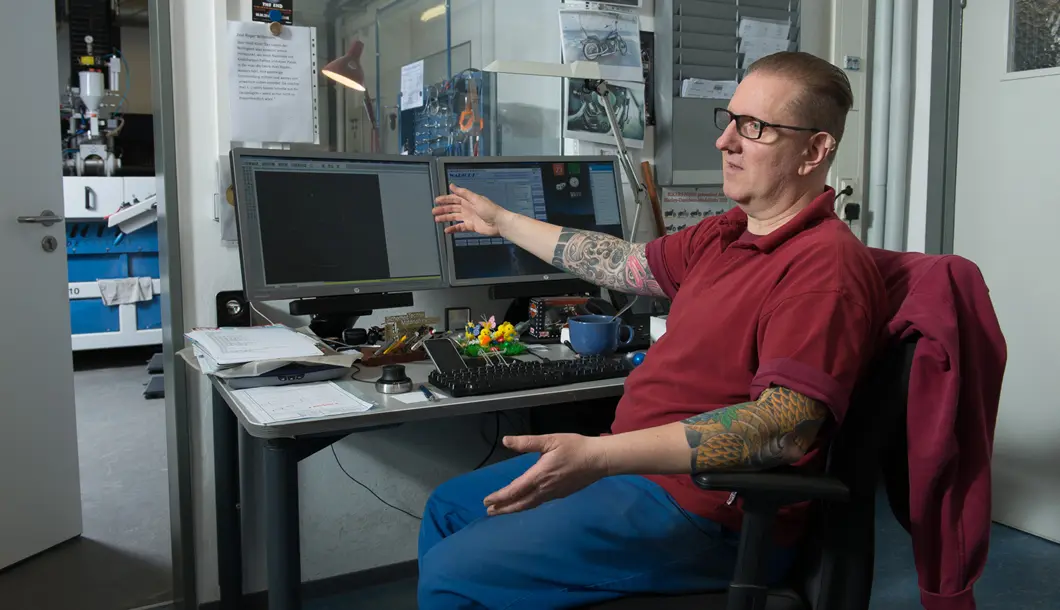
The BAM production facility team, where Harald Götsch works, can cut almost any shape – technical drawings produced on the PC are the basis for this.
-
© BAM, Photo: Michael Danner
4 of 5
-
-
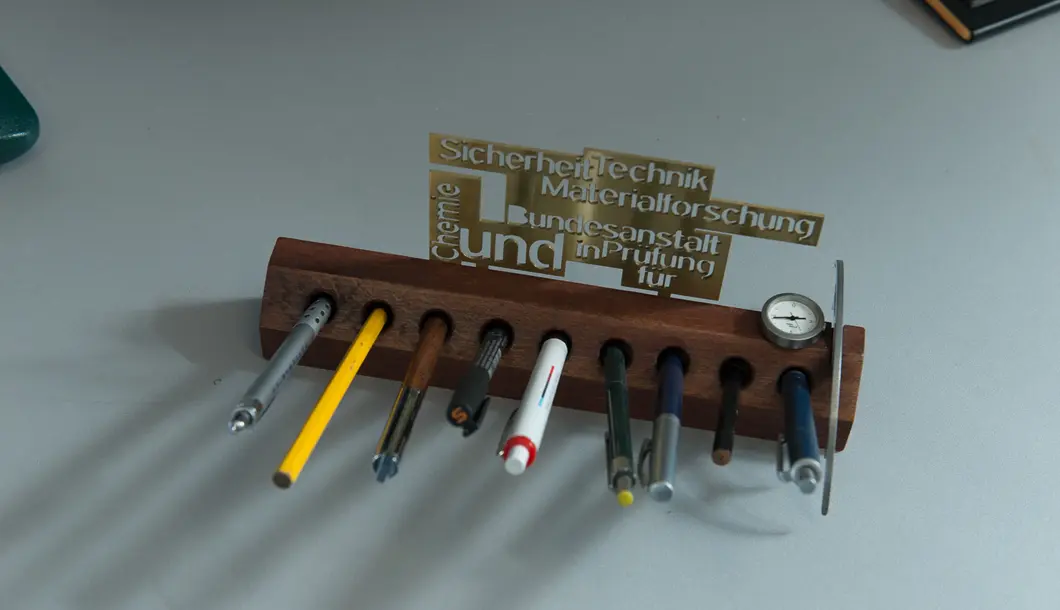
Harald Götsch has a creative and practical example on his desk: a BAM pencil holder specially cut by the water jet cutter.
-
© BAM, Photo: Michael Danner
5 of 5
-
Drawings by Adolf Martens
Image Gallery
Drawings by Adolf Martens
-
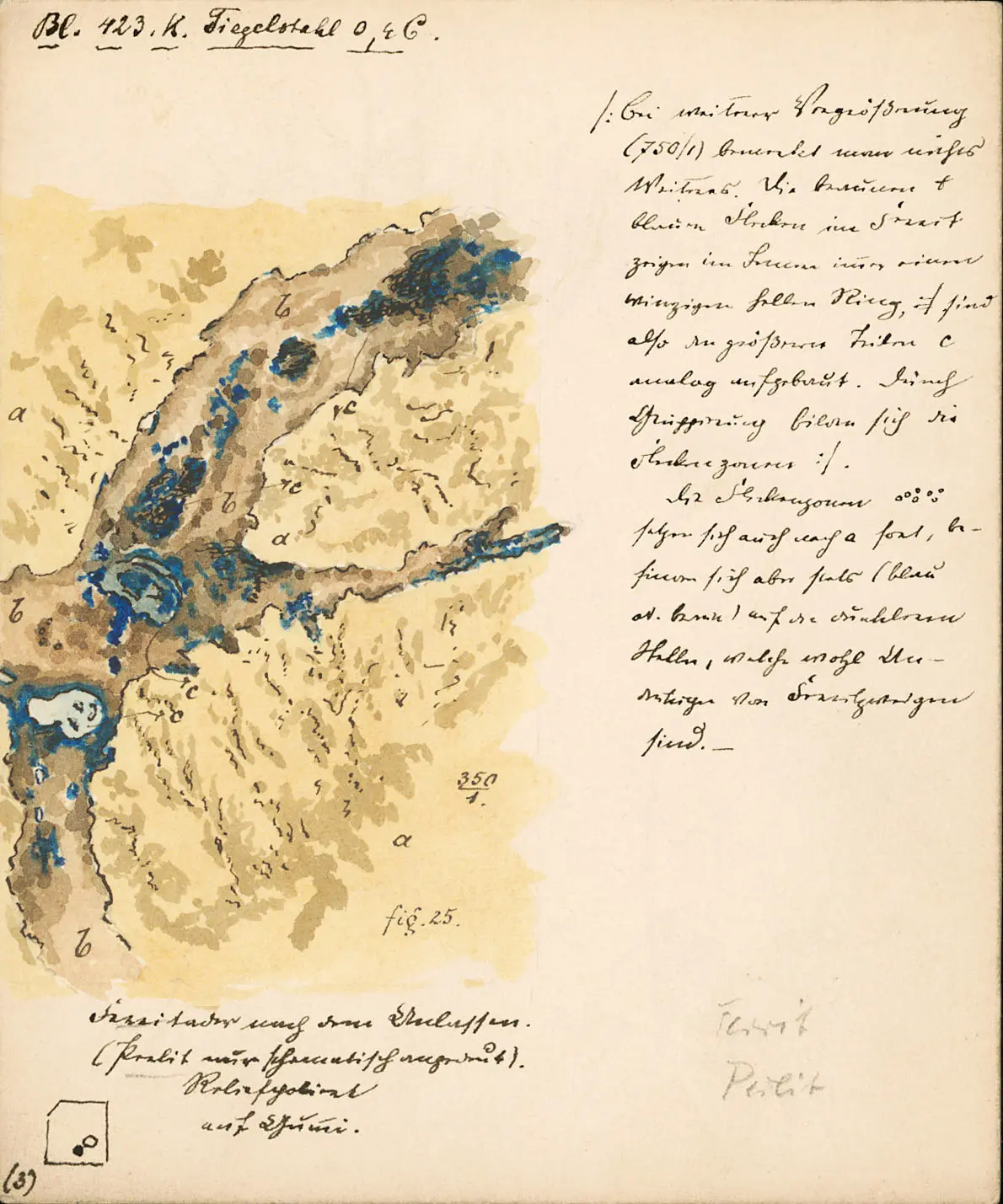
Drawing by Adolf Martens (1850-1914): ferrite vein after tempering; surface of crucible steel 0.4 C., structure with ferrite und perlite
-
© BAM
1 of 5
-
-
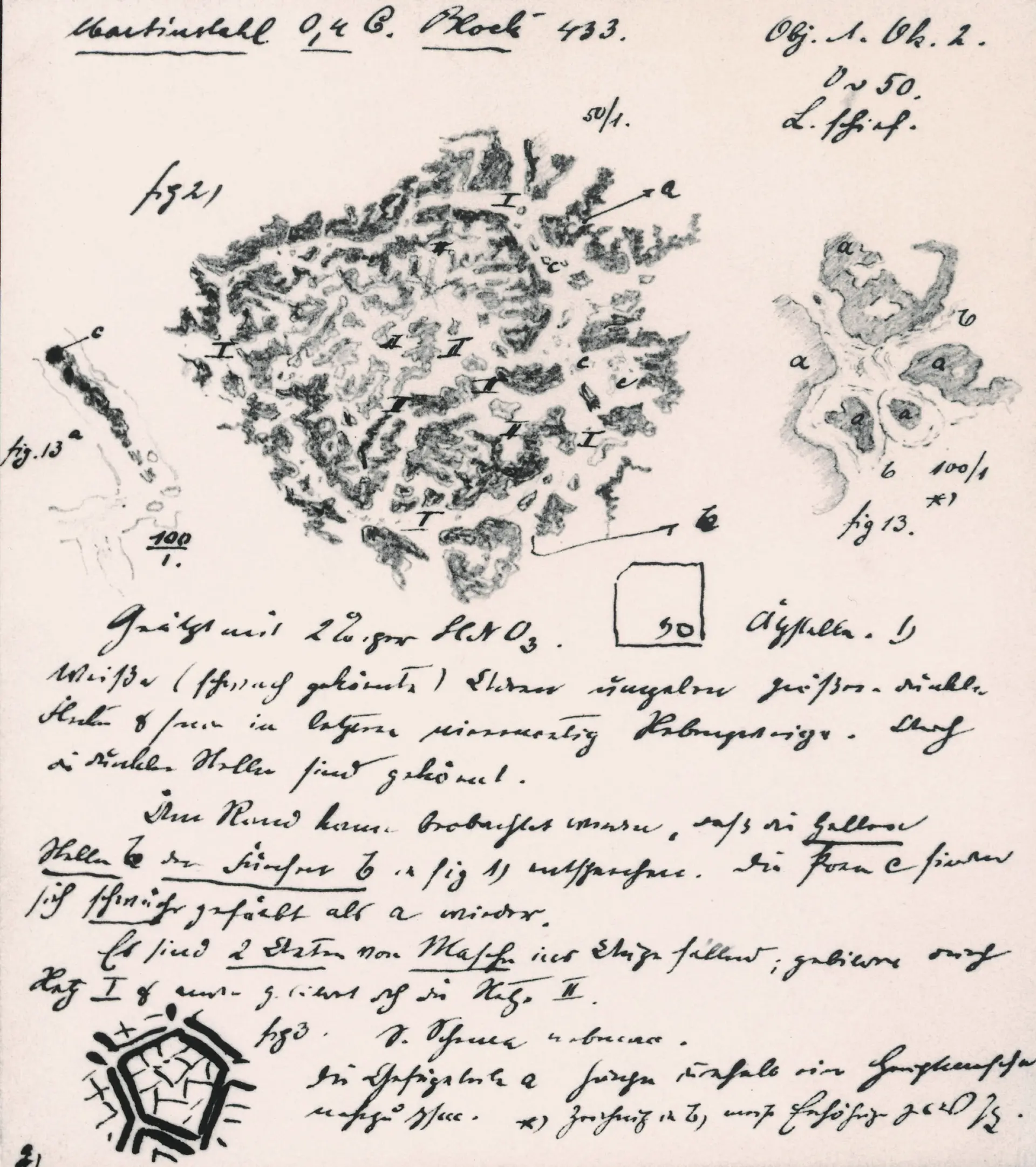
Drawing by Adolf Martens (1850-1914): surface of open-hearth steel 0.4 C., etched with 2-% nitric acid
-
© BAM
2 of 5
-
-
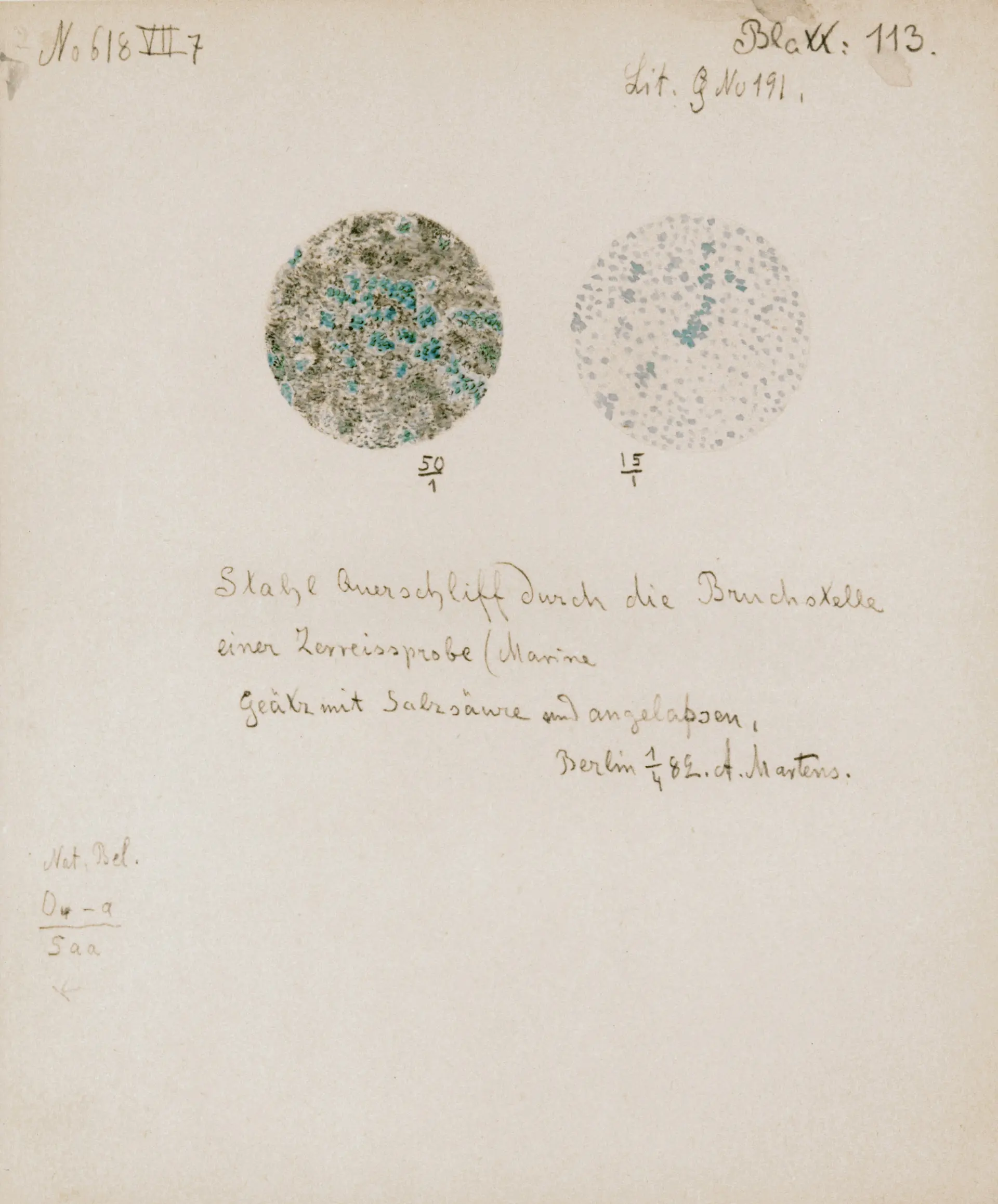
Drawing by Adolf Martens (1850-1914) from 1882: surface of steel, polished cross-section through the breaking point of a tensile specimen, etched with hydrochloric acid and tempered
-
© BAM
3 of 5
-
-
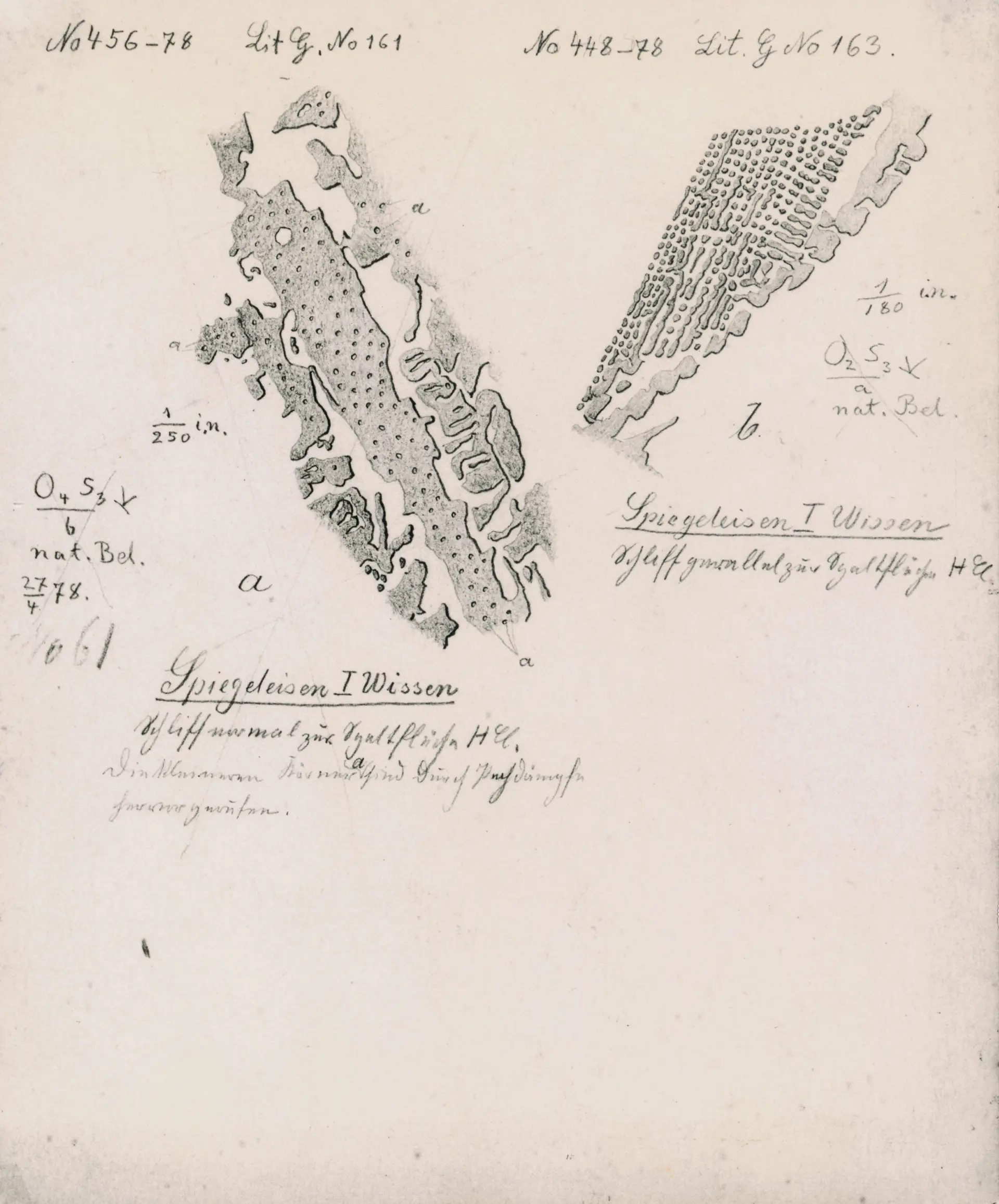
Drawing by Adolf Martens (1850-1914) from 1878: surface of so-called spiegeleisen, an iron-based material with high manganese content, etched with hydrochloric acid, polished section normal and parallel to the cleavage plane
-
© BAM
4 of 5
-
-
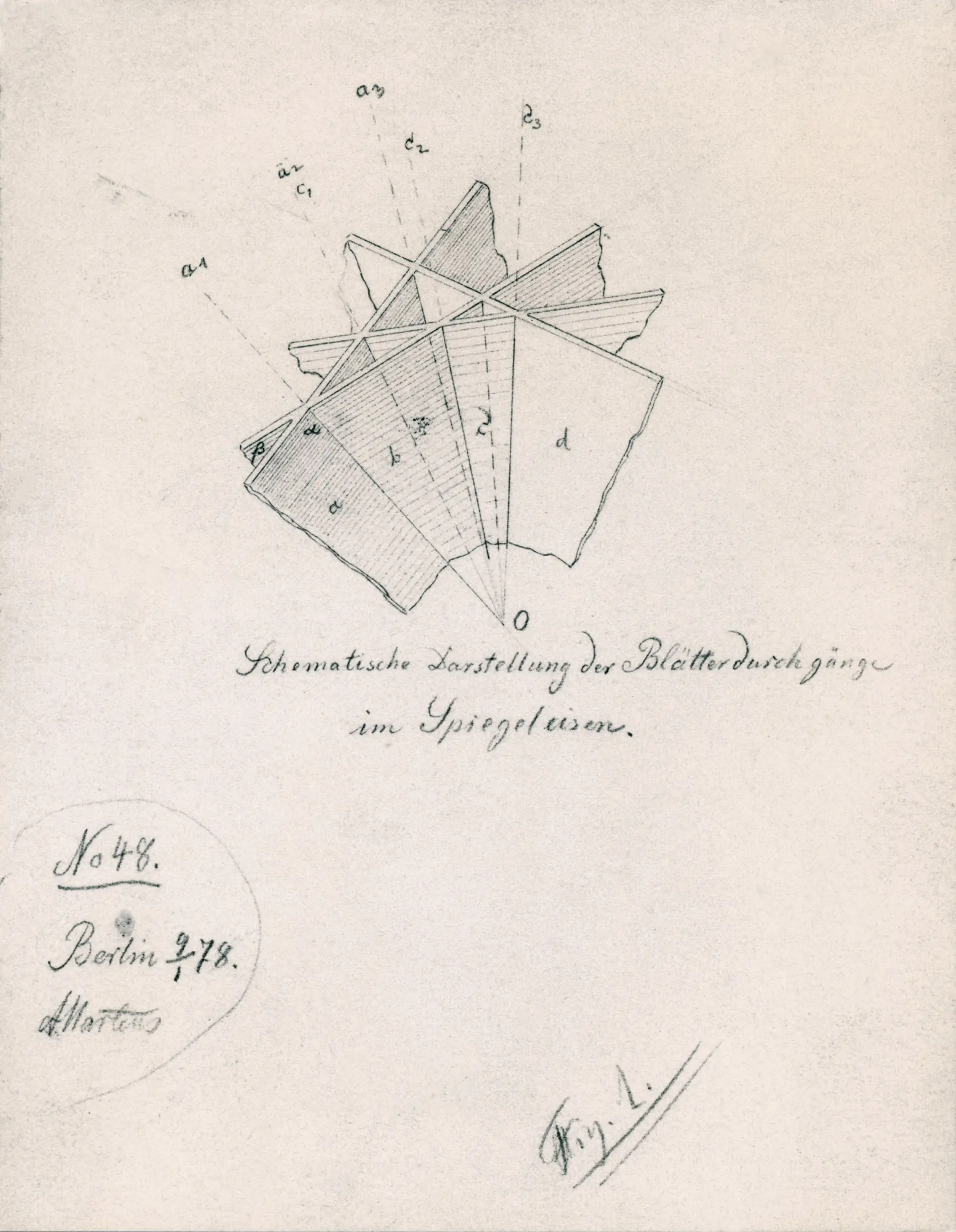
Drawing by Adolf Martens (1850-1914) from 1878: schematic illustration of cleavability in so-called spiegeleisen, an iron-based material with high manganese content.
-
© BAM
5 of 5
-
The Frozen Explosion
Image Gallery
The Frozen Explosion
-

From the observation bunker Kai Holtappel provides his colleagues with some last minute information shortly before the test starts.
-
© BAM, Image: Michael Danner
1 of 5
-
-
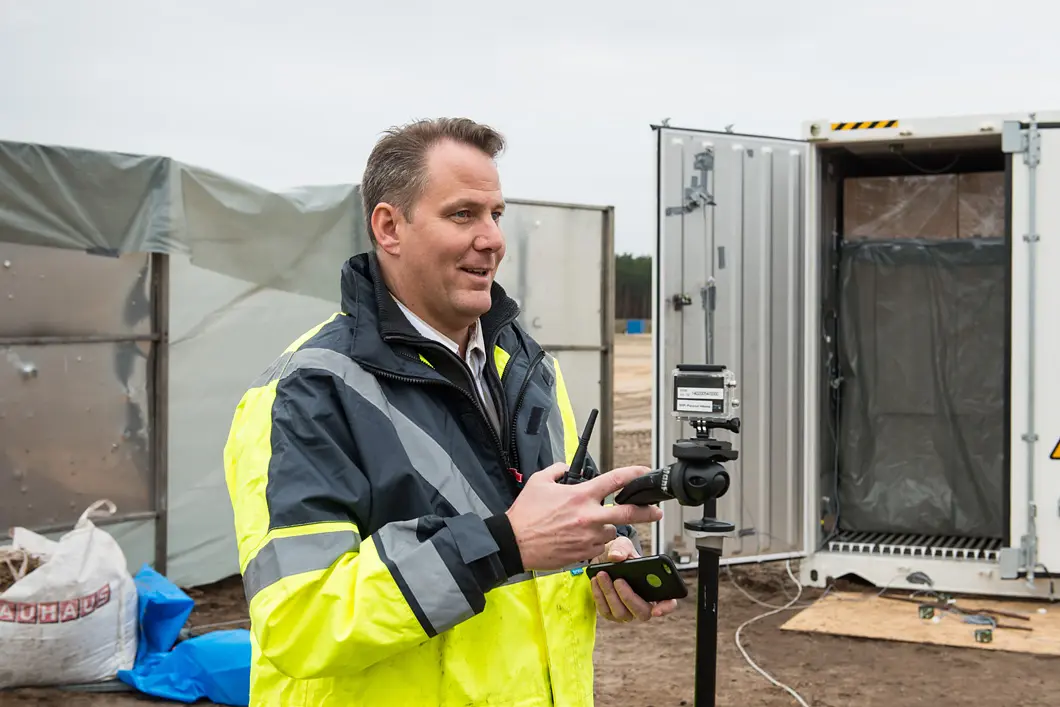
The test is being filmed using a camera...
-
© BAM, Image: Michael Danner
2 of 5
-
-
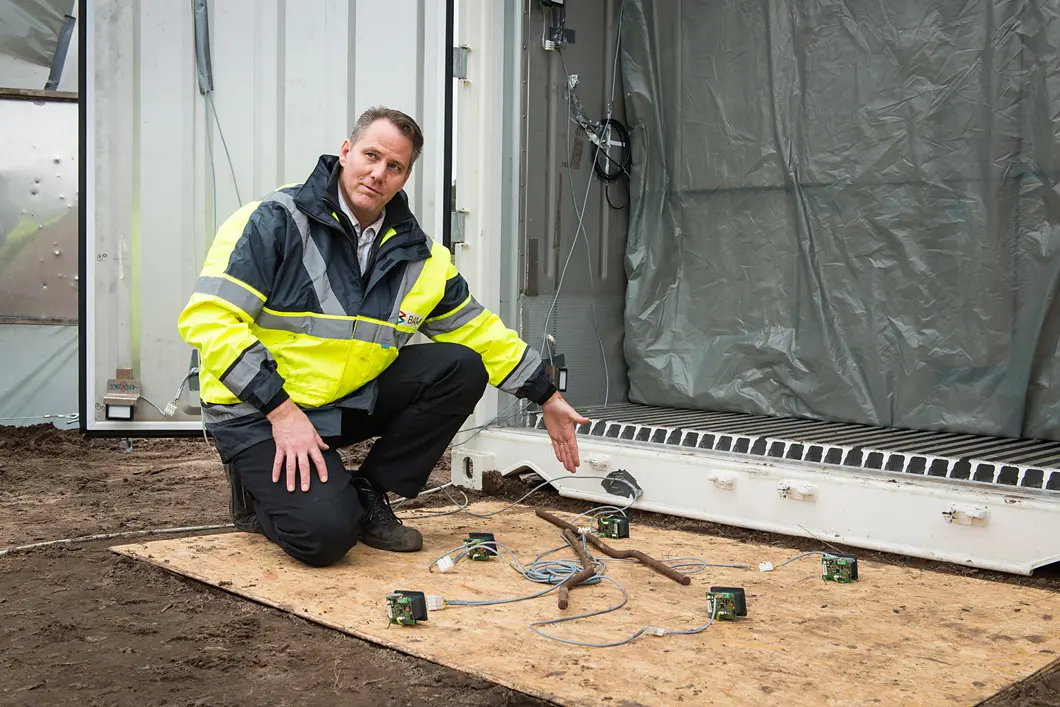
… and the gas leaving the container and its distribution is measured using sensors.
-
© BAM, Image: Michael Danner
3 of 5
-
-
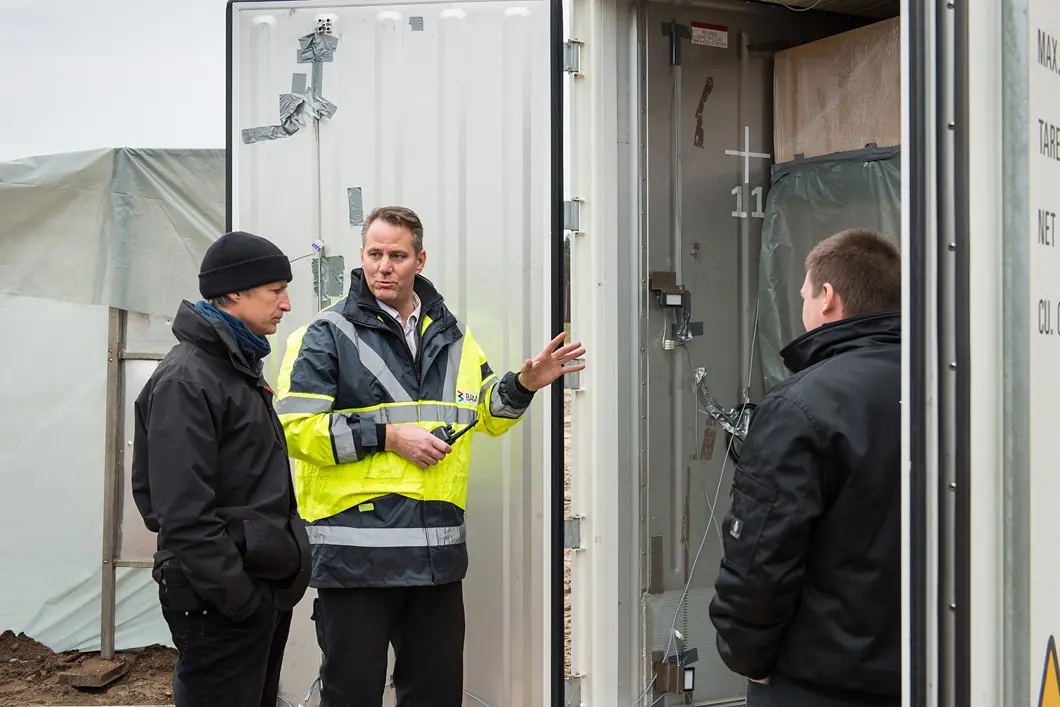
It is often more than an experiment. For example, different factors influencing the gas distribution such as wind or the container's own fan are considered and measured separately.
-
© BAM, Image: Michael Danner
4 of 5
-
-
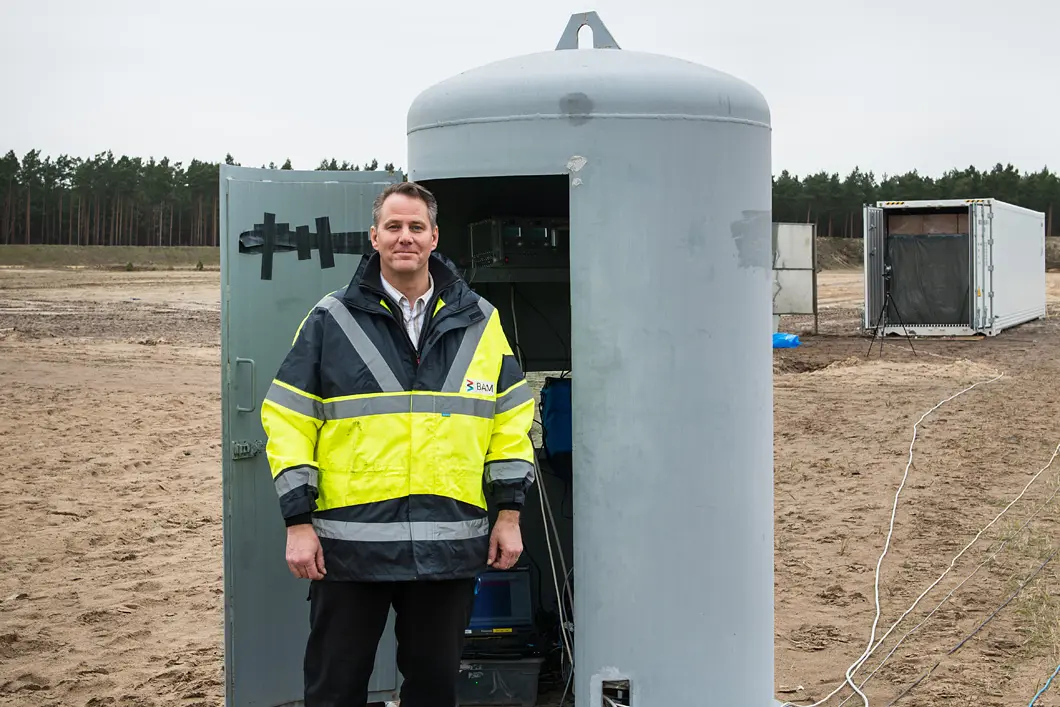
Inconspicuous and somewhat reminiscent of a brassy comic character: the "command centre" where the test series data are recorded on a PC.
-
© BAM, Image: Michael Danner
5 of 5
-
Down at the river
Image Gallery
Down at the river
-
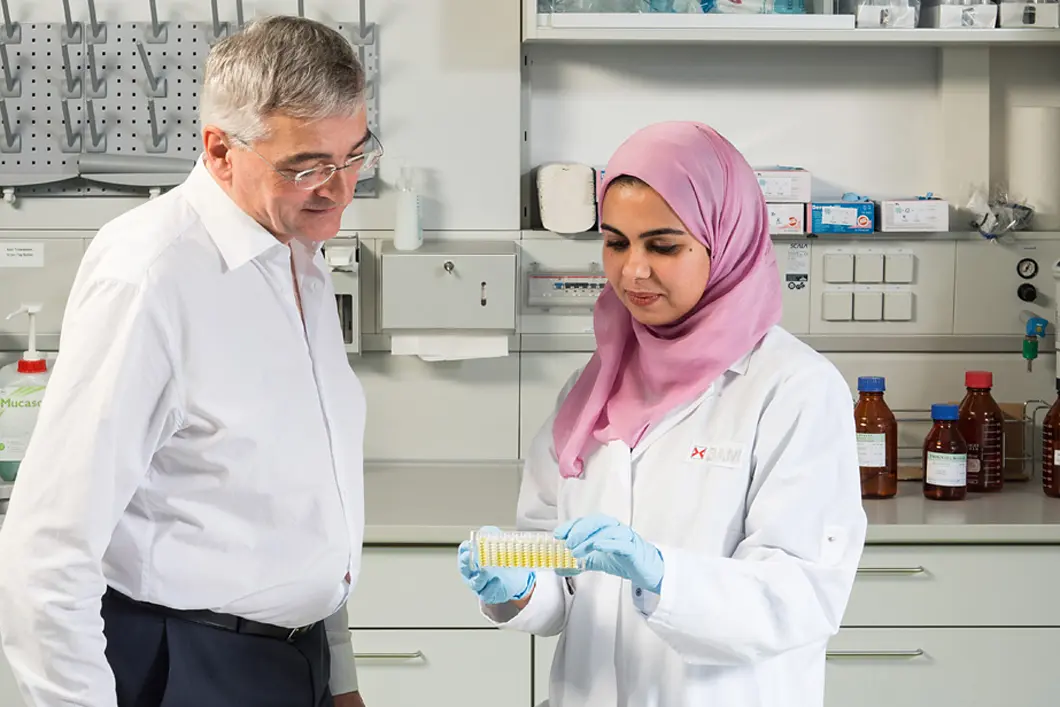
Dr. Rudolf Schneider‘s and Nahla Abdel Shafi‘s laboratory investigations rely on a proven test system using antibodies, i.e. immunoassays.
-
© BAM, Image: Michael Danner
1 of 5
-
-
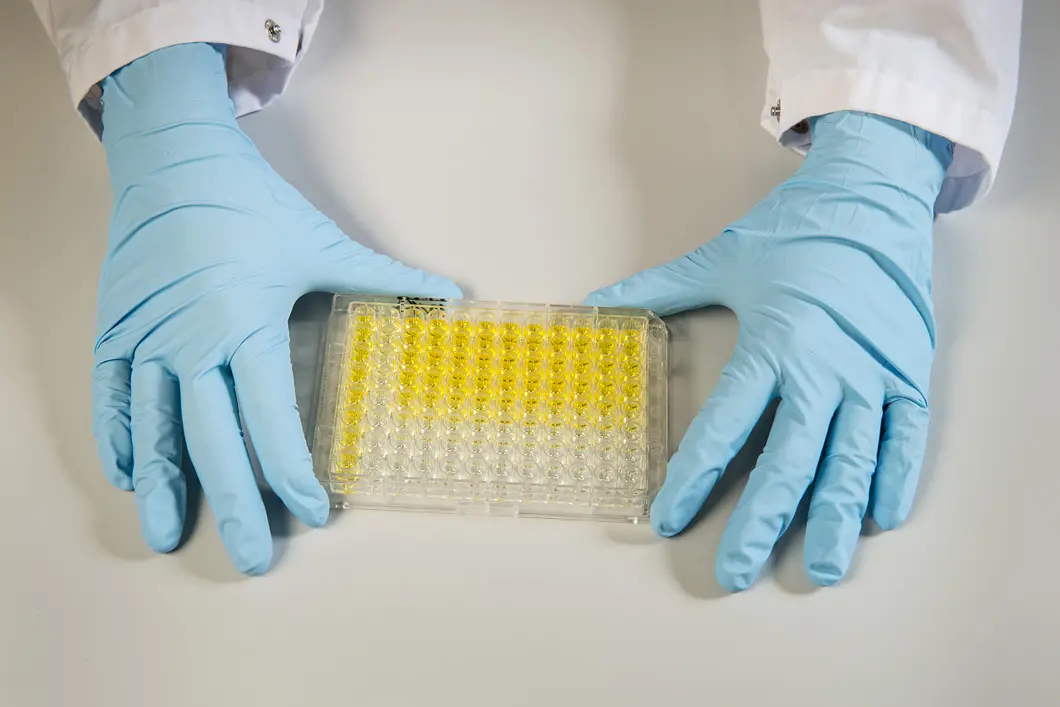
The advantage of immunoassays is that you need much less equipment than in the previous, elaborate methods.
-
© BAM, Image: Michael Danner
2 of 5
-
-
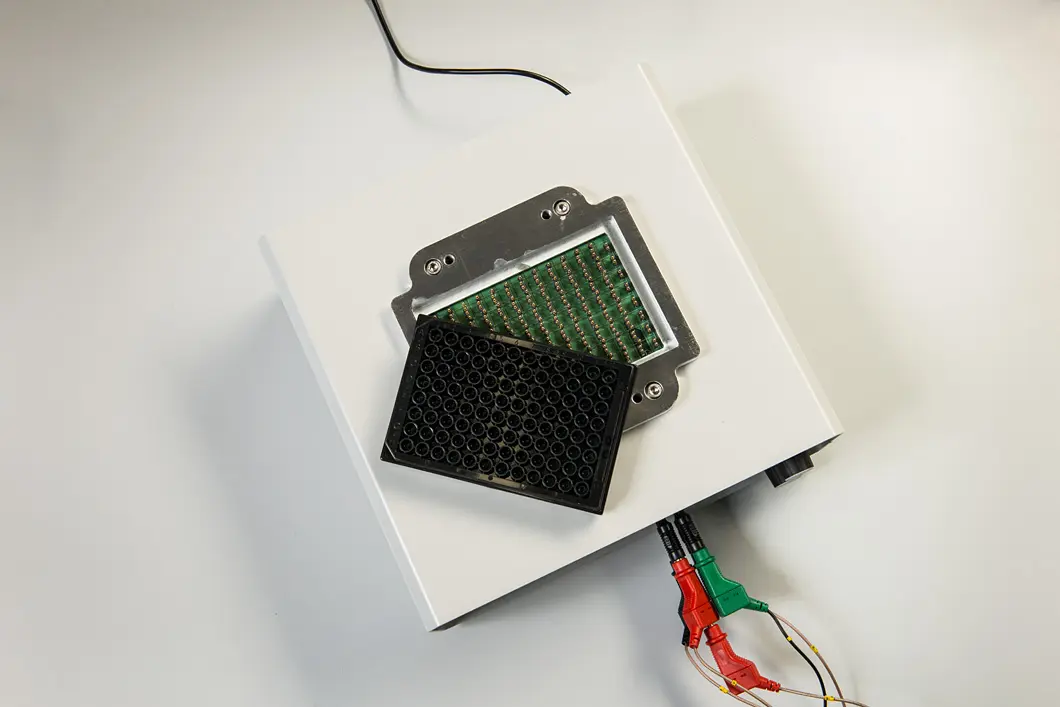
Less equipment also means that one can take swift action and carry out measurements on site, especially in the case of an emergency. For this, the technology must be light and easy to transport.
-
© BAM, Image: Michael Danner
3 of 5
-
-
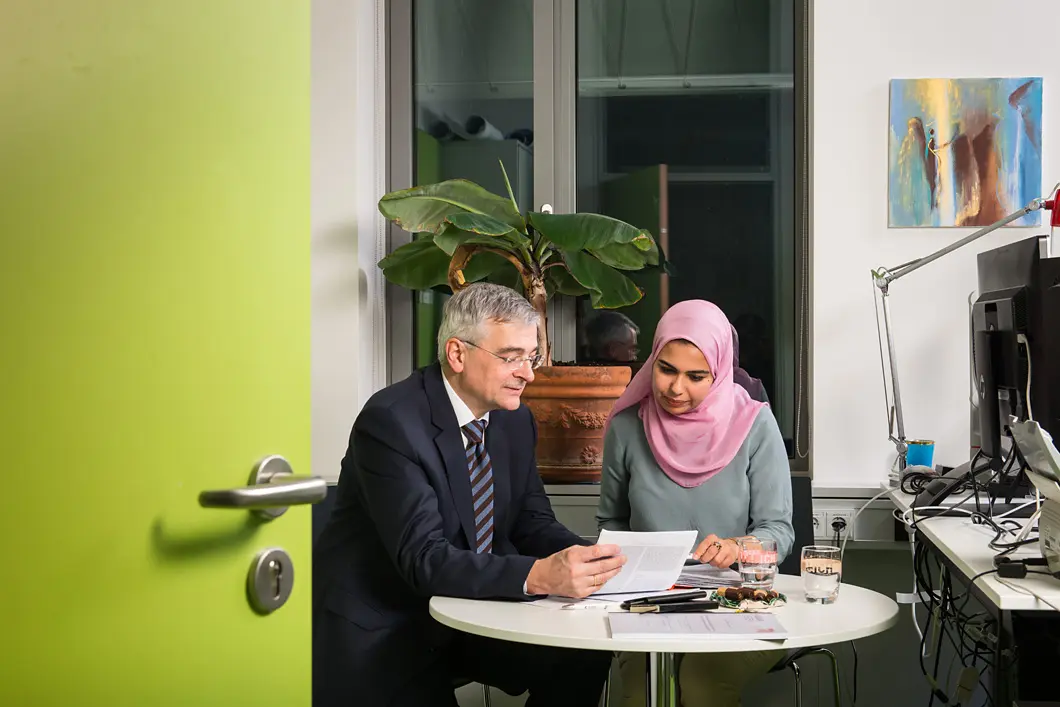
Dr. Rudolf Schneider’s and Nahla Abdelshafi’s work aims to develop measurement stations close to each other to ensure comprehensive tests.
-
© BAM, Image: Michael Danner
4 of 5
-
-

Dr. Rudolf Schneider is supervising ten Ph.D. students who are researching into environmental analytics here in Adlershof.
-
© BAM, Image: Michael Danner
5 of 5
-
Add: Sugar
Image Gallery
Add: Sugar
-

A termite strain in BAM’s basement. Altogether there are 30 species of these animals.
-
© BAM, Image: Michael Danner
1 of 5
-
-

Dino McMahon’s stock of termites at BAM is "probably the best in the world".
-
© BAM, Image: Michael Danner
2 of 5
-
-
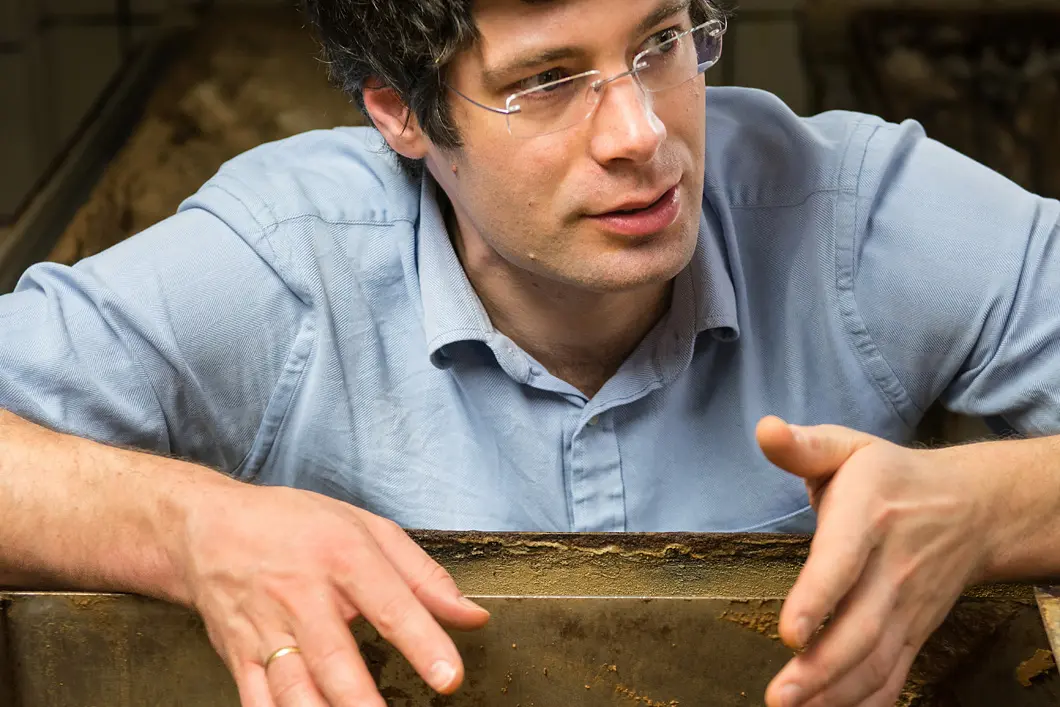
Evolutionary biologists are particularly interested in the social behaviour of the animals, he explains.
-
© BAM, Image: Michael Danner
3 of 5
-
-

Under video observation: a group of termites that were infected with the immune blocker GDL in a long-term test.
-
© BAM, Image: Michael Danner
4 of 5
-
-

A field test, also in the basement: there is a piece of wood with about 1000 termites in each of 36 separate beds.
-
© BAM, Image: Michael Danner
5 of 5
-
From Lisbon to Berlin
Image gallery
Manuel Piedade is an associate professor of Chemistry and Biochemistry at the Faculty of Sciences of the University of Lisbon (FCUL). As part of a sabbatical leave, he came to Berlin-Adlershof, more precisely to BAM. Here, together with Dr. Franziska Emmerling, head of the Analytical Chemistry; Reference Materials department and her team, he is conducting research on mechanochemical synthesis.
For more infomation read the interview with Manuel Piedade: From Lisbon to Berlin
From Lisbon to Berlin
-
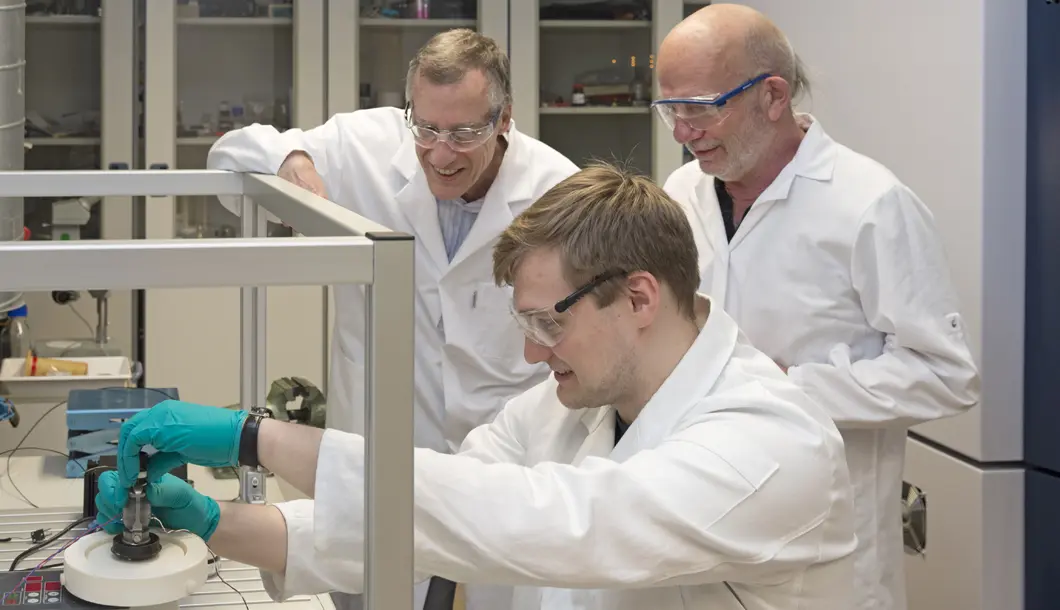
Prof. Manuel Piedade together with the BAM team is conducting research on mechanochemical methods, which also play an important role in developing novel pharmaceuticals.
-
© BAM
1 of 4
-
-
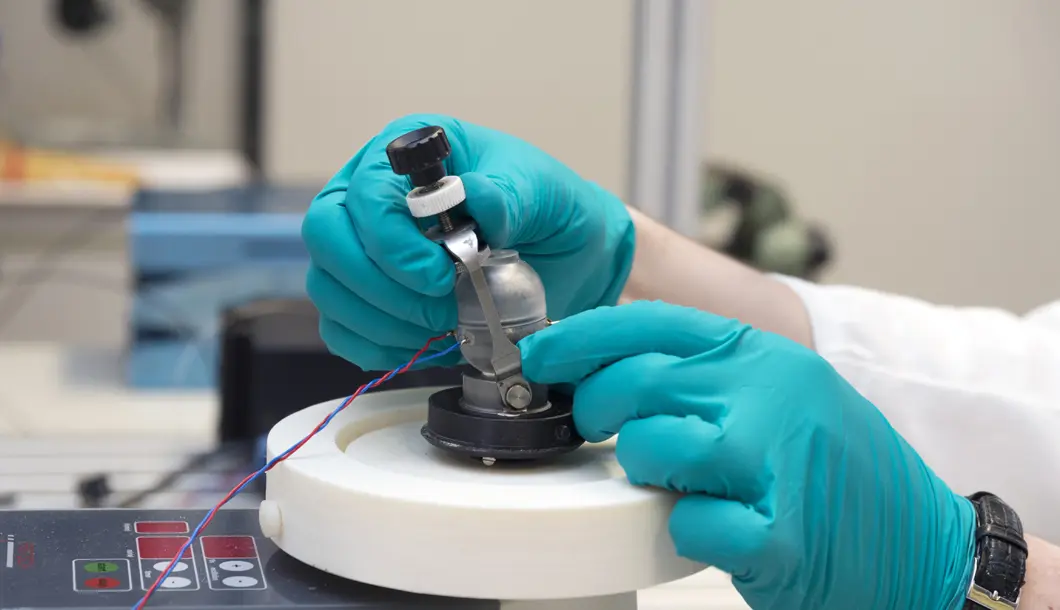
Their focus is on designing and building a prototype of a ball mill, whose core (the milling jar) looks a bit like a surprise egg.
-
© BAM
2 of 4
-
-

Besides the mechanochemical apparatus, Prof. Manuel Piedade is also working with the BAM team on the development of other devices, such as a new cell for solution calorimetry studies.
-
© BAM
3 of 4
-
-
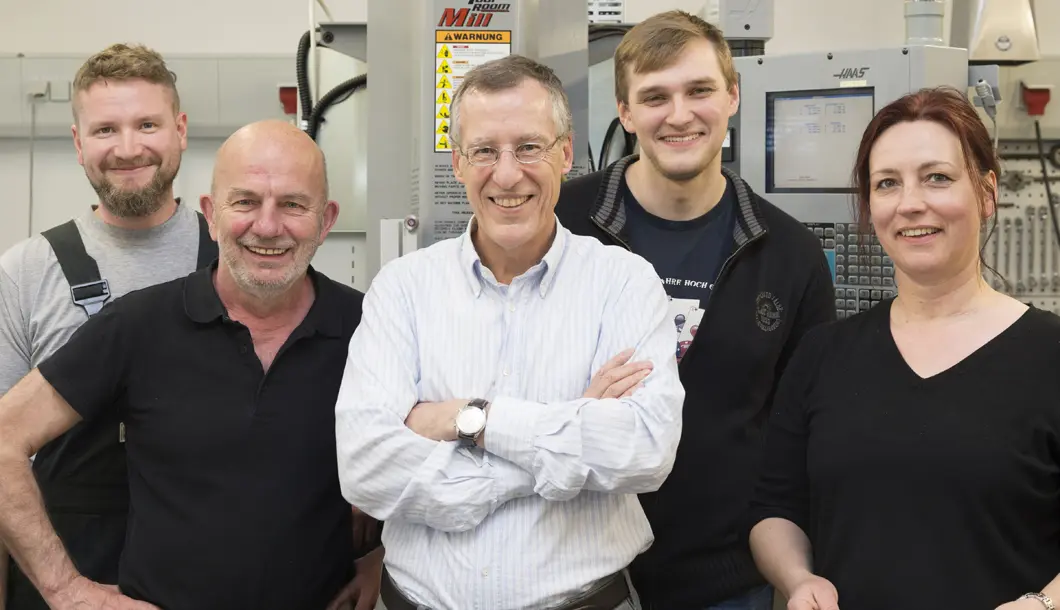
Prof. Manuel Piedade (middle) and the BAM team in their workshop (from left to right): Christoph Naese, Klaus-Jürgen Wenzel, Kevin Linberg and Bettina Röder.
-
© BAM
4 of 4
-
Building Bridges
Image Gallery
Building Bridges
-
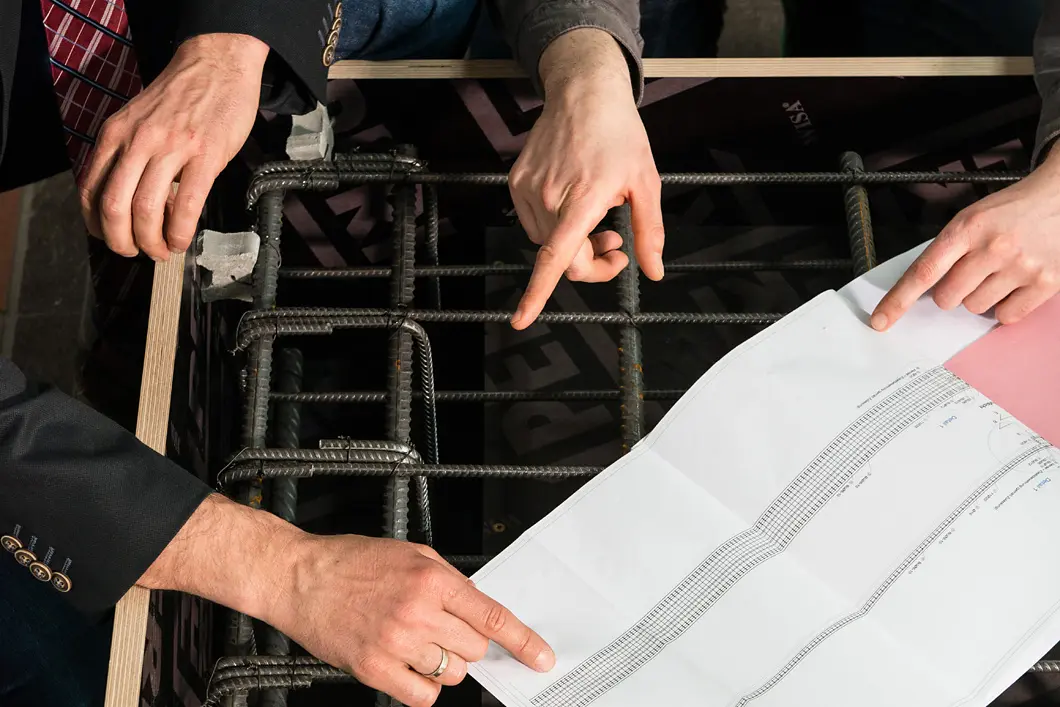
A "reference body" made from concrete and steel reinforcement is built for the bridge tests. Here we see the start of the construction.
-
© BAM, Image: Michael Danner
1 of 5
-
-
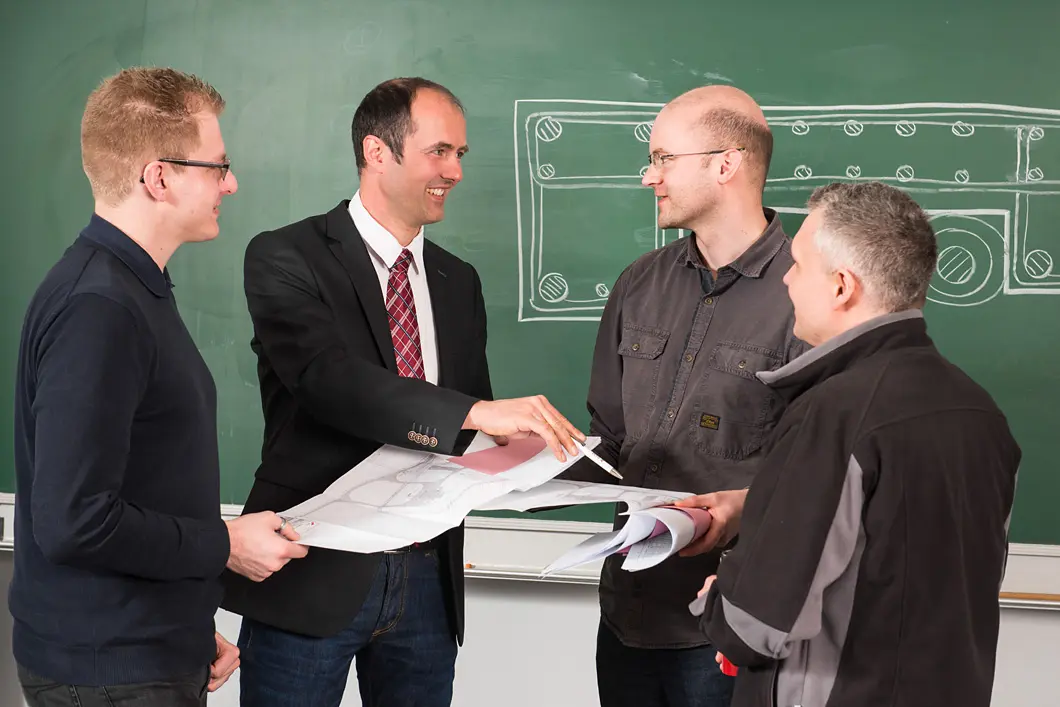
Different bridge segment geometries were debated by the scientists. The result is: they will have the shape of an inverted U.
-
© BAM, Image: Michael Danner
2 of 5
-
-
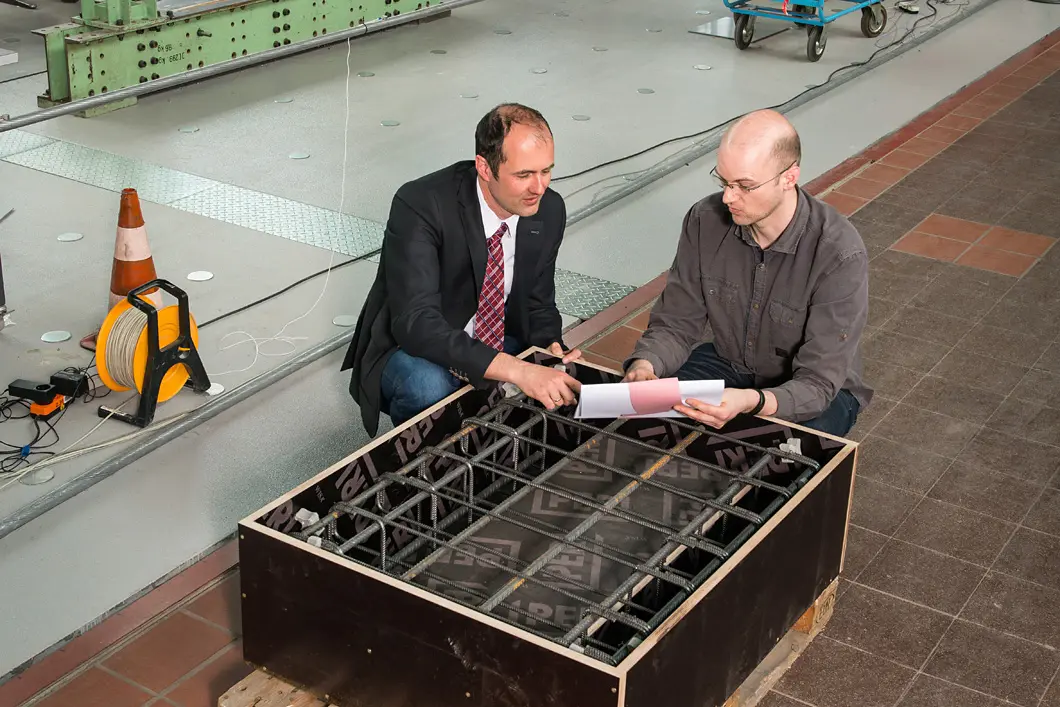
The entire measurement technology should be accommodated. Götz Hüsken (right) from the Department of Safety of Structures discusses the issue with Jörg Unger.
-
© BAM, Image: Michael Danner
3 of 5
-
-
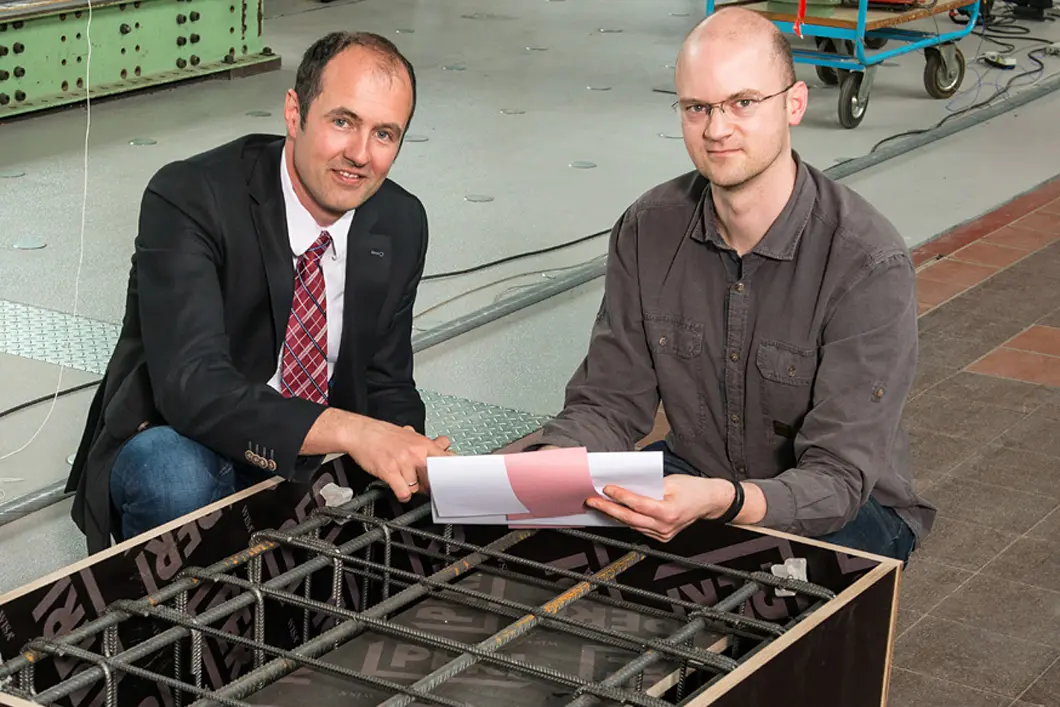
Götz Hüsken has tested the planned materials in different bending beam tests.
-
© BAM, Image: Michael Danner
4 of 5
-
-
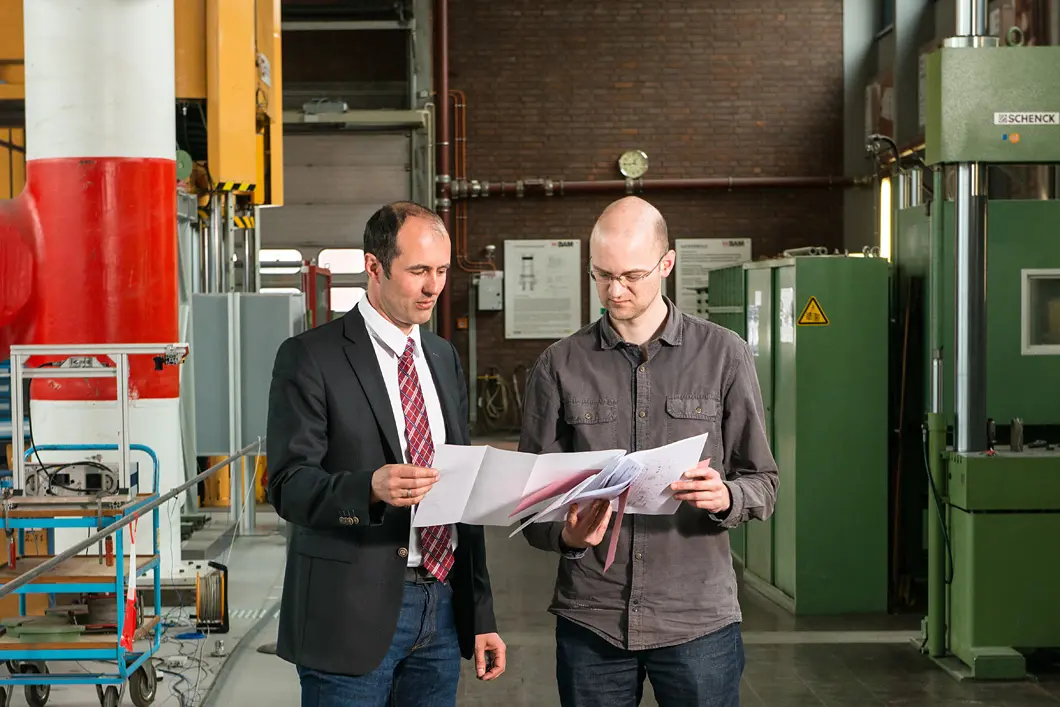
Preparatory work in the test halls in Berlin has made good progress. The next step will be made at Horstwalde, where the real thing will be built.
-
© BAM, Image: Michael Danner
5 of 5
-
The Trace Finder
Image gallery
Dr Björn Meermann has been leading the Inorganic Trace Analysis Division at BAM at BAM since June 2019. He previously worked as a chemist at the Federal Institute of Hydrology (Bundesanstalt für Gewässerkunde) in Koblenz and also lectured at the university there. A discussion on precision and the limits of research.
The Trace Finder
-
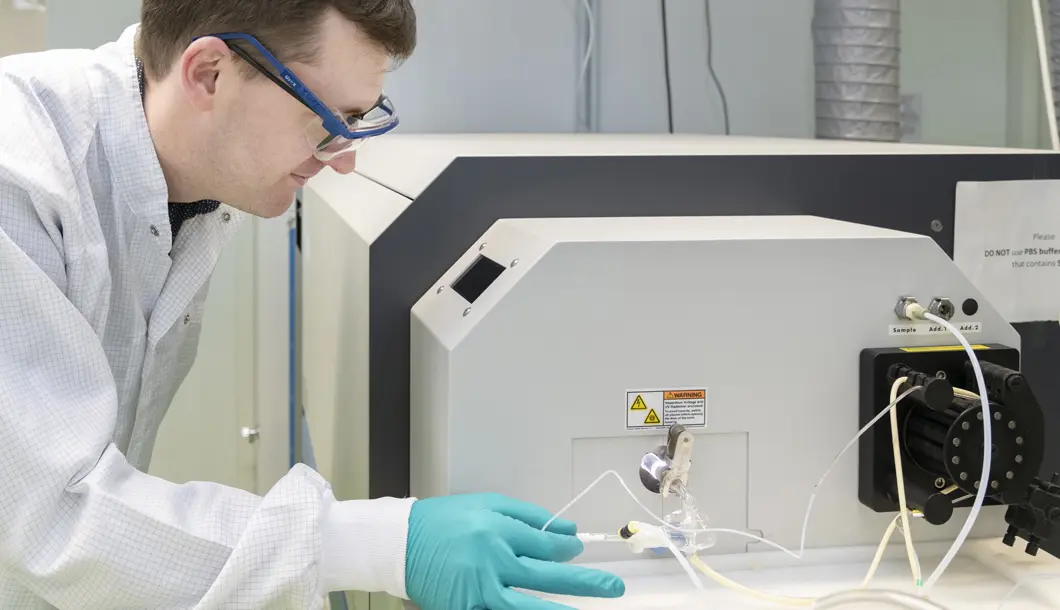
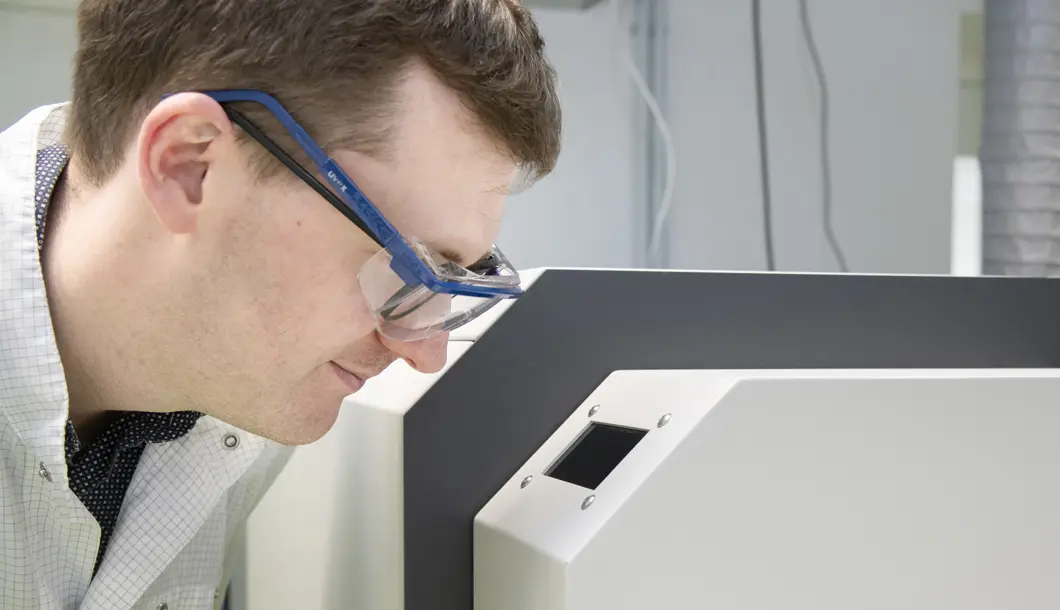
As a trace analysts, Dr Björn Meermann investigates samples in the micro- or nanogram range...
-
© BAM
1 of 5
-
-
...because it is important to closely examine certain elements that can be potentially harmful, such as mercury, cadmium or lead and to explore these extreme measuring ranges.
-
© BAM
2 of 5
-
-
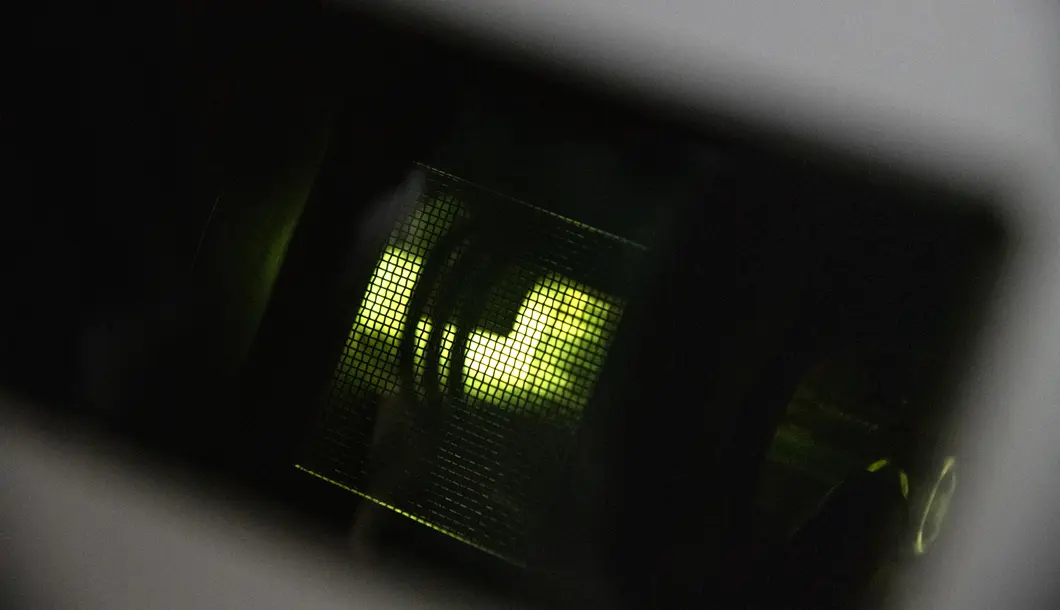
His most important tool is a plasma mass spectrometer in which the substances ionised or vaporised into gas begin to glow.
-
© BAM
3 of 5
-
-
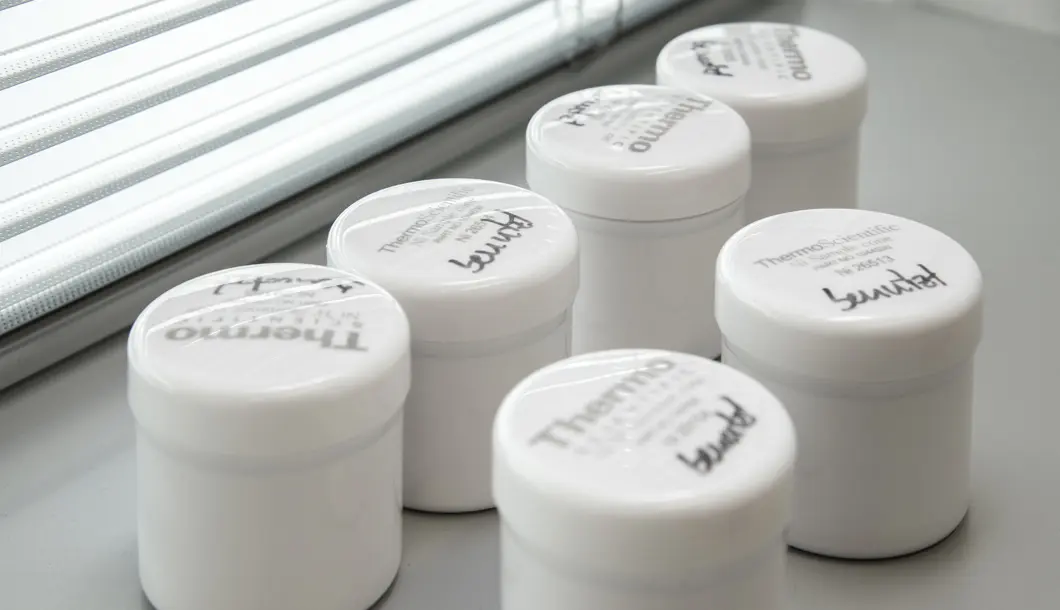
Working in this extreme range requires extreme precision, diligence and neatness.
-
© BAM
4 of 5
-
-
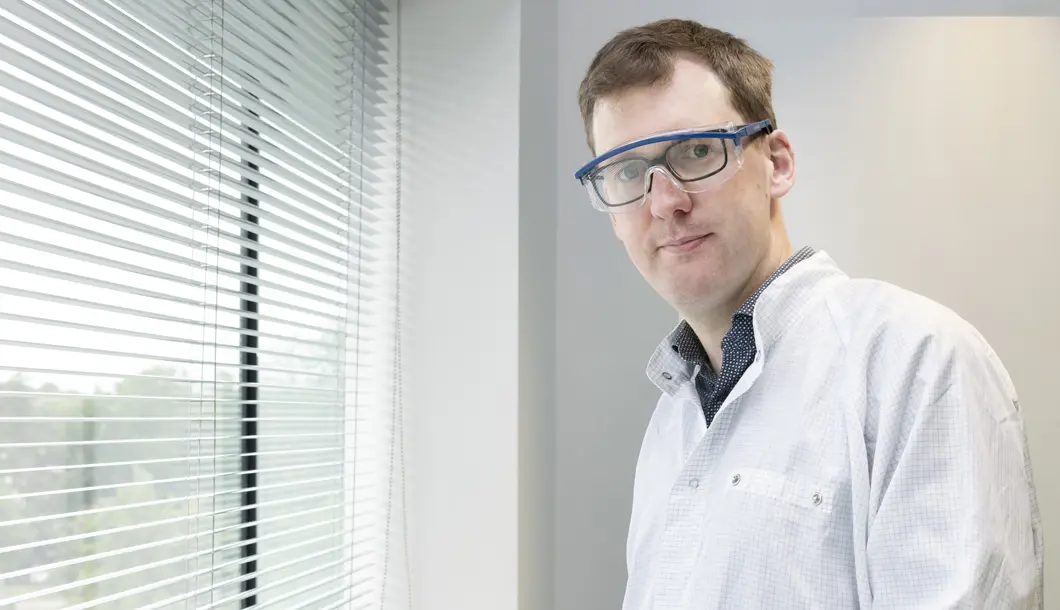
One future goal: Björn Meermann would like to characterise and quantify nanoparticles that are only a few thousandths of a millimetre in size and occur in foods, textiles and cosmetics, for example, and can thus enter the environment, and create a database for their subsequent evaluation.
-
© BAM
5 of 5
-
Flying by
Image Gallery
Flying by
-
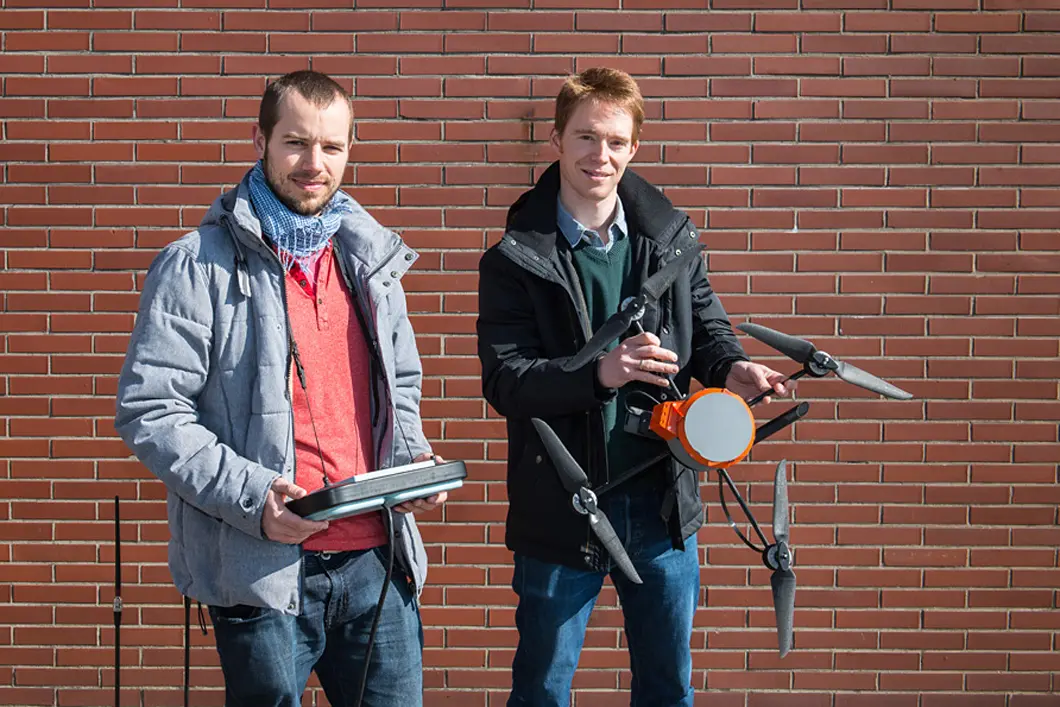
Dr.-Ing. Matthias Bartholmai and Dr. Patrick Neumann have been working together to get sensors onto quadrocopters to locate gas sources since 2008.
-
© BAM, Image: Michael Danner
1 of 4
-
-
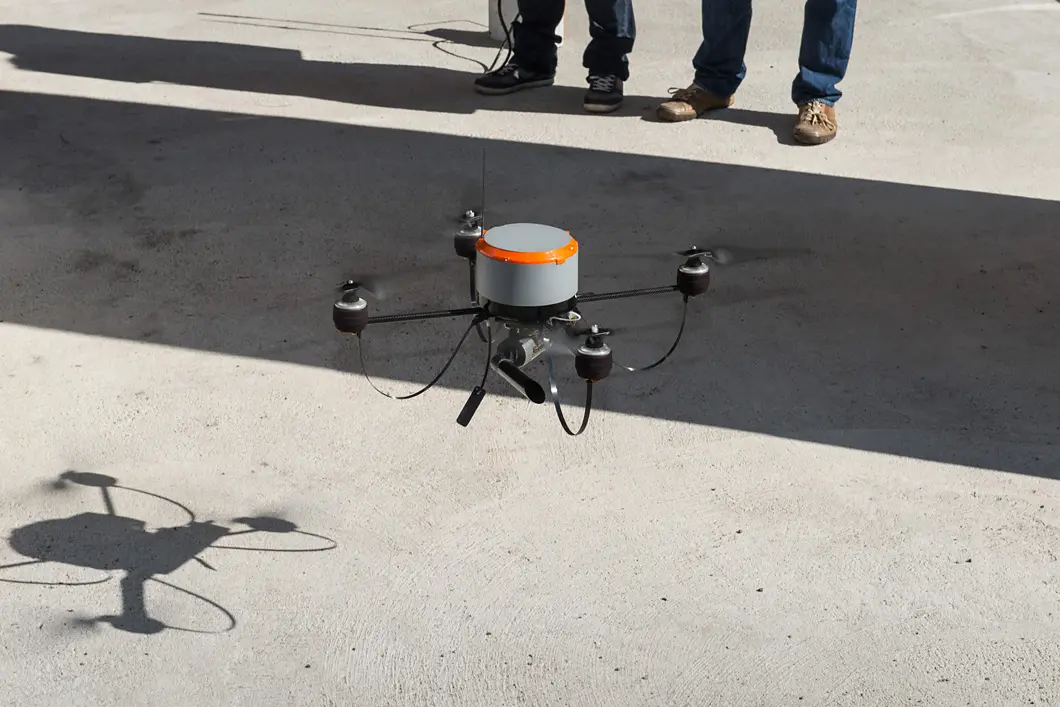
A flying sensor unit has the advantage that you do not have to expose humans to risk when measuring traces of environmental poisons.
-
© BAM, Image: Michael Danner
2 of 4
-
-
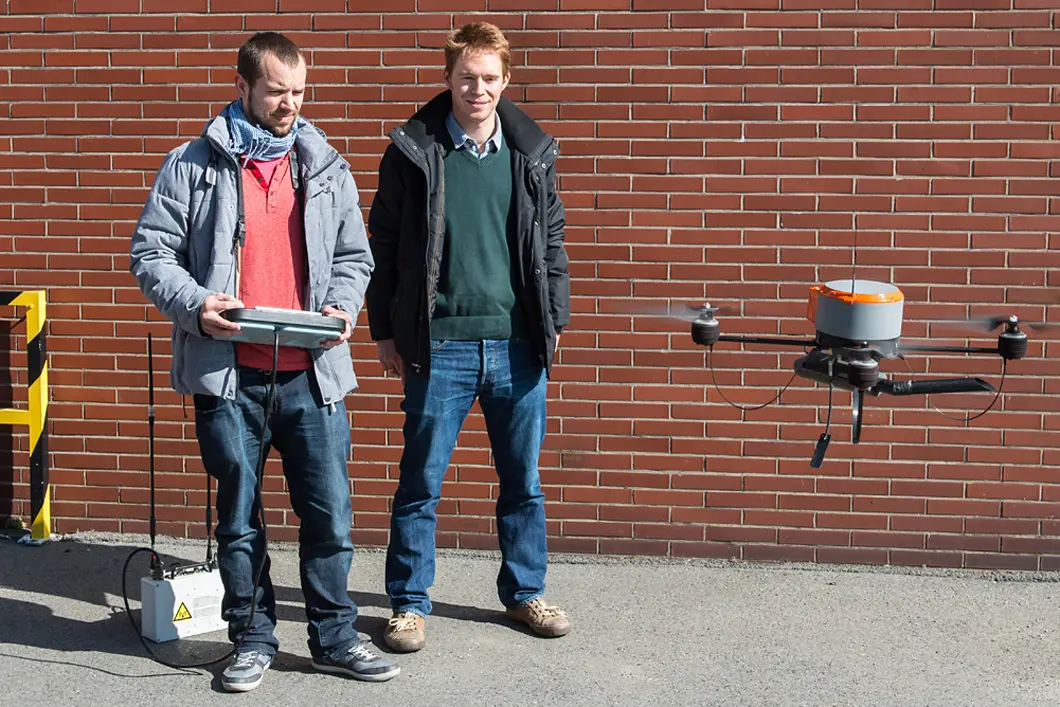
Since the first successful prototype the two of them have been researching possible improvements in terms of range and performance.
-
© BAM, Image: Michael Danner
3 of 4
-
-
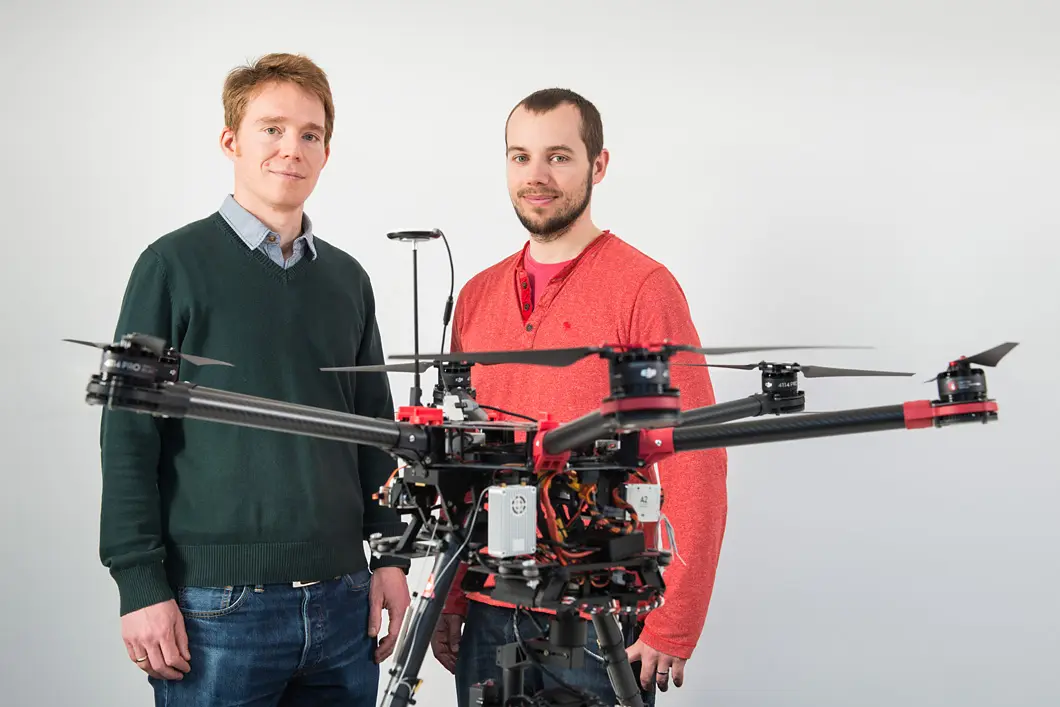
They now have a larger platform, which has six rotors and an integrated self-stabilising open-path laser that can measure gases up to 30 metres away from the aircraft. The link between the flight deck and such a sensor is unique worldwide.
-
© BAM, Image: Michael Danner
4 of 4
-