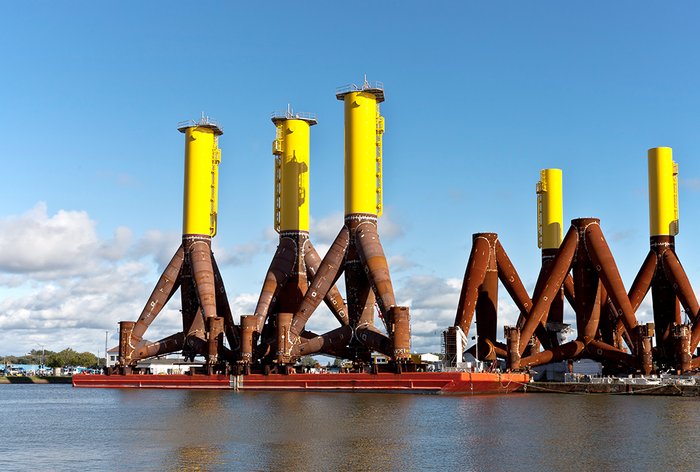
Federal Minister Robert Habeck is visiting the Bundesanstalt für Materialforschung und -prüfung (BAM) in Berlin today. On site, he will inform himself about two competence centres on hydrogen and wind energy that BAM operates. As part of its mission to further…
The Bundesanstalt für Materialforschung und -prüfung (BAM) has developed an innovative method that uses algorithms from face recognition to determine the ageing of lithium-ion batteries. The method is intended to help companies develop longer-lasting and at the same…
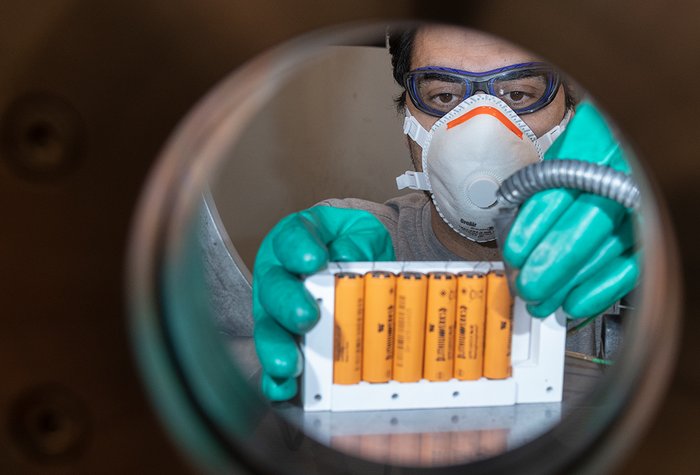
Electrical energy storage systems, which today are mainly based on lithium-ion technology, are a key to e-mobility and the energy transition. The Bundesanstalt für Materialforschung und -prüfung (BAM) is now opening a new battery test centre at its headquarters in…
Germany wants to become a world leader in the field of green hydrogen technologies. The Federal Ministry of Education and Research (BMBF) is therefore promoting the transition to a hydrogen economy with the flagship project H2Mare. The Bundesanstalt für…
BAM is setting up a large-scale test facility to test stationary electrical energy storage systems up to 500 kilowatt hours on a real scale. Until now, the storage systems, which are an important part of the energy transition, have mostly only been tested in…
The Federal Institute for Materials Research and Testing (BAM) is continuing its research projects on highly efficient gas turbines at the Werner-von-Siemens Centre for Industry and Science e.V. (WvSC) for another two years. The projects, which are funded by the…
In a new EU project, the Bundesanstalt für Materialforschung und -prüfung (BAM) is developing standardized measurement methods for investigating the surfaces of nanoparticles. The goal is to further improve the functionality and safety of nanoparticles. Due to their…
The Federal Institute for Materials Research and Testing (BAM) is working with partners from Italy and France to investigate the safety of nanomaterials in lithium-ion batteries (LIBs). The aim is to develop reliable assessments of potential risks during manufacture,…
Titanium metal is a critical raw material that the EU imports largely from Kazakhstan, Russia, and China. The Federal Institute for Materials Research and Testing (BAM) is part of a large EU consortium that aims to reduce dependence on imports while drastically…
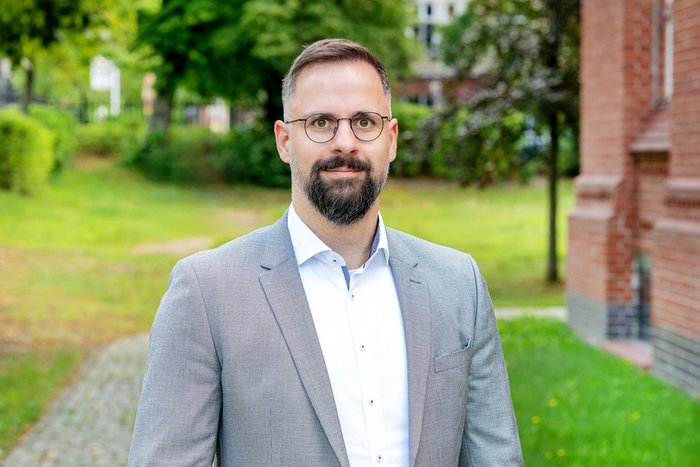
The Federal Institute for Materials Research and Testing (BAM) has appointed Kai Hilgenberg as the new head of the Component Safety department. With many years of experience in laser material processing and additive manufacturing, he brings comprehensive expertise in…
BAM is a senior scientific and technical Federal institute with responsibility to the Federal Ministry for Economic Affairs and Energy.