
„Science is a tool to solve problems in society“
Interview

Dr. Marc Benjamin Hahn, Physical and Chemical Analysis of Polymers Division
Interview series "Introducing People@BAM"
Dr. Marc Benjamin Hahn, Physical and Chemical Analysis of Polymers Division
Marc, tell us a little bit about yourself. What did you do in "your life before BAM”?
I studied physics at "Freie Universität Berlin" with a focus on surface science and magnetism. During this period, I had the great opportunity to spend some time abroad, at the "Universidad de Cantabria" in Spain and "Alexandria University" in Egypt. From a personal as well as professional perspective, both stays were very enriching. To live, learn, work and discuss in such diverse social and cultural surroundings, provided me with a huge variety of valuable experiences and new insights.
What inspired you to pursue a career in science?
The main motivation to study physics was clearly to understand "Was die Welt im Innersten zusammen hält". However, after a while it became clear to me, that each newly discovered answer provides you with additional, even more challenging questions. Thus, the additional motivation, to use science as a tool to solve (at least some) problems in society, became stronger. Which finally made me become involved in radiation biophysics.
Do you have any role models and, if so, which ones?
I wouldn’t say that I have a specific role model. But there are many people I admire for certain personal traits, which I try to take as a good example.
What does your research focus on, and what excites you most about this topic?
My current research focus is on the interaction of biopolymers, such as DNA and proteins, their degradation by radiation, and the underlying physical and chemical mechanisms. Due to the interdisciplinary nature of this topic - which is located at the intersection between physics, biology and chemistry – I had to learn to speak the “language” of the different communities. The broad focus, the interesting and challenging questions to answer, and the possible positive impact on society is what motivates me most.
Why research at BAM? What do you like most about your work here?
Due to its broad scope and well-equipped laboratories, BAM is a great place to do interdisciplinary research, where the access to state-of-the art technology is crucial. The possibility to have these at hand, in combination with competent and helpful colleagues, is one of the things I like most.
Have there been any obstacles or challenges in your career so far? And how has COVID-19 affected your research?
The uncertainty, which was predominant at the beginning of the pandemic, made long-term planning of experiments and projects quite challenging. Luckily, this was quickly overcome by the flexible regulations and the support of plenty of colleagues. A similar uncertainty, regarding the long-term perspectives in research, is inherent to the employment situation of many early-career researchers with fixed-term contracts. This uncertainty often prevents them to tackle the really challenging questions in science, by forcing one to focus on the more solvable problems while not providing enough time needed to answer the “big questions “. For me, this was partly solved, after being awarded with a DFG grant to investigate “Ionizing Radiation Damage to Nucleoprotein Filaments involved in DNA Replication, Recombination and Repair”, providing me with the opportunity to focus my attention for a couple of years on some of these “big questions”.
What do you like to do when you’re not doing research?
After a long and focused day in the lab, I like to relax with good friends enjoying a nice drink. When I have a little free time, I like spending it in the nature, either on a hike or a sailing boat.
If you should describe your job at BAM in one sentence – what would that be?
Always different.
Description
Interview with Dr. Marc Benjamin Hahn
"Metal-eating microbes are the powerhouses of the future"
Interview
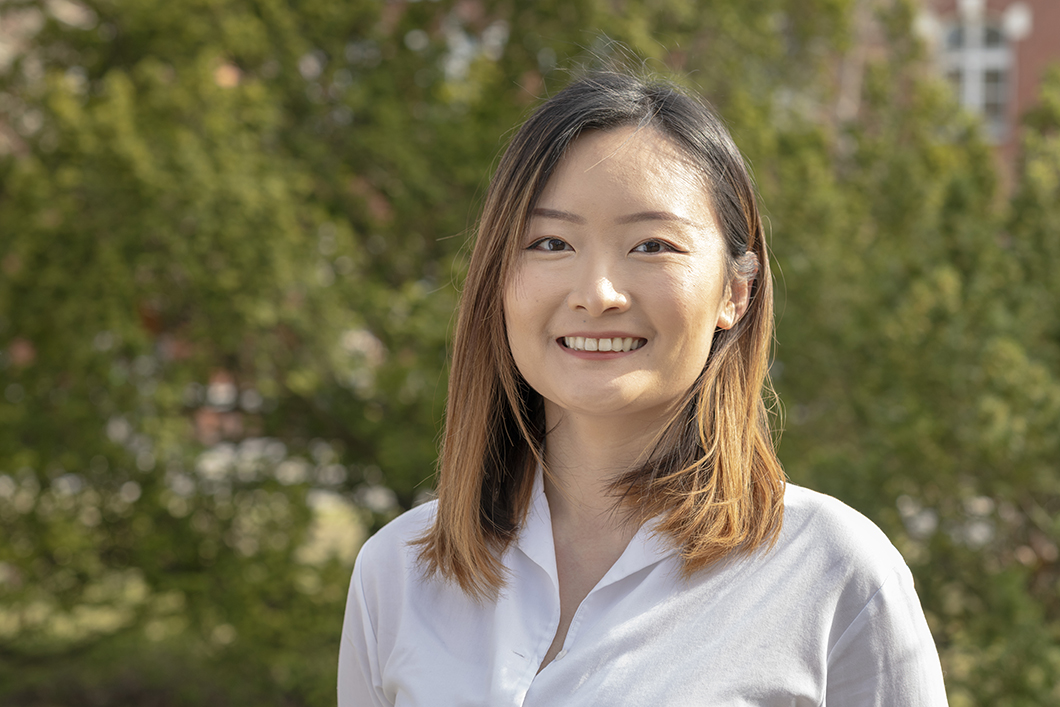
Dr. Biwen Annie An-Stepec, Biodeterioration and Reference Organisms Division
Interview series "Introducing People@BAM"
Dr. Biwen Annie An-Stepec, Biodeterioration and Reference Organisms Division
Annie, tell us a little bit about yourself. What did you do in "your life before BAM”?
I grew up in Calgary, Canada, we call it ‘Cow-town’, because it is in central Canada, surrounded by farms and oil fields. I did my PhD in environmental microbiology and got to collect a lot of field samples from the petroleum reservoirs. It was a great experience going into the field, being surrounded by nature, with a can of bear spray and sample collection bottles...
What inspired you to pursue a career in science? Do you have any role models and, if so, which ones?
I have always been interested in biology. I first became interested in science when my childhood best friend gave me a book about Darwin and the theory of Natural Selection. Overtime, I just became more and more interested in microbiology. When I met my former supervisor, Dr. Gerrit Voordouw, I was so fascinated with the concept of applied microbiology, as it opened a whole new dimension of integrative research. He is extremely hardworking, diligent, and brilliant, which are all qualities I aspired to achieve one day.
What does your research focus on, and what excites you most about this topic?
My research focuses on interdisciplinary microbiology, which integrates microbiology with material science, electrochemistry and analytical science. We all know those ‘bugs’ are everywhere, and what we are trying to do in our lab is to understand them through an application point of view. By doing so, we can examine their impact on energy conversion and infrastructure degradation. The most exciting aspect of our research is the unknown. There are just so much we could do with microbiology, and so much potential for us to explore.
Why research at BAM? What do you like most about your work here?
As I was finishing my PhD, I wanted to expand my knowledge regarding material research and different analytical techniques. When I saw the job posting of BAM for Department 4.1, I was really excited, and applied right away.
During my time here at BAM, I loved the amount of available resources and helpful colleagues that have aided my work. I have made some great friends here, and my boss Dr. Andrea Koerdt, is undoubtedly the most supportive person there is. Our team in 4.1 is also filled with amazingly helpful and friendly colleagues. So, I would say, so far, BAM has been great!
What do you like to do when you’re not doing research?
During my time off, I like to play board games with friends. I am a boardgame junkie, so finding new games to play is very exciting process.
If you should describe your job at BAM in one sentence – what would that be?
Metal-eating microbes are the powerhouses of the future!
Location