

From genes to Black Rust: genomic insights into corrosive methanogens
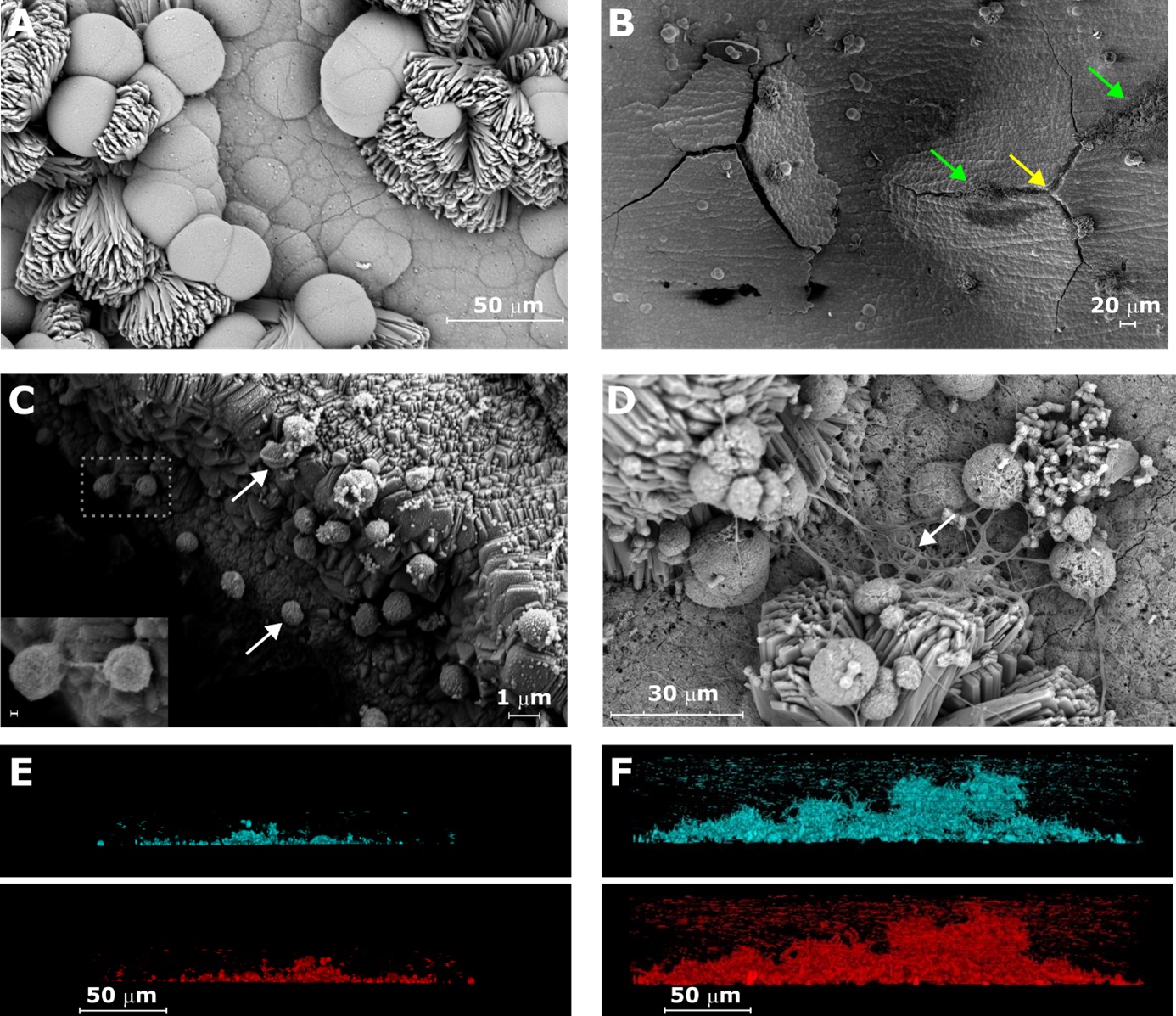
M. maripaludis Mic1c10 (A-C; vers. Vergrößerungen) inkubiert mit Eisen, und Glas (E); Methanobacterium IM1 inkubiert mit Eisen (D) und Glas (F)
Microbiologically influenced corrosion (MIC) causes significant damage to metallic infrastructure worldwide. While indirect effects of microbial activity were long considered dominant, recent genetic studies provide evidence for direct microbial mechanisms driving corrosion.
In this study, we investigated corrosive methanogenic archaea, particularly Methanococcus maripaludis and Methanobacterium strains.
Through comparative genomic analyses we classified a conserved set of genes as the “MIC core”, which plays a central role in corrosion processes. This core includes an extracellular [NiFe]-hydrogenase (FohAB), a TAT secretion system, and a carbonic anhydrase-like protein (FohE), which are implicated in the extraction of electrons from metallic iron, thereby catalyzing hydrogen production and accelerating corrosion.
Our findings further demonstrate that the MIC core can spread among microorganisms via multiple genetic mechanisms, including horizontal gene transfer and transposable elements, explaining the widespread occurrence of corrosive traits among methanogens.
Comparative analyses revealed that the interaction of cells with metal surfaces could influence corrosion rates. While some organisms form extensive biofilms, others localize within corrosion structures with limited surface attachment.
Based on these insights, we proposed a model with two modes of action: corrosion mediated either by enzymes anchored to the cell wall via glycosylation or freely diffusing toward the metal. This dual-mode model of MIC action underscores the role of microbial surface interactions and biofilm formation in biocorrosion dynamics.
Overall, this work provides new insights into the molecular basis of biocorrosion and supports the development of improved detection and mitigation strategies. Such developments could transform how industries detect and mitigate microbial threats to infrastructure. Our work also aims to stimulate further interdisciplinary research at the intersection of microbial genomics, environmental microbiology, and materials science.
From genes to Black Rust: genomic insights into corrosive methanogens
Sherin Kleinbub, Joseph J Braymer, Friedhelm Pfeiffer, Mike Dyall-Smith, Kristin Spirgath, Gabriela Alfaro-Espinoza, Andrea Koerdt
FEMS Microbes, 2025