


COMIT - Characterization of moisture and ion transport in porous building materials using NMR and LIBS
Junior research project
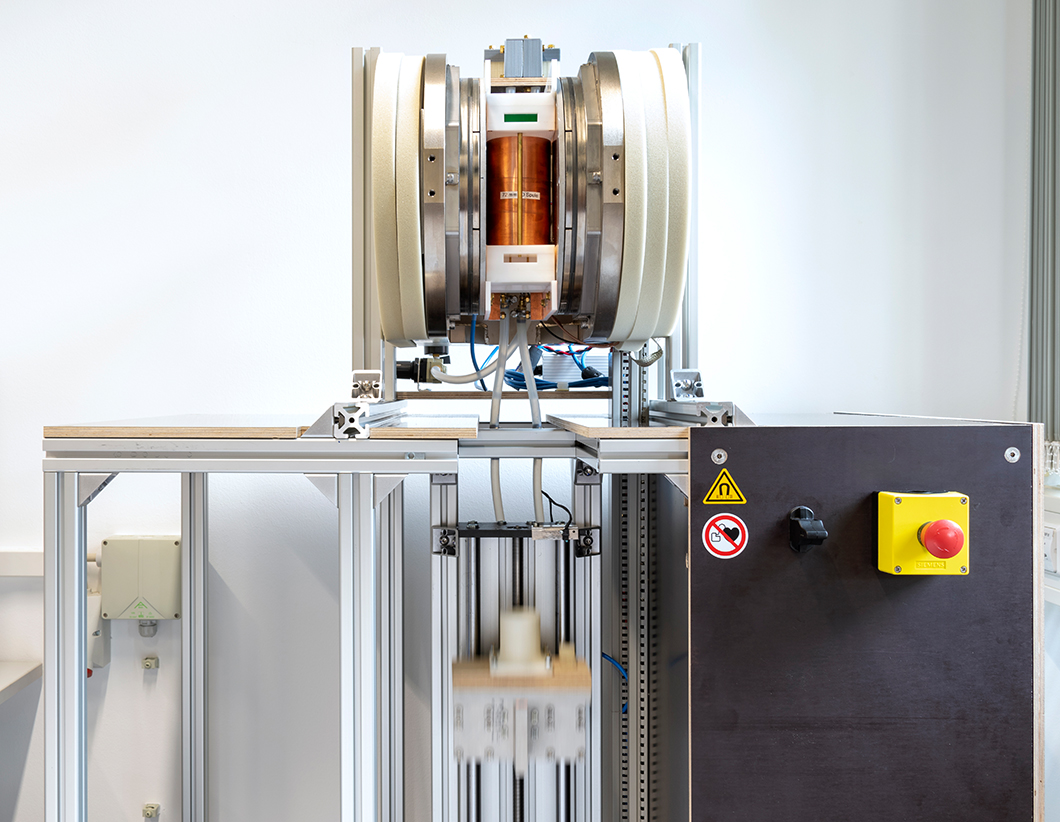
Description
In our work, we use a combination of nuclear magnetic resonance (NMR) and laser-induced breakdown spectroscopy (LIBS) to investigate the transport characteristics of building materials featuring completely different pore systems.
COMIT - Characterization of moisture and ion transport in porous building materials using NMR and LIBS
Understanding transport processes in building materials is important to characterize their durability and allow for life cycle assessment simulations. Moisture and especially chloride ions are of crucial importance, but it is time-consuming and expensive to determine their transport spatially resolved and in relation to each other. In our work, we use a combination of nuclear magnetic resonance (NMR) and laser-induced breakdown spectroscopy (LIBS) to investigate the transport characteristics of building materials featuring completely different pore systems. Also, we use different pore fluid concentrations and try to determine material specific transport coefficients based on our observations.
We carry out capillary suction and ion migration experiments on CEM I as well as CEM II/A, CEM III/B, CEM II/C and CEM VI or even recycled concrete samples and monitor the moisture uptake by non-destructive, layer sensitive NMR measurements. Subsequently, the samples are split vertically to investigate the chloride ion ingress with high spatially resolved LIBS measurements. This way we can study the material specific transport characteristics of moisture and salt depending on the individual pore-size distributions. The first experiments clearly showed that the two penetration fronts move with different time constants. Moreover, the concentrations of the used solutions play an important role. In the figure is shown that in a mortar sample (max. aggregate size 2 mm) a sodium chloride concentration of 1 mol/l penetrates more slowly than the same fluid with a concentration of 4 mol/l. The moisture fronts seem to penetrate somewhat quicker though, when the ion concentration is lower.